

TMJ treatment doesn’t automatically mean you’ll need braces. The bite and tooth alignment help determine whether orthodontics belongs in the plan, since braces and TMJ care address different concerns. For children under age 13, most need orthodontics after TMJ treatment.
Jaw pain, clicking, or tightness can be unsettling, and dizziness or balance concerns may add to the worry. A TMJ specialist in NYC can assess jaw symptoms and how the joint and muscles are working. This article explains common treatment options, including appliances, medication, injections, and exercises, and considers dizziness and balance symptoms without assuming the jaw is their cause. You’ll get a clearer sense of when orthodontics may fit into care and what an evaluation can clarify.
Key Takeaways
- A TMJ evaluation can consider jaw movement, muscle function, medical history, and symptoms that may overlap with dental pain.
- Care may include appliances, medication, BOTOX injections, or guided exercises, alongside practical steps such as choosing softer foods.
- Dizziness and balance concerns can be discussed with jaw symptoms, while ear, neck, or shoulder discomfort adds useful context to the overall picture.
- Beyond Dentistry NYC’s Smile Gallery Restorations may be relevant if you’re also considering restorative or smile-focused dental care.
Treatment options including appliances, injections, medication, and exercises
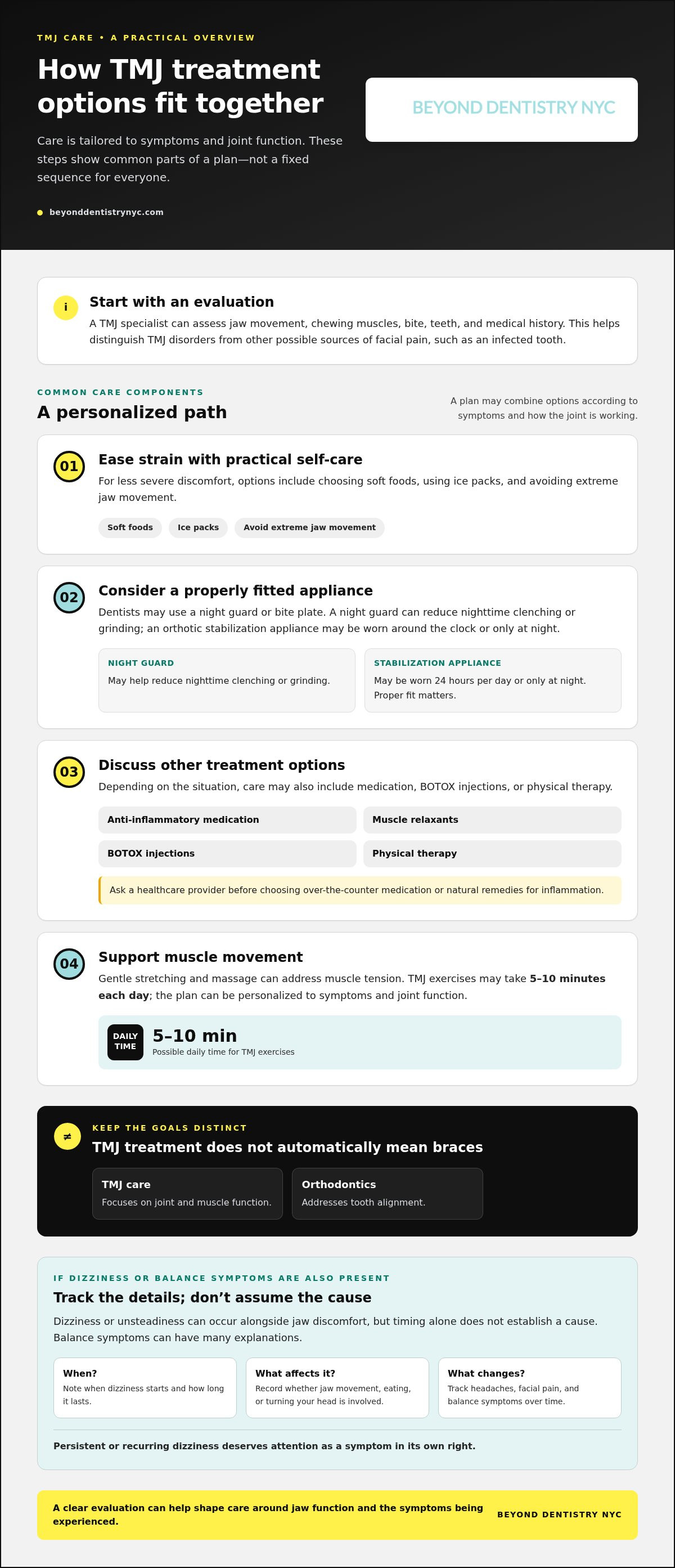
A TMJ specialist in NYC can assess jaw movement, chewing muscles, bite, teeth, and medical history. This helps distinguish TMJ disorders from other problems, such as an infected tooth, that can also cause facial pain. The temporomandibular joint and surrounding muscles affect opening, eating, and jaw function, so an evaluation can guide the treatment plan.
For less severe discomfort, Weill Cornell Medicine lists soft foods, ice packs, and avoiding extreme jaw movement as self-care options. Dentists may also use night guards or bite plates. A night guard can reduce nighttime clenching or grinding, while an orthotic stabilization appliance may be worn 24 hours per day or only at night. A custom appliance should fit properly.
Other options include anti-inflammatory medication, muscle relaxants, BOTOX injections, and physical therapy. Ask a healthcare provider before choosing over-the-counter medication or natural remedies for inflammation. Gentle stretching and massage can address muscle tension; TMJ exercises may take 5-10 minutes each day. A personalized plan can combine these steps based on symptoms and joint function.
Braces aren’t automatically needed after TMJ treatment. Orthodontics addresses tooth alignment, while TMJ care focuses on joint and muscle function.
The cost of a consultation depends on the examination and any records or imaging needed. Request a quote to learn the fee.
Payment plans vary by practice, and dental insurance benefits depend on your plan’s coverage rules. Your insurer’s in-network directory can identify specialists who participate in your plan. Participation depends on both the office and the specific plan.
TMJ-related dizziness and balance symptoms
Dizziness or unsteadiness can occur alongside jaw discomfort, but their timing alone doesn’t establish a cause. The temporomandibular joint is near the ear, while balance symptoms can have many explanations. Note when dizziness starts, how long it lasts, and whether jaw movement or eating affects it. This record gives a dentist or healthcare professional useful context.
TMJ and TMD symptoms can include clicking, limited opening, painful movement, jaw locking, headaches, and facial pain. Clenching or grinding may tighten jaw muscles; arthritis or injury can also affect the joint. Ear-area pain and neck aches may accompany TMJ disorders, and shoulder tension can add context. Sinus pressure may also overlap with facial discomfort, so symptoms alone don’t identify the cause.
For a useful diagnosis, describe each symptom specifically: clicking when chewing, pain near one ear, or dizziness when turning your head. A dental examination can assess jaw movement, muscles, and bite, while medical history helps shape treatment options. Persistent or recurring dizziness deserves attention as a symptom in its own right, rather than being assumed to come from the jaw. If jaw symptoms continue, a dental assessment of jaw function can help clarify the dental findings.
During therapy or TMJ treatment, track changes in headaches, facial pain, and balance symptoms, including whether they shift together. This pattern can help distinguish jaw-related discomfort from separate concerns. If jaw locking or painful opening makes eating difficult, describe those specific problems during an evaluation. They help show how symptoms affect daily function.
Beyond Dentistry NYC: Smile Gallery Restorations
Beyond Dentistry NYC offers Smile Gallery Restorations and TMD therapy for patients seeking dental care that considers jaw function alongside their smile. If you’re exploring restorative care after learning about TMJ symptoms, the practice’s functional dentistry approach may be a relevant next step.
Innovative Technology Treatments support the practice’s dental care, while smile makeovers and veneers can address separate appearance goals. These services meet different needs: smile-focused treatment isn’t a substitute for evaluating dizziness or other symptoms that may have another cause.
For dental care suited to your concerns, contact Beyond Dentistry NYC or visit beyonddentistrynyc.com.
Take a Clear Next Step
Persistent jaw symptoms or dizziness can make everyday choices feel uncertain. Describe what affects your comfort, eating, sleep, and confidence, then use those priorities to guide a conversation with a TMJ specialist in NYC. Focus on care that fits your needs rather than assuming every symptom has one cause or solution.
Beyond Dentistry NYC offers Smile Gallery Restorations, implants, sleep apnea appliances, Botox, TMD care, and Innovative Technology Treatments. These services address different dental needs, from jaw-related concerns to restorative goals.
When you’re ready to discuss your dental concerns and possible next steps, contact Beyond Dentistry NYC. A thoughtful conversation can help you move forward with greater clarity and confidence.
Frequently Asked Questions
What About Bite Correction or Surgery?
Bite correction and surgery address different concerns: orthodontics changes tooth alignment, while surgery treats severe joint problems. Surgery is reserved for serious cases, such as a jaw that cannot open, a non-reducible dislocation, severe joint degeneration, or unsuccessful appliance treatment. If your bite feels uneven after TMJ care, note when it affects chewing and describe the change at follow-up.
What Is A Board-Certified Orofacial Pain Specialist?
An orofacial pain specialist focuses on diagnosing and treating pain disorders affecting the jaw, mouth, face, head, and neck. In New York, this expertise can help assess whether facial or head pain relates to jaw structures. A board examination is one qualification for doctors described as orofacial pain specialists; it doesn’t mean every ear or balance symptom comes from the jaw.
What Causes TMJ?
TMJ disorders can develop when factors such as injury, arthritis, clenching, grinding, or bite-related strain affect the joint or chewing muscles. There may not be one isolated cause. Note whether symptoms began after trauma, flare during stress, or accompany waking jaw tightness. These details can help a New York dentist assess possible contributors and guide an evaluation.
How do NYC dentists, oral surgeons, and orofacial pain specialists compare for TMJ care?
Dentists can assess jaw movement, muscles, and bite, distinguish TMJ pain from an infected tooth, and provide conservative treatment. Orofacial pain specialists focus on diagnosing and treating pain affecting the jaw, mouth, face, head, and neck. Oral and maxillofacial surgeons may evaluate severe cases or symptoms that do not improve with physical therapy, bite plates, or medication.


