

What if protecting porcelain veneers depends as much on your gums and bite as it does on the porcelain itself? It’s understandable to wonder whether your usual brushing routine, toothpaste, or favorite foods could cause staining, chipping, or a loose veneer. Good porcelain veneers maintenance doesn’t need to be complicated, but gentle, consistent habits matter.
This guide explains how to care for veneers each day, which habits can put unnecessary stress on them, and what to do if a veneer feels different or becomes damaged. You’ll learn how brushing and flossing support the teeth and gums around your veneers, why stain-resistant porcelain still benefits from mindful choices, and when a dental evaluation can help. With clear guidance, you can build a routine that supports both the appearance of your smile and its function.
Key Takeaways
- Think of porcelain veneers maintenance as care for your restorations, gums, and overall oral health, not just the visible surface.
- Use a soft-bristled toothbrush and nonabrasive toothpaste to care for veneers and surrounding teeth.
- Avoid biting hard objects or using your teeth as tools, since concentrated force can put veneers at risk.
- If a veneer feels loose or uncomfortable, looks chipped, or changes how your bite feels, keep the area clean and arrange a dental evaluation.
- Routine dental visits give your clinician a chance to assess veneer margins, surrounding gums, comfort, and bite.
What porcelain veneers maintenance protects beyond the visible surface
A veneer’s polished surface is only one part of the picture. Porcelain veneers maintenance combines daily oral care and thoughtful habits to support the restoration, its bond to the tooth, and the surrounding gums and natural teeth. The way your teeth meet when you bite matters, too.
Porcelain is durable, but it isn’t indestructible. A veneer can experience wear or damage, and the teeth and tissues around it remain part of your oral health. The goal isn’t to guarantee that a veneer will never chip, stain, or loosen. It’s to support a healthy mouth and avoid preventable stress where possible.
Veneers are one type of dental restoration. For a broader overview of the materials and forms they can take, see the Veneer (dentistry) Wikipedia article. The care principles here focus on how a veneer sits within your mouth and what that means for everyday upkeep.
How veneers fit into a healthy mouth
A porcelain veneer is bonded to the front of a tooth that has been prepared to receive it. It changes the tooth’s visible surface, but it doesn’t replace the need to care for the natural tooth beneath it. The edge where the veneer meets the tooth is called the margin. Plaque can collect around that area, just as it can along other tooth surfaces.
Gentle, thorough cleaning around the margins helps support gum and tooth health. The gums, bonding interface, and bite all deserve attention. Veneers can improve appearance, but they don’t prevent future dental concerns or replace ongoing oral care.
What maintenance can and cannot do
Consistent home care supports the health of the teeth and gums around veneers. Sensible habits can also reduce avoidable pressure on a restoration. Daily brushing and cleaning between teeth are part of that foundation. Focus on cleaning your whole mouth gently rather than scrubbing the porcelain itself.
Even with attentive care, a veneer may chip, stain, or loosen, and a change in comfort or bite can have more than one cause. General guidance can help you build sound habits, but it can’t assess your individual veneers. A dental examination allows a clinician to consider the restoration alongside its margins, nearby gums and teeth, and the way your bite feels.
Thoughtful veneer care is about more than keeping porcelain polished. It supports the restoration as part of a functioning, healthy mouth. If something feels different, an evaluation can help clarify what’s happening and what care may be appropriate.
A daily porcelain veneers maintenance routine that is simple to keep
A steady routine makes caring for veneers part of ordinary oral hygiene, not a separate project. Clean your teeth and gumline gently, including the edges where a veneer meets a natural tooth. You don’t need to scrub harder because a tooth has a restoration.
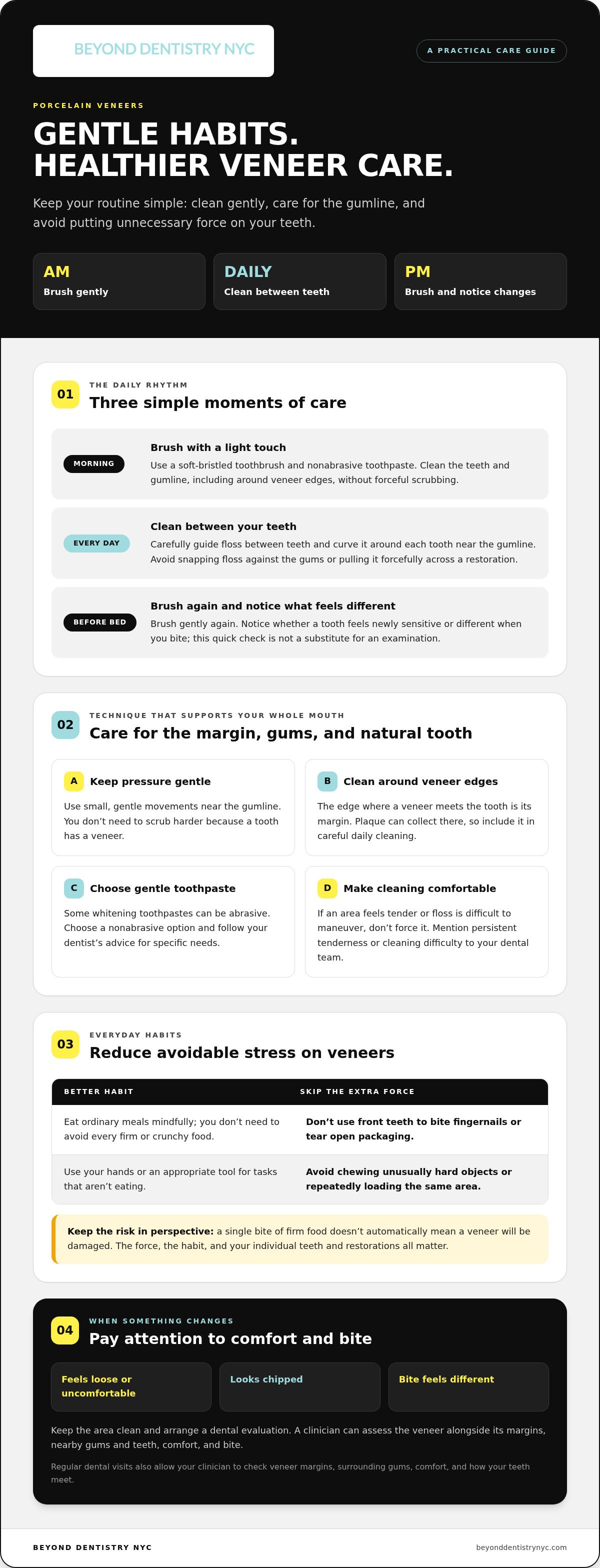
In the morning, brush gently with a soft-bristled toothbrush and nonabrasive toothpaste. In the evening, brush again and carefully floss or use another dentist-recommended interdental cleaner. Keep the pressure light and give each tooth attention, including those without veneers.
Brushing and toothpaste choices for veneers
Hold the brush at a comfortable angle near the gumline and use small, gentle movements across the tooth surfaces. Pay attention to the edges around each restoration, where plaque can collect, but avoid forceful back-and-forth scrubbing. A soft-bristled brush and nonabrasive toothpaste help you clean without harsh friction. Some whitening toothpastes can be abrasive, so choose a gentle option instead.
If you have sensitivity or specific oral-care needs, follow your dentist’s advice about products and technique. Your routine should be comfortable enough to maintain consistently. If brushing a particular area feels tender, don’t press harder. Note what you’re experiencing and mention it at a dental visit.
Flossing and cleaning between teeth
Clean between your teeth every day, including beside veneered teeth. Carefully guide floss between the teeth and curve it around each tooth to clean near the gumline. You don’t need to avoid veneer margins, but don’t snap floss down against the gums or pull it forcefully across a restoration. If floss is difficult to maneuver, a dentist can discuss an appropriate way to clean between your teeth.
Bleeding, persistent tenderness, or difficulty cleaning a specific spot is worth mentioning to your dental team. These signs don’t reveal the cause on their own, but they’re useful information for an assessment. Gentle technique matters, and so does being able to clean comfortably and thoroughly.
To keep the habit manageable, brush in the morning and before bed, and clean between your teeth daily. At night, notice whether any tooth feels newly sensitive or different when you bite. That quick check isn’t a substitute for an examination, but it can help you spot a change worth mentioning.
For guidance that considers both your smile’s appearance and how your teeth function, explore personalized veneer care with Beyond Dentistry NYC in New York City.
Which everyday habits can help or harm porcelain veneers?
Veneers are part of your smile during everyday activities, so pay attention to how you use your teeth. Ordinary eating and speaking are different from repeatedly placing concentrated force on a front tooth. A single bite of firm food doesn’t automatically mean a veneer will be damaged, but repeated habits that load the same area can create avoidable stress.
Eating, biting, and protecting veneers from excess force
You don’t need to avoid every firm or crunchy food. The risk depends on the force involved, the habit, and your individual teeth and restorations. Avoid using front teeth to bite fingernails, tear open packaging, or chew unusually hard objects. Use your hands or an appropriate tool instead. Changing a repeated habit is more helpful than worrying that one ordinary meal has caused damage.
Consider where the pressure goes. Biting into something with a front tooth places force differently than chewing with your back teeth. If you notice yourself using a veneered tooth to crack, tear, or hold something, pause and choose another approach. These small adjustments make porcelain veneers maintenance practical without turning meals into a list of rigid restrictions.
Grinding, whitening, and other common concerns
Clenching or grinding can place repeated pressure on teeth and restorations, sometimes without you noticing. If you wake with jaw tension, notice unusual tooth wear, or suspect you clench, a dentist can assess your bite and discuss whether individualized protection may be appropriate. The right guidance depends on your mouth and habits.
Whitening requires planning. Whitening products can change the shade of natural teeth, but they don’t change porcelain in the same way. If you whiten after veneers are placed, your natural teeth may become lighter while the veneer shade stays the same, creating a difference in color. Discuss your aesthetic goals with your dentist before starting a whitening routine, especially if your veneers show when you smile.
Appearance and function often go hand in hand. If you’re considering how veneer shade, tooth shape, and your overall smile work together, the practice’s guide to smile makeovers offers broader aesthetic context. A dentist can help you consider those choices alongside your oral health and bite, rather than treating color as an isolated concern.
Eat normally, avoid using your teeth as tools, and mention signs of clenching or grinding at a dental visit. If a veneer feels different or you’re unsure how a habit may affect it, personalized guidance can help you decide what to adjust without unnecessary worry.
How to respond to a chipped, loose, or uncomfortable veneer
Noticing a chip or a change in how a veneer feels can be unsettling, but you don’t have to work out the cause on your own. Avoid putting extra pressure on the tooth, keep the area clean with gentle oral hygiene, and arrange a dental evaluation. A visible chip, looseness, a changed bite, or persistent discomfort deserves attention, even if the change seems small.
What to do if a veneer chips or feels loose
If a veneer feels mobile or has come off, don’t pull at it, repeatedly test it with your tongue or fingers, or try to glue it back in place. Household adhesives and at-home repairs aren’t a substitute for dental assessment. If a piece has detached, keep it in a clean container and bring it to the appointment if you can. Avoid biting with that tooth until it has been assessed.
Continue to keep the area clean, but be gentle around the affected tooth. Arrange an evaluation rather than waiting to see whether the veneer settles back into place. The appropriate next step depends on what an examination shows. Appearance alone can’t determine whether a veneer can be repaired or needs another approach.
When sensitivity or a bite change needs attention
Brief, mild sensitivity doesn’t necessarily mean the veneer is damaged, but pay attention to how it develops. Arrange an assessment if sensitivity persists, worsens, or makes eating uncomfortable. A bite that suddenly feels uneven or a tooth that feels uncomfortable can have several possible causes. An examination helps assess the veneer alongside the tooth, surrounding tissues, and the way your teeth meet.
This guidance can help you respond calmly, but it isn’t a diagnosis. Seek appropriate urgent medical attention for severe symptoms, such as significant swelling or difficulty breathing or swallowing. For other changes, timely dental evaluation can help clarify what’s happening and what care may be suitable.
Veneer concerns are also a reminder that comfort and appearance are connected to the way the mouth functions. Beyond Dentistry NYC’s functional dentistry approach considers how oral health and dental restorations work together.
For personalized guidance about a chipped, loose, or uncomfortable veneer, arrange a veneer evaluation with Beyond Dentistry NYC. Good porcelain veneers maintenance includes knowing when a new symptom calls for professional attention.
Professional porcelain veneer maintenance at Beyond Dentistry NYC
Home care is essential, but it can’t show you everything about how a veneer is holding up or how the surrounding teeth and gums are doing. Routine dental visits give a clinician the opportunity to assess your oral health and restoration together. Visit timing depends on your individual clinical needs, so there isn’t one schedule that suits every patient.
What a dentist may evaluate during routine care
An evaluation may include the veneer’s surface and margins, the nearby tooth and gum tissues, and whether the restoration appears intact. Your clinician may also ask about comfort, cleaning habits, and changes you’ve noticed, such as new sensitivity or a bite that feels different. Sharing those details helps make the visit more useful.
The bite matters because restorations function as part of the whole mouth, not as isolated surfaces. A dentist may consider how your teeth meet and whether any area feels uncomfortable when you bite. If something has changed since your last visit, mention when you first noticed it and what activities make it more apparent. These observations support an assessment, but an examination is needed to understand the cause.
Professional care complements your daily routine. A clinician can assess areas that are difficult to judge on your own, including veneer edges and surrounding gums, and discuss care suited to your mouth. This is particularly helpful if you’re unsure whether a new sensation needs closer attention.
Personalized veneer care in New York City
At Beyond Dentistry NYC, veneer expertise and smile makeovers are part of a functional dentistry approach. Care can account for the appearance of your smile as well as comfort and how your teeth work together. The practice’s Smile Gallery restorations offer related restorative care for people interested in considering aesthetic goals alongside function.
Your needs may differ depending on your oral health, the condition of your restorations, and the changes you’ve noticed. A personalized conversation can connect your home-care habits with what a clinician observes during an evaluation. It can also help you prioritize questions about comfort, appearance, or the way your bite feels.
Good porcelain veneers maintenance combines consistent care at home with professional guidance shaped around your mouth. To explore veneer care or smile makeover options in New York City, explore veneer and smile makeover care at Beyond Dentistry NYC.
Make your next step feel clear and comfortable
Your veneer-care routine should fit your mouth, not create new uncertainty. If you’re unsure whether a habit is putting pressure on a restoration, or you’ve noticed a change that’s hard to explain, bring that question to a dental visit. A focused conversation can help you decide what to keep doing and where a personalized adjustment may make sense.
Think of porcelain veneers maintenance as an ongoing partnership between the care you practice at home and professional guidance shaped around your needs. You don’t have to figure out every concern alone. With a clear plan, it can feel easier to care for your smile with confidence.
Explore personalized veneer and smile makeover care at Beyond Dentistry NYC, and take a reassuring next step toward a smile that feels well cared for.
Frequently Asked Questions
Can you whiten porcelain veneers?
No, whitening products don’t lighten porcelain the way they can lighten natural teeth. If you whiten after getting veneers, your natural teeth may change shade while the veneers stay the same, which can make the colors look less even. Before starting whitening, discuss your goals with your dentist, especially if you’re considering treatment for teeth beside existing veneers.
Does flossing damage porcelain veneers?
No, careful flossing shouldn’t damage a well-bonded veneer. If floss catches, shreds, or feels unusually difficult to move beside a veneered tooth, don’t tug hard or keep forcing it through. That sensation doesn’t identify the cause, but it’s useful to mention at a dental visit. Your dentist can assess the area and suggest a comfortable way to clean between those teeth.
What should I do if a porcelain veneer feels loose?
Arrange a dental evaluation and avoid chewing with the affected tooth in the meantime. Don’t pull at the veneer, keep testing its movement, or use household glue to reattach it. If it comes off, save it in a clean container and bring it with you. A dentist needs to examine the veneer and tooth before recommending what should happen next.
Can porcelain veneers stain at the edges?
Discoloration can appear near a veneer’s edge, but its source isn’t always the porcelain. The natural tooth, nearby gumline, or area around the margin may contribute to how the edge looks. Avoid scraping or using abrasive products to remove a mark. A dental assessment can help determine what’s causing the change and whether it needs attention.
Do porcelain veneers need special toothpaste?
Usually, veneer care doesn’t require a special brand of toothpaste. Choose a gentle, nonabrasive toothpaste, and avoid relying on harsh whitening formulas to polish the veneer. If you have sensitivity, gum concerns, or another specific oral-care need, your dentist can tailor advice to your situation. The goal is comfortable cleaning of the whole mouth, not intensive polishing of the restoration.
Can you wear a night guard with porcelain veneers?
Yes, a dentist may recommend a night guard if you clench or grind, but the decision and fit should be individualized. A dentist can assess your bite, signs of grinding, and existing restorations before discussing protection. Don’t assume a guard you already own is suitable after veneer treatment. Bring it to your appointment so its fit can be considered.
How often should porcelain veneers be checked by a dentist?
There isn’t one checkup interval that suits everyone with veneers. Follow the schedule your dentist recommends based on your oral health, restorations, and individual needs. Between visits, note changes such as a rough edge or a new sensation when biting, and arrange an assessment rather than waiting for the next routine check if something concerns you.
Is sensitivity normal after getting porcelain veneers?
Some sensitivity may occur after veneer treatment, but persistent or worsening discomfort shouldn’t be dismissed as routine. Notice whether it happens with hot or cold foods, during chewing, or without an obvious trigger, and share those details with your dentist. If sensitivity interferes with eating or continues rather than settling, an examination can help identify what’s contributing to it.


