

Could changing your jaw position while you sleep be an alternative to wearing a CPAP mask? If you’re exploring a sleep apnea dental appliance in NYC, you may be wondering whether it suits your diagnosis, feels comfortable, and fits your teeth properly.
A mandibular advancement device gently holds the lower jaw forward during sleep to help support an open airway. Unlike CPAP, which delivers air through a mask, an oral appliance works by positioning the jaw. It isn’t right for everyone. Choosing treatment starts with a sleep apnea diagnosis based on clinical assessment and sleep testing, followed by a review of your oral and jaw health.
This guide explains who may be a candidate, how an appliance compares with CPAP, and what evaluation and follow-up can involve. Beyond Dentistry NYC provides sleep apnea appliance care, with attention to dental and jaw health. Understanding the steps can help you explore your options and prepare for a conversation with a New York City dental team.
Key Takeaways
- Snoring or disrupted sleep can be reasons to seek evaluation, but symptoms alone don’t confirm obstructive sleep apnea.
- A mandibular advancement device positions the lower jaw forward during sleep. Whether it’s appropriate depends on individual clinical and dental considerations.
- CPAP and oral appliances work differently, so treatment choices should reflect your needs and clinical guidance.
- Diagnosis, medical history, current treatment, bite, and jaw comfort can all inform an appliance evaluation.
- Learn what to expect from sleep apnea dental appliance NYC care, including diagnosis, treatment fit, and follow-up at Beyond Dentistry NYC.
Considering a Sleep Apnea Dental Appliance in NYC? Start With the Diagnosis
Loud snoring, waking often, or feeling unrefreshed can prompt you to look for ways to sleep better. If CPAP has been difficult to use, you may wonder whether an oral appliance could be another option. These concerns are worth discussing, but they can’t establish whether you have sleep apnea or which treatment is appropriate.
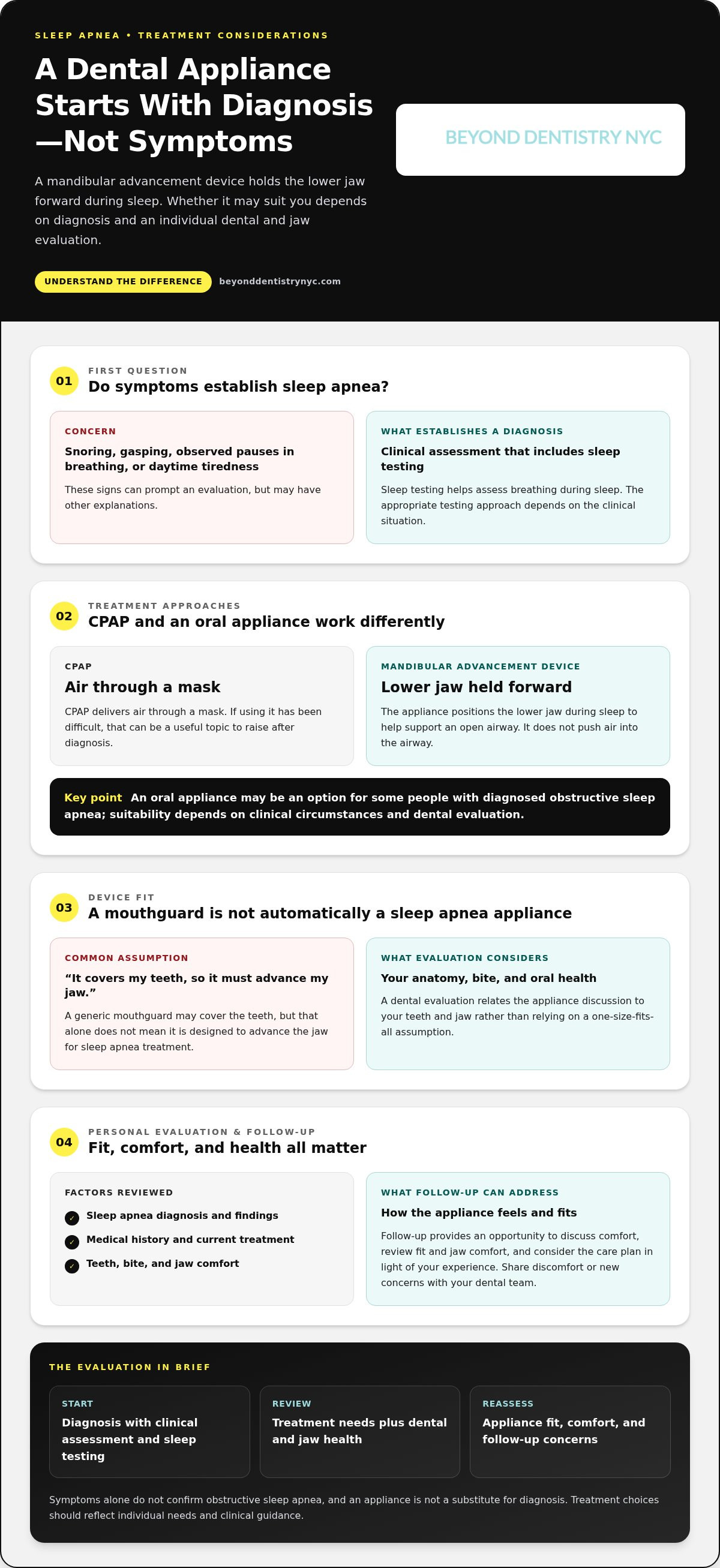
Obstructive sleep apnea (OSA) occurs when the upper airway repeatedly becomes partially or fully blocked during sleep, disrupting normal breathing. Snoring, gasping, observed pauses in breathing, and daytime tiredness may raise concern, but they can also have other explanations. A possible warning sign can prompt an evaluation, but only a clinical assessment that includes sleep testing can establish a sleep apnea diagnosis.
A dental appliance is a treatment option, not a test for sleep apnea. If you’re considering sleep apnea dental appliance NYC care, begin by understanding your diagnostic findings and whether an appliance may suit your needs. Suitability depends on the diagnosis and an individual clinical evaluation, including your dental and jaw health.
What does a sleep apnea diagnosis establish?
Symptoms alone can’t determine whether sleep-disordered breathing is obstructive or establish its severity. Sleep testing helps assess breathing during sleep and contributes to a diagnosis. The appropriate testing approach depends on the clinical situation. The aim is to understand what the findings show, rather than assume that snoring or fatigue tells the whole story.
Those findings provide important context for treatment discussions. A conversation about a dental appliance should take the diagnosis into account, so the treatment being considered relates to the identified condition rather than a symptom alone. During a sleep apnea dental appliance NYC evaluation, a dentist can also consider your teeth, bite, jaw comfort, and medical history.
When might someone explore a dental appliance?
Oral appliance therapy may be an option for some people with diagnosed OSA. A mandibular advancement appliance is designed to position the lower jaw forward during sleep. The Mandibular Advancement Splint overview describes this general approach, but whether it suits you depends on your clinical circumstances and dental evaluation.
Your preferences are part of the conversation. You might be interested in an appliance because wearing CPAP has been challenging, or you may simply want to understand how the approaches differ. These are useful questions to raise after diagnosis. Snoring alone doesn’t establish eligibility for appliance therapy, and an appliance shouldn’t replace assessment of the underlying sleep condition.
At Beyond Dentistry NYC, sleep apnea appliance care is considered alongside dental and jaw health. The practice also provides TMD therapy, which makes jaw comfort a relevant part of the discussion. Starting with a clear diagnosis helps focus the next steps: what the findings mean, which options may be appropriate, and what a dental evaluation can contribute.
How a Mandibular Advancement Device Works for Sleep Apnea
A mandibular advancement device is a dental appliance worn during sleep that holds the lower jaw slightly forward to help support an open airway. You may also hear it called an oral appliance. Its purpose is to change jaw position during sleep, not to diagnose sleep apnea or guarantee that breathing interruptions will stop.
The jaw, tongue, and surrounding soft tissues relate to the space at the back of the throat. In some people, moving the lower jaw forward can help support that space during sleep. The effect varies by person, which is why the device and treatment plan need to be considered in light of the diagnosis and dental health.
What happens when the appliance is worn?
The appliance sits over the teeth and guides the lower jaw forward from its usual resting position. Think of it as a gentle change in how the jaw is held overnight, rather than a device that pushes air into the airway. Its role is to support airway openness, but it can’t be assumed to prevent every breathing interruption or work the same way for everyone.
Before treatment planning, a clinician evaluates relevant dental and jaw factors. The condition of your teeth, your bite, jaw comfort, and medical history can all inform whether an appliance is appropriate to discuss and how care should be approached. If wearing a device causes discomfort or raises new concerns, tell your dental team so the issue can be reviewed clinically.
How is a custom dental appliance different from a generic device?
Fit matters because an appliance rests on the teeth and relates to jaw position. A generic mouthguard may cover the teeth, but that alone doesn’t mean it is designed to advance the jaw for sleep apnea treatment. A dental evaluation connects the appliance discussion to your anatomy, bite, and oral health rather than relying on a one-size-fits-all assumption.
Comfort is personal, too. A device that feels manageable to one person may feel unfamiliar or uncomfortable to another, especially when they’re getting used to wearing something during sleep. Follow-up is a chance to discuss how the appliance feels, review fit and jaw comfort, and consider the care plan in light of your experience.
For anyone exploring a sleep apnea dental appliance in NYC, the key question isn’t simply whether an appliance exists. It’s whether this type of treatment makes sense given the diagnosis and your dental and jaw health. At Beyond Dentistry NYC, sleep apnea appliance care takes these individual factors into account. Learn more about sleep apnea appliance care as you explore your options.
Dental Appliance or CPAP? Compare Sleep Apnea Treatment Considerations
CPAP and oral appliance therapy take different approaches to treating obstructive sleep apnea. CPAP uses a machine to deliver air through a mask, while an oral appliance repositions the jaw during sleep. Neither is automatically more comfortable, more effective, or right for everyone. If you’re considering sleep apnea dental appliance NYC care, compare how each approach fits your diagnosis, clinical needs, and ability to use the treatment as planned.
| Consideration | Oral appliance | CPAP |
|---|---|---|
| Treatment approach | A dental device positions the lower jaw forward during sleep. | A machine delivers pressurized air through a mask to support the airway. |
| Daily use | Worn in the mouth during sleep; dental fit and jaw comfort are part of the experience. | Used during sleep with a mask and connected equipment; comfort and routine can vary by person. |
| Clinical oversight | Requires dental evaluation and follow-up as part of appliance care. | Requires clinical oversight to guide treatment and assess its use. |
Which treatment factors should patients compare?
Start with your sleep apnea diagnosis and the clinical findings behind it. The type and severity of the condition, other health considerations, and dental or jaw factors can shape whether an appliance is appropriate. Treatment decisions should reflect the diagnosed condition and an individualized clinical assessment, not preference alone.
Next, consider the routine each approach involves. An appliance may appeal to someone who prefers a dental device, while another person may find CPAP’s approach more workable. Neither assumption predicts how you’ll respond. When discussing sleep apnea dental appliance NYC treatment, weigh the clinical plan alongside comfort, practical use, and how care will be monitored.
What if CPAP has been difficult to use?
Difficulty tolerating a mask or keeping up with a treatment routine can be frustrating. It’s understandable to explore other options, but difficulty is a reason to discuss the challenges and possible next steps with your care team, not to switch treatments on your own. Don’t stop or change prescribed treatment without clinical guidance.
Myofunctional therapy is another subject people may encounter while researching sleep-related care, but it’s distinct from CPAP and dental appliances. Keep the discussion grounded in your diagnosis and individual needs rather than assuming different approaches are interchangeable.
If you’re weighing an oral appliance against CPAP, bring practical questions to the conversation: what does your diagnosis call for, what does each routine involve, and how will your care be followed? Beyond Dentistry NYC provides sleep apnea appliance care with attention to dental and jaw health as you explore whether an appliance may suit your needs.
What to Expect When Evaluating a Sleep Apnea Dental Appliance
A thoughtful evaluation connects your sleep apnea diagnosis with your dental health, jaw comfort, and treatment goals. It’s more than checking whether an appliance can be worn. Each part of the conversation helps determine whether oral appliance care may be suitable and what considerations should shape the plan.
Appliance care calls for an individualized dental evaluation because the right approach depends on both the diagnosed sleep condition and the health and comfort of your teeth and jaw.
- Review the diagnosis. Bring available sleep study findings or other information about your diagnosis. These details frame the discussion. A dental appliance evaluation is not a sleep test and doesn’t establish a sleep apnea diagnosis.
- Assess dental and jaw health. The clinician considers your teeth, bite, jaw comfort, and relevant medical history. These factors help inform whether an appliance is appropriate to discuss and what needs attention during planning.
- Discuss treatment and preferences. Share your current treatment, what’s working, and what has been difficult. Your goals and comfort priorities can guide a conversation about options without assuming one approach is best for everyone.
- Plan care and follow-up. If appliance therapy is considered appropriate, the next steps are discussed in light of your individual needs. Follow-up gives you an opportunity to review fit and comfort, raise concerns, and discuss progress with the relevant clinical team.
What information should patients bring to an evaluation?
If available, bring relevant sleep study findings, diagnosis details, and information about current or previous treatment. It can also help to describe symptoms, challenges using treatment, and comfort concerns, such as jaw soreness or wearing a device through the night. These details support a focused dental care discussion, but the visit itself doesn’t confirm sleep apnea.
How do dental and jaw considerations affect appliance planning?
Your teeth and bite affect how an oral appliance can be considered, and jaw comfort is important to discuss before and during care. Tell the clinician about jaw pain, stiffness, clicking, or a history of TMD. These concerns don’t automatically rule out treatment, but they deserve attention in an individualized assessment. Beyond Dentistry NYC provides TMD therapy, bringing jaw health into the practice’s broader dental care.
Follow-up is part of the treatment process, not an afterthought. If comfort changes or concerns arise, share them so they can be reviewed clinically. Assessing treatment progress may also involve coordination with the clinician managing your sleep apnea, and further testing may be recommended as appropriate.
If you’re considering a sleep apnea dental appliance in NYC, Beyond Dentistry NYC provides appliance care that takes dental and jaw health into account. Explore sleep apnea appliance care and the evaluation considerations that can help inform your next steps.
Explore Sleep Apnea Appliance Care at Beyond Dentistry NYC
Whether to explore an oral appliance is a personal decision shaped by your sleep apnea diagnosis, treatment needs, and dental and jaw health. Beyond Dentistry NYC is a New York City practice that provides sleep apnea appliances and TMD therapy, with attention to the factors that make each patient’s experience individual.
Keep four questions in view as you consider your options:
- Diagnosis: What do your sleep-care findings establish?
- Treatment fit: Could an appliance be appropriate given your diagnosis and oral health?
- Comparison: How does the appliance’s routine compare with other treatment approaches for your needs?
- Follow-up: How will comfort and progress be reviewed as care continues?
These questions can help organize your thoughts without requiring you to arrive with a decision already made. Dental appliance care is a conversation about your circumstances, not a promise that one option will suit everyone.
How to prepare for a conversation about appliance care
Gather available sleep-care information, including diagnosis or sleep study findings and details about current or previous treatment. Make a short list of questions about treatment options, dental fit, jaw comfort, and follow-up. It can also help to describe what has felt difficult about your current routine. Sharing these concerns gives the discussion a practical starting point.
Bring up dental or jaw concerns, too. A history of jaw discomfort or TMD symptoms is relevant context, not a reason to assume in advance what care is possible. The conversation can focus on your questions and priorities, helping you understand the considerations before deciding what you’d like to explore.
Take the next step with a New York City dental team
Beyond Dentistry NYC provides sleep apnea appliance care alongside TMD therapy, connecting treatment discussions with attention to dental and jaw health. If you’re exploring a sleep apnea dental appliance in NYC, use your diagnosis, treatment experience, comfort concerns, and questions about follow-up to guide the conversation. An evaluation can help clarify how those factors relate to appliance care, without assuming the same choice works for every patient.
Myofunctional therapy is another topic you may encounter while learning about sleep apnea care. It’s distinct from dental appliances, so consider it as a separate subject rather than assuming it replaces or duplicates appliance treatment.
Ready to explore whether appliance care may fit your needs? Connect with Beyond Dentistry NYC about sleep apnea appliance care and bring your questions about diagnosis, dental fit, jaw comfort, and next steps.
Take a Thoughtful Next Step Toward Better-Fitting Care
You don’t need to have every answer before exploring treatment. Start with the questions that matter most: what your diagnosis means, how an appliance may fit your needs, and what comfort and follow-up could involve. A clear conversation can help you understand your options without assuming one approach is right for everyone.
If you’re considering a sleep apnea dental appliance in NYC, Beyond Dentistry NYC provides appliance care with attention to your individual dental and jaw health. Explore sleep apnea appliance care at Beyond Dentistry NYC and take the next step by discussing your questions with the team. You deserve care that starts with your concerns and supports an informed decision.
Frequently Asked Questions
What is a dental appliance for sleep apnea?
It’s a device worn during sleep that may be considered as treatment for some people with obstructive sleep apnea. A mandibular advancement device generally holds the lower jaw forward. It isn’t a diagnostic tool, and snoring alone doesn’t show that someone should use one. A clinician considers the person’s confirmed diagnosis and dental health before discussing whether an oral appliance may be appropriate.
Can a dental appliance replace CPAP for sleep apnea?
Not automatically. CPAP and oral appliances work differently, and one isn’t a universal substitute for the other. If CPAP is difficult to use, note what feels challenging, such as mask comfort or fitting treatment into your nightly routine, and discuss it with your care team. Don’t stop or change prescribed treatment on your own. A dental evaluation can help clarify whether appliance care is worth considering.
Is a sleep apnea dental appliance comfortable to wear?
Comfort varies. The way an appliance fits, how your jaw feels, and getting used to wearing a device during sleep can all affect your experience. If you notice soreness or another source of discomfort, tell your dental team so the concern can be reviewed. Don’t assume you must tolerate ongoing discomfort, and don’t adjust your treatment yourself without guidance from the clinician involved in your care.
How does a mandibular advancement device work?
A mandibular advancement device is worn during sleep and is designed to hold the lower jaw forward. This position may help support the airway for some people with obstructive sleep apnea, but the effect and suitability depend on individual clinical factors. The device doesn’t diagnose sleep apnea. Its role should be considered within an overall care plan informed by the person’s diagnosis and dental evaluation.
Who may be a candidate for a sleep apnea dental appliance?
Some people with diagnosed obstructive sleep apnea may be considered for oral appliance treatment, but candidacy isn’t established by symptoms alone. A clinician can review the diagnosis, dental and jaw health, and treatment history to help determine whether an appliance is an option to discuss. Sharing concerns about existing treatment can make that conversation more useful and focused on your circumstances.
Can a dental appliance help with snoring if I do not have sleep apnea?
Snoring by itself doesn’t identify its cause or confirm sleep apnea, so it can’t determine which treatment is appropriate. If you’re concerned about snoring, especially alongside observed breathing pauses, gasping, or persistent daytime sleepiness, seek an appropriate clinical evaluation. A treatment discussion should take your symptoms and health history into account rather than treating snoring alone as proof that an appliance is needed.
What should I expect at a dental appointment about a sleep apnea appliance in NYC?
A dental appointment can focus on your confirmed diagnosis, available sleep-care information, treatment experience, and dental or jaw concerns. Bring relevant findings if you have them, and describe what you hope to understand, such as fit, comfort, or follow-up. A dental visit doesn’t replace sleep apnea diagnosis. For those considering sleep apnea dental appliance NYC care, the discussion can help clarify whether appliance treatment merits further consideration.


