

What if a jaw click or ache doesn’t point to one clear cause? Discomfort, clicking, or limited movement can make eating and speaking stressful. It isn’t always obvious whether symptoms involve the jaw joint, muscles, teeth, or another issue. A jaw pain specialist NYC patients consult can help make sense of those patterns through an individual evaluation, rather than relying on a label or self-diagnosis.
It’s understandable to feel unsure about where to start. Temporomandibular disorders (TMD) include different conditions affecting the jaw joint and the muscles that support movement. The right next step depends on your symptoms and health history. This article explains what may contribute to jaw pain, how a specialist may assess it, and what information and questions can help you prepare for an appointment in New York City.
We’ll also explore how TMD therapy and Botox fit into a broader care conversation at Beyond Dentistry NYC. The clinical team considers each patient’s experience and goals as part of its functional dentistry approach. The aim is to help you approach care with greater clarity and confidence.
Key Takeaways
- Track when jaw symptoms occur, where you feel them, what seems to trigger them, and how they affect daily activities.
- A jaw pain specialist NYC patients see can assess their history and symptoms to help clarify possible contributing factors.
- Joint-related and muscle-related symptoms are useful descriptions to discuss during an evaluation, not diagnoses to make on your own.
- The care path may involve assessment, conservative management, or a discussion of additional options, depending on clinical findings and your goals.
- Learn how Beyond Dentistry NYC’s functional dentistry perspective informs its TMD care, including therapy and Botox.
Jaw Pain in NYC: What a Specialist Can Help You Understand
Jaw discomfort can affect ordinary activities: chewing a meal, speaking through a conversation, getting comfortable at bedtime, or moving your mouth without thinking about it. If symptoms are affecting your routine, it’s reasonable to want a clearer explanation. A jaw pain specialist NYC patients consult can consider the full picture, including how the problem feels and which movements or activities seem to influence it.
Temporomandibular joint (TMJ): The joint on each side of the head that connects the lower jaw to the skull and allows the jaw to move.
Temporomandibular disorders (TMD): A broad term for conditions that affect the jaw joint and the muscles involved in jaw movement.
Jaw pain can have different contributing factors. A click, ache, or stiff feeling by itself doesn’t establish the cause. A clinician may consider whether symptoms seem related to the joint, the surrounding muscles, dental history, or a combination of factors. The overview of Temporomandibular Joint Dysfunction (TMD) offers additional background. An individual assessment helps relate general information to your experience.
“The TMJ is the joint, the surrounding muscles help move the jaw, and TMD is the broader term for disorders affecting the joint or those muscles.” This distinction can make conversations about symptoms easier to follow without turning a description into a self-diagnosis.
What does a jaw pain specialist evaluate?
An evaluation starts with your account of the problem: where discomfort occurs, how it affects eating or speaking, and whether it interferes with rest or other daily activities. A clinician may consider how your jaw moves, the joint and nearby muscles, and relevant dental history. Together, these details help build an individualized picture. Not everyone with jaw pain needs the same specialty, assessment, or treatment approach.
Which symptoms are useful to describe?
Share specific concerns such as jaw discomfort, clicking, locking, or difficulty opening and moving the jaw. Note when each symptom began, whether it has changed, and which activities seem to affect it, such as chewing or talking. A click alone doesn’t prove TMD, and symptoms can vary from person to person. Clear observations give the clinician useful context to explore with you.
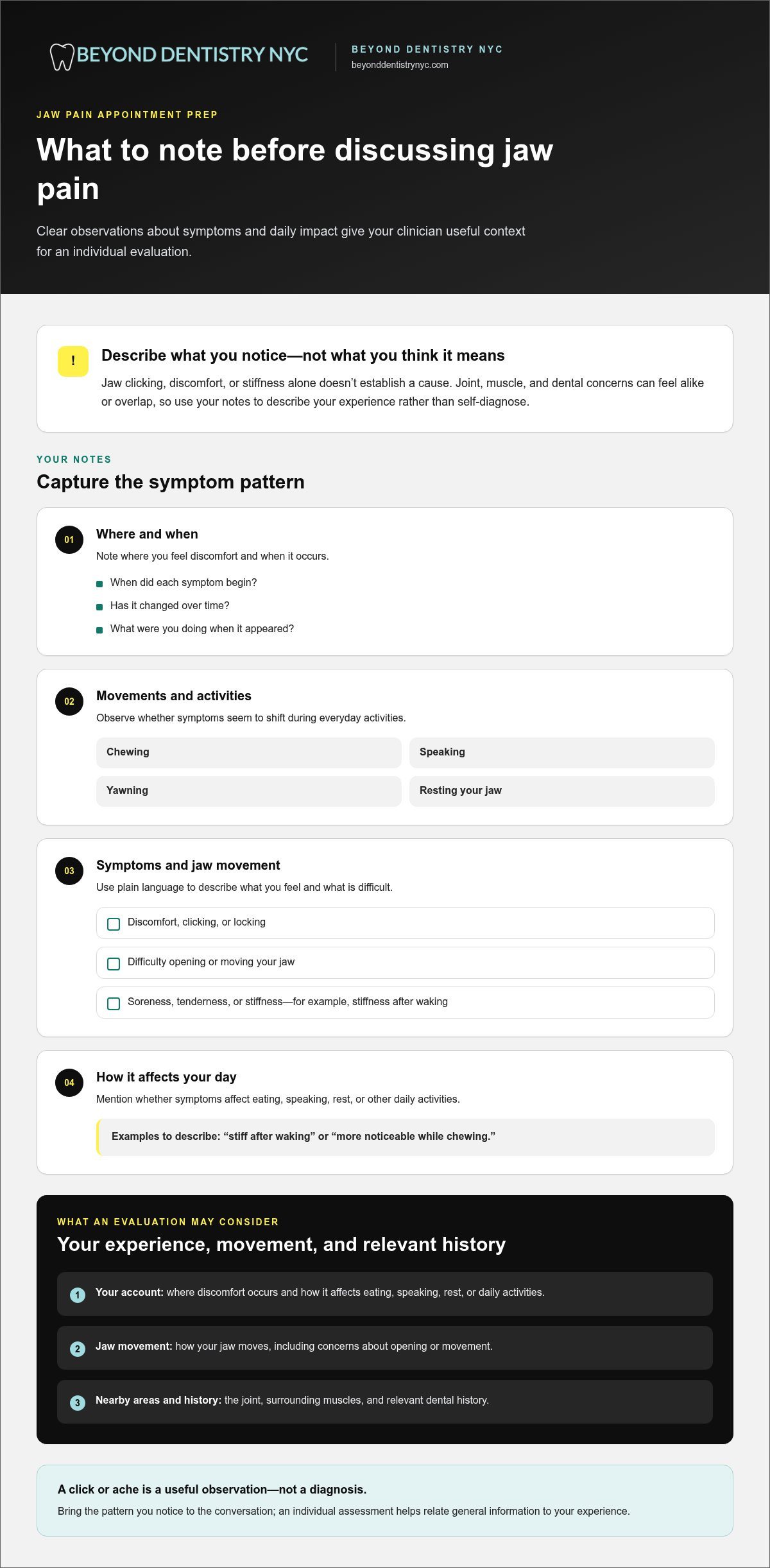
Before an appointment, jot down a few notes rather than trying to arrive with a diagnosis. Record where and when discomfort occurs, what you were doing when it appeared, and how it affects your day. A simple description such as “stiff after waking” or “more noticeable while chewing” can make the conversation more concrete and focused on what matters to you.
Jaw Pain Causes and TMD: Why Symptoms Need Individual Assessment
Similar complaints can have different explanations. One person may notice soreness mainly while chewing, while another experiences restricted opening or tenderness around the jaw. These patterns can guide a clinical conversation, but they don’t identify the cause on their own. Jaw discomfort may involve the joint, nearby muscles, dental factors, or overlapping concerns, so an assessment needs to consider more than one symptom.
“Because joint, muscle, and dental concerns can feel alike or overlap, an individualized evaluation matters more than assigning a diagnosis from one symptom.” A click doesn’t automatically mean the joint is damaged, and discomfort alone can’t predict which treatment, if any, is appropriate. A jaw pain specialist NYC patients consult can consider how symptoms behave alongside relevant history and examination findings.
How joint and muscle symptoms may differ
Joint-related concerns may be described as discomfort with jaw movement or difficulty opening comfortably. Muscle-related discomfort may feel like soreness or tenderness around the jaw, but the sensation alone can’t confirm which tissue is involved. Notice whether symptoms shift with chewing, speaking, yawning, or resting the jaw. These observations are useful context for a clinician, not a way to diagnose the source yourself.
For example, pain during a meal and stiffness after a long conversation are both worth describing, even if they seem unrelated. Include where you feel the sensation and whether it changes over time. The Mayo Clinic on TMJ Disorders provides additional background on symptoms and possible causes. A clinician can consider how your own pattern fits the broader picture.
Why a symptom label is not a diagnosis
TMD is an umbrella term for disorders involving the jaw joint and related structures, rather than the name of one single cause. Dental concerns, muscle discomfort, joint symptoms, and other sources of pain can overlap in how they feel. That overlap is one reason a label based on a click or ache alone may not explain what’s happening. Learning about TMD dental care can help you understand the care conversation without treating general information as a personal diagnosis.
Describe the experience in plain language rather than deciding in advance that it must be a joint or muscle problem. When did it start? Does movement change it? Has it affected eating, speaking, or sleep? Those details help make an appointment more productive and give the clinician a clearer starting point. Beyond Dentistry NYC offers TMD therapy as part of its functional dentistry practice. Explore TMD care in NYC as you consider a next step.
Choosing a Jaw Pain Care Path in NYC: What the Evaluation Should Clarify
A care plan should make the next step easier to understand, not leave you guessing. Jaw pain doesn’t automatically mean surgery, Botox, or a night guard is needed. The right path depends on what the evaluation finds, how symptoms affect you, your goals, and clinical judgment. A jaw pain specialist NYC patients consult should explain how those pieces inform the discussion rather than begin with a one-size-fits-all recommendation.
This comparison shows how different parts of the care conversation can serve different purposes. It isn’t a sequence every patient must follow.
| Part of the care path | What it helps clarify |
|---|---|
| Assessment | How your symptoms, history, and clinical findings fit together. |
| Conservative management | Whether a less intensive approach may be appropriate for your individual concerns. |
| Additional treatment discussion | Whether other options merit consideration based on the assessment and your goals. |
What should an individualized plan explain?
A useful conversation connects the findings to the proposed next step: what the care is intended to address, what benefits may be considered, and what limitations matter. You can also ask how progress will be reviewed and what would prompt the plan to be reconsidered. These questions help you understand the reasoning behind a recommendation without assuming that one approach fits every jaw-pain concern.
If a treatment is suggested, ask how it relates to what was observed and to the activities you want to manage more comfortably. A clear explanation should distinguish what is known from what remains uncertain, while making room for your preferences and questions. Your plan should feel like a shared clinical conversation, not a preset menu of treatments.
How TMD therapy and Botox fit into care
Beyond Dentistry NYC provides TMD therapy and Botox as part of its functional dentistry practice. Their role depends on an individual assessment and care plan. Neither should be treated as an automatic answer to clicking, discomfort, or limited movement. Discussing an option means understanding why it may be considered in your circumstances, not assuming that it is suitable or will produce a particular result.
The practice’s functional dentistry approach considers oral health in the context of dental function and the patient’s experience. That perspective can inform the conversation, while the evaluation remains specific to your symptoms and goals. Learn about TMD care at Beyond Dentistry NYC as you consider a next step and the questions you’d like your clinician to address.
Preparing for a Jaw Pain Specialist Appointment in New York City
A little preparation can make it easier to explain what you’ve been experiencing, especially if symptoms come and go or feel different from one day to the next. You don’t need to arrive with a diagnosis. A clear account of what you notice, what affects it, and what you hope to understand gives the visit a useful starting point.
Create a concise jaw-pain symptom history
Before your appointment with a jaw pain specialist NYC patients can see, make a short record of the symptoms that matter most to you. Keep it simple and descriptive. The goal is to help the clinician understand your experience, not to decide what’s causing it in advance.
- Note when it began. Record when you first noticed discomfort or movement changes, and whether they appeared suddenly or gradually.
- Describe where and when it happens. Note the location, time of day, and whether symptoms are occasional, frequent, or changing.
- Track possible triggers. Write down whether chewing, speaking, yawning, or other jaw movement seems to affect the sensation.
- Record other changes. Include clicking, locking, stiffness, or difficulty moving your jaw, without interpreting what they mean.
- Describe daily impact. Note any effects on eating, speaking, sleep, or comfort during your usual activities.
Bring relevant medical and dental history, along with a list of current concerns. Notes about previous dental treatment or changes you’ve noticed may add context to the conversation. A few brief reminders on your phone or paper are enough. You don’t need a perfect log.
Questions to ask during the visit
Choose a few questions in advance, then add others as the conversation unfolds. Ask the clinician what the evaluation suggests and which findings support that explanation. If a term feels unfamiliar, ask for it to be put in everyday language. Understanding the reasoning can help you feel more informed and involved in decisions about care.
- What did the evaluation find, and how does it relate to the symptoms I described?
- Which care options may be appropriate, and what is each intended to address?
- What are the potential benefits and limitations of the proposed approach?
- How will we review progress, and what changes should I share?
- How does this plan take my comfort, concerns, and treatment goals into account?
Tell the clinician what feels most important to you, such as eating more comfortably or understanding why movement feels restricted. A thoughtful plan should make space for those priorities and explain how they fit into the care discussion. If you’re ready to discuss your jaw concerns with Beyond Dentistry NYC, schedule a TMD care conversation.
Jaw Pain Care at Beyond Dentistry NYC: A Thoughtful Next Step
Jaw symptoms can be unsettling, especially when you’re unsure what they mean or what care might involve. Beyond Dentistry NYC provides TMD therapy and Botox as part of its functional dentistry practice. For someone looking for a jaw pain specialist NYC, the first step is a thoughtful conversation about individual symptoms and concerns, not an assumption that one treatment is right for everyone.
What patients can expect from the practice's approach
The practice is led by Dr. Morgan Herman and Dr. Michael Herman. Its functional dentistry perspective considers oral health in the context of dental function and each patient’s experience. That broader outlook can inform a care discussion, but it doesn’t replace an individual evaluation or determine a treatment plan in advance.
At Beyond Dentistry NYC, the conversation can center on what you’ve noticed, what matters most in daily life, and what you hope to understand. Share concerns about movement, discomfort, or the effect symptoms have on activities that matter to you. The aim is to make space for your questions and discuss care in relation to your situation.
TMD therapy and Botox are among the practice’s offerings, but their potential role depends on the person and the clinical discussion. A treatment name alone doesn’t explain whether an option fits a particular concern. Ask what a suggested approach is intended to address, what its limitations may be, and how the plan relates to your goals. No single option is an automatic answer for every person experiencing jaw pain.
Beyond Dentistry NYC also uses innovative technology treatments as part of its clinical approach. The team considers your individual concerns alongside the available care options. Technology is one part of the practice’s approach, while a considered care conversation focuses on your symptoms, priorities, and questions.
Take the next step toward a clearer plan
Before making decisions, explain what you’ve experienced and understand how the clinician’s recommendations connect to your concerns. You don’t need to arrive with the perfect words or a firm conclusion about what is causing your symptoms. Sharing your experience and asking questions can help make the next steps feel more understandable and personal.
If you’re ready to discuss your jaw-pain concerns, talk with Beyond Dentistry NYC about jaw pain care. A calm, individualized conversation can help you explore the evaluation and care options that make sense for your needs.
Take a Calm, Informed Step Toward Care
You don’t need to have every answer before starting a conversation about jaw discomfort. If you’re considering a jaw pain specialist NYC, focus on a clear discussion where you can share what matters to you and understand the reasoning behind possible next steps. Feeling heard is an important part of making care decisions with confidence.
Give yourself permission to ask questions, consider the information you receive, and take part in decisions at a pace that feels comfortable. The goal isn’t to rush toward a particular treatment. It’s to create a clearer path that reflects your needs and priorities.
Start a conversation about your jaw health with Beyond Dentistry NYC to discuss TMD care in New York City.
Frequently Asked Questions
Can jaw pain cause headaches or ear discomfort?
Jaw pain can occur alongside headaches or discomfort around the face or ear, but those symptoms don’t reveal the cause by themselves. You might notice ear-area discomfort while chewing or a headache after a day of frequent talking. Keep track of where symptoms occur and whether jaw movement changes them. Sharing those details with a clinician can help clarify what should be considered next.
Is jaw clicking always a sign of TMD?
No. A click by itself doesn’t confirm TMD or indicate how serious a concern may be. Mention it during an evaluation, particularly if it occurs with pain, locking, or trouble moving your jaw. The clinician can consider when the sound happens, your health history, and other findings together. Avoid judging its meaning based on the sound alone, since it may not explain your overall symptoms.
Can stress make jaw pain worse?
Stress may be relevant to some people’s jaw symptoms, but it doesn’t explain every case or establish a diagnosis. You might notice discomfort during a demanding period or become aware of clenching while concentrating. Record these observations without assuming stress is the only cause, then share them with your clinician. A jaw pain specialist NYC patients consult can consider that context alongside your symptoms and broader history.
What should I eat when my jaw hurts?
If chewing feels uncomfortable, choose foods that are manageable for you and avoid forcing movements that increase discomfort. You might temporarily prefer a meal that requires less chewing, but individual needs differ. This is a comfort measure, not a treatment plan. Note which foods or jaw movements affect you, and discuss pain that persists or limits your usual eating with a clinician.
Can a dentist evaluate jaw pain?
Yes. Dental clinicians can evaluate concerns involving the teeth, jaw, and related structures, and practices offering TMD therapy may discuss jaw-pain care. For New Yorkers considering a jaw pain specialist NYC, describe your symptoms when arranging an evaluation and ask what it will address. The appropriate assessment depends on your experience and clinical findings, so don’t assume every complaint has the same source or calls for the same care.
When should jaw pain be treated as urgent?
Seek urgent medical attention if jaw pain occurs with severe or rapidly worsening symptoms, a significant injury, difficulty breathing or swallowing, or other alarming changes. When jaw trauma is caused by a motor vehicle collision or personal injury incident, legal resources like Yakov Mushiyev & Associates can provide guidance on managing accident-related claims alongside your medical recovery. Ongoing or recurring discomfort without these signs still deserves appropriate evaluation, but online information can’t determine the cause. If you’re uncertain about the urgency of your symptoms, contact an appropriate urgent medical service for guidance rather than waiting for a routine dental discussion.


