

What if the clue to your recurring temple or morning headache isn’t only stress, but the way your jaw is working? If you’re looking for headache from jaw clenching relief nyc, start by noticing when symptoms appear and whether jaw tightness, facial soreness, or tooth wear occur alongside them.
It’s understandable to want a clear answer when headaches keep returning. Clenching can contribute to head and facial discomfort, but headaches can also have other causes, including migraine. A pattern may offer useful clues, but it can’t confirm a diagnosis on its own.
This article explains how jaw clenching may relate to headaches, which gentle comfort measures may help, and when a personalized evaluation for temporomandibular disorder (TMD) could be appropriate. You’ll also learn how TMD-focused care in New York City can help explore possible contributors and discuss options suited to your needs, without assuming every headache starts in the jaw.
Key Takeaways
- Notice whether headaches appear with jaw tightness, facial soreness, or signs of nighttime clenching. These patterns don’t diagnose the cause.
- Understand the difference between bruxism, the jaw joint, and temporomandibular disorders (TMD). Clenching may contribute to discomfort, but it doesn’t prove what caused a headache.
- Explore headache from jaw clenching relief nyc options, from gentle comfort measures to a personalized dental evaluation. A nightguard has specific limits and isn’t a guaranteed headache treatment.
- Keep a simple record of headache timing, jaw symptoms, sleep context, and possible triggers to make an evaluation more useful.
- Learn how TMD therapy at Beyond Dentistry NYC may fit into an individualized care discussion. Botox is also offered and can be considered clinically, without promising a particular outcome.
Could Jaw Clenching Be Behind Your Headache? Signs to Notice in NYC
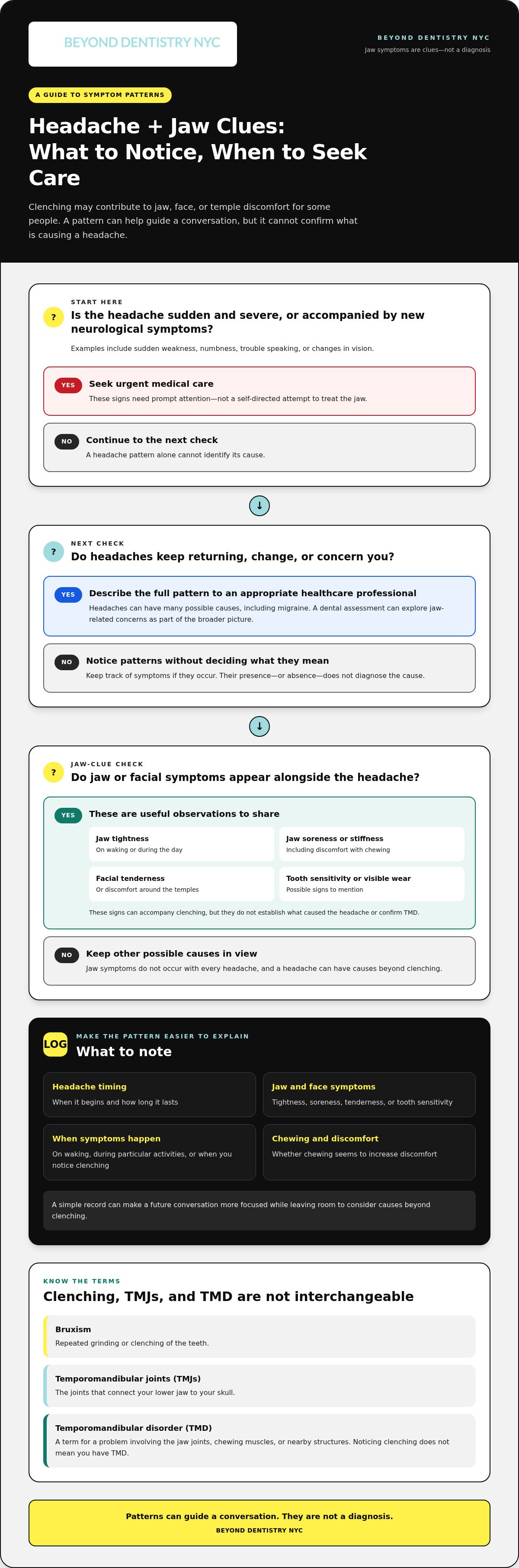
Recurring headaches can be frustrating, especially when they arrive in the morning or settle around your temples without an obvious cause. Jaw clenching may be one contributor, but the headache pattern alone can’t identify what’s causing the pain. Noting what happens alongside the headache can help you decide whether to discuss jaw symptoms with a dental professional in New York City.
A simple definition: Bruxism is repeated grinding or clenching of the teeth. The temporomandibular joints, or TMJs, connect your lower jaw to your skull. Temporomandibular disorder (TMD) is a term for a problem involving the jaw joints, chewing muscles, or nearby structures. These terms describe different things: noticing clenching doesn’t mean you have TMD.
What symptoms can accompany jaw clenching?
Some people clench or grind while asleep and may not realize it. Others notice their jaw tightening during the day, such as while concentrating or feeling tense. Possible accompanying signs include jaw soreness or stiffness, facial tenderness, tooth sensitivity, or visible tooth wear. These symptoms don’t occur in everyone with headaches, and their presence doesn’t establish the cause.
Look for patterns rather than relying on a single clue. Note whether temple discomfort or jaw tightness is present on waking, whether chewing seems to increase discomfort, and whether headaches occur on days when you catch yourself clenching. Morning timing, tooth wear, and jaw tightness are useful observations to share, not a diagnosis. The overview of Temporomandibular Joint Dysfunction (TMD) explains the broader term and related symptoms.
When might a headache need broader medical attention?
Headaches have many possible causes, and a dentist can’t determine every cause from jaw or tooth symptoms alone. Don’t assume temple pain means clenching is responsible, or that a jaw symptom confirms TMD. If headaches keep returning, change, or concern you, describe the full pattern to an appropriate healthcare professional. A dental assessment can help explore jaw-related concerns as part of that broader picture.
Seek urgent medical care for a sudden, severe headache or one accompanied by new neurological symptoms, such as sudden weakness, numbness, trouble speaking, or changes in vision. These signs need prompt attention, not a self-directed attempt to treat the jaw. If you’re looking for headache from jaw clenching relief nyc, start by observing symptoms without deciding in advance what they mean.
- Record when the headache begins and how long it lasts.
- Note jaw tightness, facial soreness, tooth sensitivity, or discomfort with chewing.
- Include whether symptoms appear on waking or during particular activities.
These details can make a future conversation more focused while leaving room to consider causes beyond clenching.
How Clenching Can Strain the Jaw and Contribute to Headaches
The jaw is built for frequent movement. Muscles help you chew and speak, while the temporomandibular joints connect your lower jaw to your skull. Repeated clenching adds muscle activity beyond those everyday movements. For some people, this may contribute to tired, tender jaw muscles or tension around the face and temples. It’s a possible connection, not proof that clenching caused a particular headache.
What happens when jaw muscles stay tense?
Holding your shoulders raised for a long time can leave the area feeling tired or tight—a reason many people exploring head and neck tension look to providers like Enrich Chiropractic for targeted headache relief. Repeated jaw effort may likewise leave some people with soreness or facial discomfort, particularly if they clench without noticing. Sensations around the jaw, temples, or face can overlap, but muscle tension doesn’t explain every headache or point to one specific diagnosis.
Bruxism is repeated teeth grinding or jaw clenching that may place extra demand on the jaw muscles and contribute to discomfort for some people. The word describes a behavior, not a complete explanation for pain. The Mayo Clinic’s overview of bruxism symptoms and causes offers additional general context, but it can’t determine what’s behind an individual headache.
Clenching may happen briefly and repeatedly, or continue for stretches without you noticing. Consider a possible jaw contribution as one part of the picture, rather than a settled cause. A clinician can assess jaw concerns, while other headache symptoms may call for a broader medical evaluation.
How can clenching overlap with migraine or other headaches?
Jaw discomfort and headache can occur together, but that overlap doesn’t establish which came first or whether one caused the other. Headache disorders, including migraine, can also coexist with jaw symptoms. A clinician considers headache features and your overall history when assessing possible contributors. Jaw tightness alone can’t confirm migraine, TMD, or another condition.
This distinction matters if you’re trying to find headache from jaw clenching relief nyc. Focusing only on the jaw could miss another contributor, while dismissing jaw symptoms may leave a relevant pattern unexplored. Note whether the headache and jaw discomfort begin together, whether one occurs without the other, and how symptoms change during activities such as chewing. These observations can guide a more informed conversation, but they aren’t a self-diagnosis.
If jaw symptoms are part of your concern, a calm, individualized TMD care discussion can help explore whether dental evaluation is appropriate. The goal is to consider the pattern carefully, rather than assume every headache starts in the jaw.
Jaw-Clenching Headache Relief: Comparing Self-Care and Clinical Options
There isn’t one best first step for everyone. If you notice jaw tightening during the day, gentle habit awareness may be a reasonable starting point. If headaches recur with jaw discomfort, a dental evaluation can help explore whether TMD-related concerns deserve attention. Comfort measures support day-to-day wellbeing; clinical care can assess symptoms and help shape a plan.
What can you try when tension starts?
When you notice your teeth pressed together, pause and let your jaw rest rather than forcing it into a new position. You might temporarily choose softer foods or skip gum if chewing seems to aggravate discomfort. A calming routine or a warm or cool compress may feel comfortable to some people. Stop any measure that worsens symptoms. These steps may support comfort, but they can’t identify the cause of a headache or guarantee relief.
A nightguard has a different purpose. Depending on its design and clinical recommendation, it may help protect teeth from grinding contact. It shouldn’t be described as a guaranteed way to stop clenching or prevent headaches. A dental professional can assess whether an appliance makes sense for your teeth and symptoms. Don’t rely on a guard as a substitute for evaluating persistent or changing headaches.
When might professional TMD care be worth discussing?
Recurring headaches alongside jaw soreness, tightness, or chewing discomfort may be a reason to discuss an individualized evaluation. The conversation can consider your symptom history and clinical findings rather than presume clenching is the sole cause. TMD therapy may be part of care planning when appropriate. Beyond Dentistry NYC also offers Botox, which may be discussed clinically. Suitability and expected effects depend on individual assessment, so don’t assume a particular headache outcome. For readers in other regions exploring non-surgical aesthetic treatments for facial muscle relaxation, medical spas such as Davam Aesthetics offer dedicated aesthetic consultations.
Self-care may support comfort; clinical evaluation helps assess possible contributors and shape an individualized treatment plan.
| Option | Purpose | Limitations | Clinician involvement |
|---|---|---|---|
| Habit awareness | Notice and gently interrupt daytime clenching. | May not address sleep clenching or other headache causes. | Not usually needed to notice the habit; seek guidance if symptoms persist. |
| Comfort measures | Support ease during everyday activities. | Don’t diagnose or guarantee headache relief. | Ask for guidance if a measure aggravates symptoms. |
| Nightguard | May protect teeth from grinding contact. | Doesn’t guarantee clenching or headaches will stop. | A dental professional can assess whether one is appropriate. |
| TMD evaluation and care discussion | Explore jaw-related symptoms and possible next steps. | Care choices depend on individual findings and history. | Requires personalized clinical assessment. |
If you’re considering headache from jaw clenching relief nyc, match the next step to your concern: notice habits, use only comfortable measures, and seek an assessment when symptoms keep returning or affect jaw function.
A Practical NYC Plan: Track Symptoms and Prepare for an Evaluation
A clear record can make a dental conversation more focused, especially when headaches and jaw symptoms don’t always appear together. You don’t need to identify the cause before seeking care. Describe what you notice and how it affects you, so a clinician can consider whether a dental or TMD assessment is appropriate.
What should you track before an appointment?
Keep brief notes on your phone or in a notebook. A few consistent details are more useful than trying to record every sensation.
- Observe the headache. Note when it starts, how long it lasts, where you feel it, and whether it changes during the day.
- Record jaw symptoms. Note whether tightness, soreness, clicking, or discomfort with chewing or opening your mouth occurs with the headache or separately.
- Add context. Include sleep quality or interruptions, stressful moments, long periods of concentration, and habits such as chewing gum. These details may help reveal a pattern, but they don’t prove what caused symptoms.
- Prepare your questions. Write down what concerns you most, which daily activities are difficult, and what you’d like clarified about possible next steps.
Be specific about impact. For example, note if jaw discomfort makes breakfast harder or a headache interrupts work. Explaining how often a concern affects eating, speaking, sleep, or concentration keeps the discussion grounded in your experience.
What can an NYC TMD evaluation help clarify?
An evaluation offers a chance to review your symptom history and discuss whether dental or TMD assessment is relevant. Bring your notes, mention changes you’ve noticed, and share what you’ve already tried, including anything that made symptoms worse. You can also ask what the findings suggest, what other causes may need consideration, and how a proposed next step relates to your concerns.
The conversation is individualized. Symptoms alone can’t guarantee a particular diagnosis, and an evaluation doesn’t promise a specific outcome. It can help organize the information and consider an appropriate path forward. For broader treatment context, explore this TMD dental care guide. The practice’s functional dentistry overview also describes its broader care philosophy.
If recurring headaches and jaw discomfort are affecting your routine, schedule a TMD care discussion with Beyond Dentistry NYC. A concise symptom record can help you explain what’s happening and make the conversation more useful as you explore headache from jaw clenching relief nyc.
Personalized Jaw-Clenching Headache Care at Beyond Dentistry NYC
Recurring headaches can be difficult to make sense of, particularly when jaw discomfort is part of the picture. Beyond Dentistry NYC provides TMD therapy for appropriate patients. A clinical conversation can help clarify your concerns and consider whether jaw-focused care may be relevant, without assuming every headache comes from clenching.
How does individualized TMD care fit into the conversation?
Dr. Morgan Herman and Dr. Michael Herman lead the practice. A discussion about TMD care can take into account what you’ve noticed, what affects your daily comfort, and what questions you want answered. If a dental concern seems relevant, the clinician can talk through possible approaches in light of your individual situation.
Similar symptoms don’t necessarily call for the same plan. Explain whether discomfort interferes with eating, speaking, or concentrating, and whether jaw symptoms and headaches seem to occur at different times. Sharing what you hope to understand helps keep the conversation centered on your needs, without presuming a diagnosis or a particular treatment.
Functional dentistry is part of the practice’s broader approach to care. It provides a way to discuss oral health and jaw concerns within a considered, patient-centered conversation. One explanation or treatment won’t fit every person. The focus is on listening, reviewing relevant concerns, and discussing next steps that make sense for the individual.
What is a reassuring next step for New York City patients?
If headaches keep returning alongside jaw symptoms, you don’t need to arrive with a diagnosis or a perfect record of every episode. Bring the observations you have and share what feels most disruptive. You can ask what an evaluation may clarify, whether TMD therapy may be appropriate, and what other considerations might matter to your care discussion.
Beyond Dentistry NYC also offers Botox, which may be discussed as part of an individualized clinical conversation. Whether it is appropriate depends on clinical judgment and your circumstances. It shouldn’t be treated as a guaranteed way to stop clenching or relieve headaches, and no particular result can be promised.
If you’re exploring headache from jaw clenching relief nyc, a thoughtful discussion can help you understand possible jaw-related concerns. If you’re in New York City and recurring symptoms affect your comfort, contact Beyond Dentistry NYC to discuss TMD care. Start with what you’re experiencing and what you’d like help understanding.
Take the Next Step Toward More Comfortable Days
You don’t need a clear explanation for every headache before you seek a conversation. Sharing what you’ve noticed and what you’d like to understand can bring your concerns into focus and help you consider whether jaw-related care belongs in your next steps.
If you’re exploring headache from jaw clenching relief nyc, Beyond Dentistry NYC offers a place to discuss recurring headaches alongside jaw symptoms. The practice’s TMD care can be considered in light of your individual concerns, without assuming one cause or promising a particular result.
Discuss your jaw and headache concerns with Beyond Dentistry NYC. A calm, informed conversation is a useful place to begin.
Frequently Asked Questions
Is my headache from jaw clenching?
Jaw clenching could be one contributor, but symptoms alone can’t confirm that it’s responsible. Notice whether headaches tend to follow periods of jaw tightness or occur after waking, and whether they also happen when your jaw feels comfortable. A headache that occurs independently of jaw symptoms may call for broader consideration. If headaches recur, share the pattern with an appropriate clinician rather than relying on one clue.
Can jaw clenching cause a headache without jaw pain?
It’s possible to have a headache or facial tension without noticeable jaw pain, but that doesn’t establish clenching as the cause. Symptoms vary, and other headache conditions may overlap. Notice clues such as waking with tooth sensitivity or catching yourself tightening your jaw during focused work. A concise note about these details can help a clinician understand your experience, even if your jaw doesn’t feel sore.
Can stress make jaw-clenching headaches worse?
Stress may coincide with more jaw tightening for some people, but it isn’t the only possible influence and can’t explain every headache. Rather than assume a cause, note whether symptoms seem to change during demanding periods, after disrupted sleep, or alongside particular daily habits. If headaches recur or interfere with work, rest, or routine activities, discuss the pattern with a clinician who can consider the full picture.
Does jaw clenching cause migraine?
Jaw clenching and migraine can occur together, but their overlap doesn’t prove that clenching directly causes migraine. A clinician can assess headache features, your history, and any jaw symptoms to consider whether more than one factor may be involved. Don’t try to identify migraine from jaw discomfort alone. Seek urgent medical care if a headache is sudden and severe or comes with new neurological changes.
How long does relief from jaw-clenching headaches take?
There isn’t one reliable timeline for everyone. The reason for the headache, the symptoms involved, and how a person responds to care can differ. If you’re trying an approach, note whether symptoms change and stop anything that makes them worse. Don’t rely on a promised timeframe. If headaches continue, return, or disrupt daily activities, seek individualized guidance to review what’s happening and discuss appropriate next steps.
When should I seek urgent care for a headache?
Seek urgent medical attention for a sudden, unusually severe headache, new neurological symptoms, or a headache following a significant injury. Don’t assume these symptoms are caused by clenching. If headaches recur with jaw discomfort but no urgent warning signs, arrange an appropriate clinical evaluation and describe how symptoms affect your routine. For New York City patients, a dental discussion may help address jaw concerns as part of that broader assessment.


