

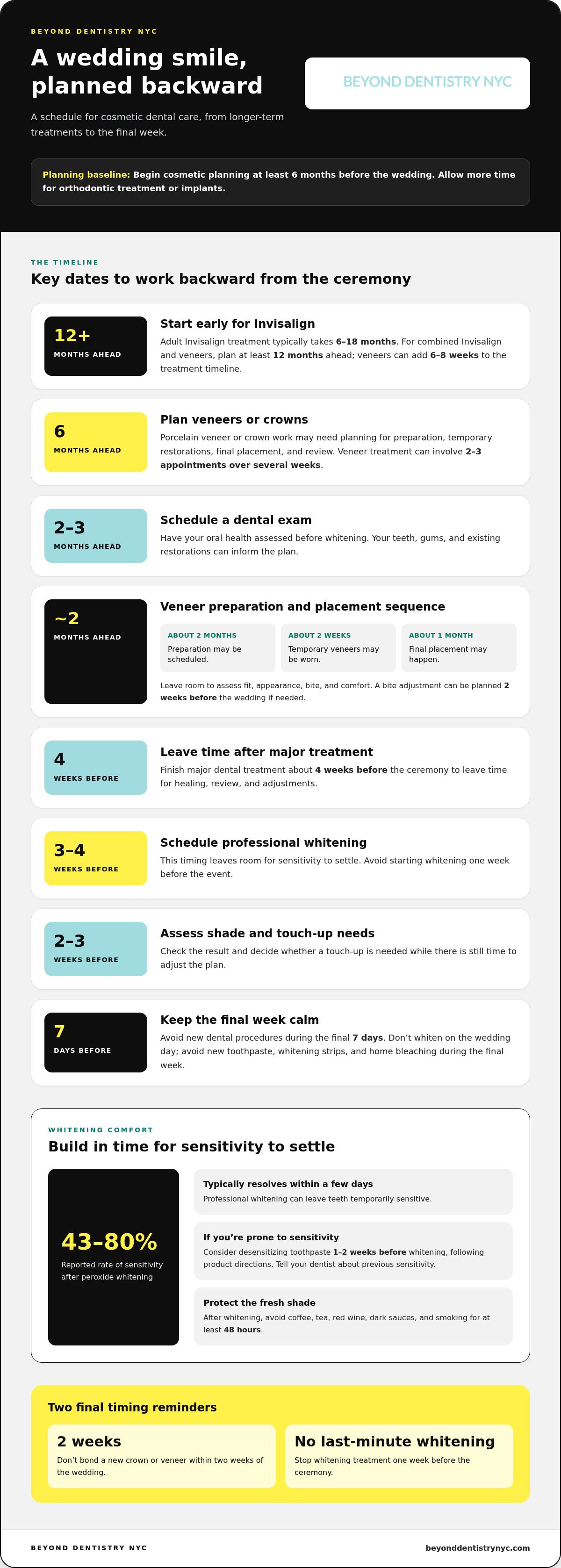
The safest pre-wedding dental work timeline begins at least six months before the ceremony, with structural treatments planned earlier. If your goals include Invisalign or dental implants, start planning at least 12 months ahead; adult Invisalign treatment typically takes 6 to 18 months, and implants need time before the final crown is placed.
It’s easy to focus on the visible finishing touches, especially once the wedding date is set. A calm plan leaves time to assess your oral health, choose appropriate treatment, and account for sensitivity or small adjustments without adding pressure close to the day.
This guide explains when to schedule an exam, aligners, veneers, whitening, and other cosmetic options, including what may be realistic with only a few months to go. You’ll also learn how to manage whitening sensitivity and time touch-ups so your smile feels comfortable and looks polished in photos.
Key Takeaways
- Begin cosmetic planning at least six months before the wedding, and allow more time if your goals include orthodontic treatment or implants.
- Plan veneer treatment across multiple appointments, leaving room for temporary restorations, final placement, and any bite adjustments.
- Schedule a dental exam before whitening so your oral health and existing restorations can inform the plan.
- Give whitening time for sensitivity to settle, and avoid leaving first-time treatments or unplanned touch-ups until the final days.
- With two months remaining, focus on options that fit the calendar and leave time for comfort and small refinements.
1. How Far in Advance Should You Schedule Cosmetic Dental Procedures Before Your Wedding?
Start cosmetic planning at least six months before the wedding. This allows time to assess your smile, plan appointments, and complete treatment before the photographs. Porcelain veneers or crowns may require planning for tooth preparation, temporary restorations, and final placement. If straightening is also part of your plan, start earlier: the pre-wedding dental work timeline can extend beyond a year.
For porcelain veneers, begin about six months ahead. Treatment can involve 2-3 appointments over several weeks. A typical sequence schedules preparation about two months before the wedding, followed by temporary veneers worn for about two weeks. Final placement may happen one month before the event, leaving time to assess fit and appearance. A bite adjustment can be planned two weeks before the wedding if needed.
Keep temporary restorations and your photo schedule in mind. Temporary veneers protect prepared teeth while the final restorations are made, and let you experience their shape and feel. Leave time between appointments to notice anything affecting your bite or comfort. Veneers are permanent and require enamel removal, so begin with an assessment rather than irreversible tooth preparation.
Crowns and gum contouring also need time for recovery and review. Plan porcelain veneer or crown work about six months before the wedding. Gum tissue may need a few weeks to heal and settle after contouring. Avoid major procedures close to the ceremony: finish major dental treatment about four weeks beforehand, and don’t bond a new crown or veneer within two weeks.
How long before a wedding should you get teeth whitening? Schedule a dental exam about 2 to 3 months before the wedding, then plan professional whitening roughly 3 to 4 weeks beforehand. That timing leaves room to address sensitivity before the ceremony, rather than making whitening a last-minute procedure.
How long do Invisalign or braces take to improve a smile before a wedding? Adult Invisalign treatment typically takes 6 to 18 months, so start well in advance. For combined Invisalign and veneers, plan at least 12 months ahead; veneers can add 6 to 8 weeks to the treatment timeline.
What dental procedures should be avoided right before a wedding? Avoid new dental procedures during the final 7 days, and don’t begin whitening one week before the event. Leave major treatment for earlier in the schedule, when there’s time for healing, bite adjustments, and comfort to settle.
2. Managing sensitivity and timing touch-ups
Professional whitening can leave teeth temporarily sensitive. The discomfort typically resolves within a few days after treatment. Peroxide-related sensitivity occurs when whitening ingredients reach dentin beneath enamel. The reported rate of sensitivity after peroxide whitening ranges from 43% to 80%. That possibility makes timing and preparation important, especially if hot coffee or cold drinks already trigger discomfort.
If you’re prone to sensitivity, start using desensitizing toothpaste a week or two before whitening. Follow the product directions and brush gently. Changing several oral-care products at once makes it harder to tell what helps. Tell your dentist about previous sensitivity before your appointment. Your history, the whitening approach, and the condition of your teeth all inform a comfortable plan.
Assess the shade and decide whether a touch-up is needed 2 to 3 weeks before the wedding. That gives time to adjust the plan without leaving a new whitening session until the final days. Stop whitening treatment one week before the ceremony, and don’t whiten on the wedding day. During the final week, limit any whitening to dentist-recommended touch-ups; avoid new toothpaste, whitening strips, and home bleaching.
After whitening, avoid coffee, tea, red wine, dark sauces, and smoking for at least 48 hours to reduce staining. These choices matter most just after treatment, when the fresh shade needs protection. If you use prescribed take-home trays, follow the dentist’s schedule rather than adding sessions for a last-minute boost. A brief professional touch-up may be considered a few days before the wedding, but not a new at-home experiment.
What is the recovery time after dental bonding or cosmetic dental work? Recovery depends on the procedure and the area treated; tooth sensitivity, gum response, and bite comfort shape what feels normal afterward. Dental bonding can take 30-60 minutes per tooth in a single visit, but appointment length doesn’t establish recovery time. Plan enough room for follow-up or adjustment instead of placing treatment immediately before photographs.
Can dental work cause swelling, bruising, or sensitivity before a wedding? Sensitivity can follow professional whitening and typically settles within a few days; swelling or bruising depends on the procedure and tissues involved. Schedule treatment with recovery in mind, and report discomfort that affects eating or your bite. A functional dentistry assessment can consider comfort and oral function alongside appearance.
3. Realistic dental options when the wedding is two months away
With two months left, use a consultation to distinguish achievable refinements from longer treatment. Bring a close-up smile photo and identify your main concern: tooth shade, a small chip, or an uneven edge. The dentist can assess your teeth and gums, existing restorations, and desired changes before recommending a cosmetic procedure. This helps keep the plan focused on changes that can be completed and reviewed before the ceremony.
Whitening may fit this window if an examination finds your teeth suitable for treatment. A study cited by the Journal of the American Dental Association reports professional in-office whitening can lighten teeth by an average of 6 to 12 shades in one visit. Results vary with starting shade and the cause of discoloration. Whitening changes natural tooth color, not the shade of crowns, veneers, or fillings, so existing restorations can look different beside newly whitened teeth.
For mild discoloration, over-the-counter whitening strips may be an option. More pronounced or uneven discoloration calls for a tailored discussion. Schedule the main whitening session early enough to notice sensitivity and assess the shade. Your dentist can then decide whether a modest touch-up fits the plan. Don’t add extra sessions just to chase a brighter, camera-ready result, as sensitivity can affect eating and comfort.
Small cosmetic concerns may have simpler solutions. Dental bonding can refine a minor chip or edge, while a consultation can determine whether the tooth’s shape, position, and bite suit that approach. Focus on the teeth visible in your photos, but consider how the change will look across your smile. If several teeth or a larger shape change are involved, the dentist can assess whether the work fits your remaining schedule.
Two months is generally too late to begin Invisalign for meaningful straightening before the wedding, as clear-aligner treatment is advised to start at least six months ahead. Crowns, veneers, and implants also require more planning than a quick cosmetic touch-up. Structural care should support long-term function, not just the wedding date. If you need a nightguard or retainer, include delivery in the schedule. It should arrive two weeks before the wedding so you have time to check comfort.
Use the remaining weeks deliberately: book an examination, choose one priority, and leave time for review before the event. The most realistic short-term changes usually address tooth shade or a small cosmetic detail, not major tooth movement or structural reconstruction. A clear treatment sequence keeps your wedding photos in view while protecting comfort and oral health.
4. When to schedule a dental exam
Make a dental exam an early planning step, before whitening or other cosmetic treatment. The American Dental Association recommends an examination before starting any whitening treatment. It gives the dentist a chance to review your oral health and choose a suitable approach before you begin a session, use home trays, or try strips.
Ask the dentist to review factors that could change your treatment sequence: gum health, cavities, bite forces, grinding history, and old restorations. For example, a cavity or irritated gums may need attention before whitening. A crown, veneer, or filling matters too, because whitening brightens natural teeth, not restoration material. Reviewing these details first helps avoid an uneven shade beside existing dental work.
How far in advance of a wedding should you schedule a dental cleaning? Book it as part of your early wedding dental exam, before whitening or restorative treatment. Routine dental cleanings every 6 months help prevent stain build-up between whitening treatments, while the exam identifies issues that could affect the cosmetic schedule.
If you’re planning to whiten your teeth, schedule a dental check-up one month before whitening begins. Discuss previous sensitivity, your current toothpaste, and whether professional treatment or home trays suit your teeth. The dentist can also compare your planned shade with crowns, veneers, or fillings, which won’t change color with whitening.
Bring a list of your current products and habits to the appointment. Include whitening strips, home trays, desensitizing toothpaste, and any past reaction to a whitening session. Mention coffee, tea, or other staining drinks if you want to discuss how daily habits affect your shade. These details help the dentist distinguish surface staining from discoloration that may need another approach.
Share any history of grinding or an uneven-feeling bite. Bite forces and grinding can influence cosmetic planning, especially if you’re considering veneers or other restorations. Mention any crown or filling that feels different when you chew. This context helps the dentist assess treatment that may change tooth shape or shade.
Use the exam to agree on the order of care, not just the final appearance you want. First, address oral health findings. Next, settle on your cosmetic goal, then choose whitening or another treatment. If a cleaning, cavity care, or restoration needs to come first, schedule it before whitening. This sequence creates a practical calendar and reduces last-minute changes before wedding photographs.
5. Starting structural dental work well before the wedding
A wedding date is a deadline, but structural dental care follows biological healing. Dental implants usually require 3 to 6 months for osseointegration before placement of the final crown. Osseointegration is the process in which the implant integrates with the surrounding bone. That healing interval alone makes an implant a poor last-minute cosmetic project.
Start implant planning well ahead of the wedding to allow time for assessment, treatment, and healing. That lead time creates room to assess the tooth, plan treatment, allow healing, and place the final crown before the event. The implant’s healing period is only one part of the calendar. The sequence also depends on when the tooth is ready for treatment and when the final restoration can be placed.
Think in stages rather than focusing on a single appointment date. First, arrange an examination to review your teeth, gums, bite, and existing restorations. Next, establish the implant treatment sequence and how it fits with your wedding date. Then leave a buffer after the final crown for a bite review and any needed adjustment. A crown that feels high when you chew deserves attention before wedding photos, not in the final days.
Structural care can affect cosmetic choices too. A crown, veneer, or filling won’t change shade during teeth whitening, so the order of restoration and whitening matters. For example, whitening natural teeth after a crown is placed may leave a shade difference. Decide which restorations you need before choosing a target shade, especially if a brighter smile is a priority.
Composite bonding is another treatment to schedule with room for review. The timeline recommends starting bonding about 3 months before the wedding. That gives space to assess the bonded area and make any refinement before the ceremony. A small chip may suit a focused cosmetic change, while a tooth requiring structural care needs a plan based on function, not just appearance.
Daily habits matter after whitening, too. Coffee, tea, dark sauces, and red wine can stain teeth, so plan how you’ll protect the result. Don’t use a last-minute whitening session to compensate for unfinished structural work. Whitening takes about 1-2 hours for a typical appointment, but that minute-by-minute duration doesn’t replace the healing and review time required by an implant or crown.
For complex care, map the wedding date backward from the final restoration, then schedule each earlier step. Plan functional dental care around healing, bite comfort, and the smile changes you want.
Beyond Dentistry NYC: Smile Gallery Restorations
Beyond Dentistry NYC offers Smile Gallery Restorations for people planning a wedding smile refresh. If you’re considering veneers or a broader smile makeover, the practice can help connect your cosmetic goals with a considered treatment plan. Its innovative technology treatments and functional dentistry approach keep both appearance and oral function in view.
Turn to Beyond Dentistry NYC when you’re ready to discuss how your goals, existing restorations, and wedding date fit together. A conversation can help you turn general timing guidance into a plan tailored to your smile.
Visit Beyond Dentistry NYC to take the next step.
Make your next step a clear one
Your wedding smile should feel like you, not like a rushed checklist. Use the pre-wedding dental work timeline to guide your planning, then choose changes that support your comfort, oral health, and confidence. Bring your priorities into one conversation: what you hope to change, what already feels right, and how your wedding date shapes the sequence.
Beyond Dentistry NYC can help you consider your smile goals alongside functional needs, with care that includes Smile Gallery Restorations and innovative technology treatments. If veneers, implants, or another restorative concern are part of your plans, discussing them together can help create a more coherent next-step plan.
Share your goals and explore your options with Beyond Dentistry NYC. A considered plan can make the process feel more manageable, so you can focus on enjoying the celebration and smiling comfortably in every photograph.
Frequently Asked Questions
How Far in Advance Should You Schedule Cosmetic Dental Procedures Before Your Wedding?
Begin cosmetic planning at least six months before the wedding, and earlier for treatment involving tooth movement or implants. This gives your dentist time to consider your goals, oral health, and the sequence of procedures. For example, if you want a brighter smile and have visible crowns, discuss the shade plan before whitening. Existing restorations won’t whiten like natural teeth, so treatment order can affect the final look.
When Should You Plan for Veneers and Bonding in Your Bridal Smile Makeover?
Plan veneers and bonding at least two to three months before the wedding. For a more involved makeover, allow extra time for appointments, temporary restorations, and review. Bring specific examples of the changes you want, such as refining a chipped edge or adjusting the shape of several visible teeth. This helps focus the consultation on the work involved and whether it fits your desired smile.
Are Cosmetic Dental Procedures Safe and Minimally Invasive for Brides?
The safety and extent of tooth alteration depend on the procedure and your oral health. A dental exam helps identify factors such as gum health, cavities, bite forces, grinding, and existing restorations before treatment. Veneers are a significant commitment, so discuss the expected changes to your teeth before choosing them. Discuss expected changes to your teeth and gums before choosing a cosmetic option.
Can I get veneers and Invisalign for the same wedding?
Yes, the treatments can be planned together, but the schedule needs to start well ahead. Adult Invisalign treatment typically takes 6 to 18 months, and veneers may add 6 to 8 weeks to a combined plan. The sequence matters: tooth movement can change the positions and spacing that veneers are designed to address. Discuss both goals at the outset, rather than planning veneers as a last-minute addition.
How long before a wedding should you get veneers or crowns?
Begin planning porcelain veneers or crowns about six months before the wedding. This allows time for preparation, temporary restorations where needed, final placement, and a comfort review. A restoration can feel different when you bite, so schedule it early enough to address the fit before wedding events. In New York, factor travel and event commitments into your appointment schedule.
When should you schedule a dental consultation before your wedding?
Schedule a consultation at least six months ahead if you’re considering cosmetic changes, and earlier for orthodontic movement or implant treatment. If whitening is your only goal, arrange a dental examination first; a check-up is recommended one month before whitening begins. Bring your wedding date, a list of priorities, and details about existing crowns, veneers, or fillings to help shape a practical sequence.


