

A functional dentist in NYC considers how dental materials and treatment decisions fit your oral health and overall well-being. Some holistic dentists avoid mercury-containing amalgam fillings and use alternative materials, weighing each choice against the patient’s needs. Biocompatibility is one consideration in an individualized plan, not a guarantee that a particular material is right for everyone.
It’s reasonable to want to know what goes into a filling and how a dental decision may relate to your health beyond your teeth. This guide explains how material choices, whole-health evaluation, and personalized planning shape functional dental care.
You’ll also learn why a dentist’s education and experience matter when discussing treatment options. In New York, holistic dentistry doesn’t require a separate degree beyond a DDS or DMD, so understanding a dentist’s background can clarify their approach. The sections ahead offer a practical starting point for considering care that reflects your priorities.
Key Takeaways
- Ask how a proposed dental material fits your oral health needs; some holistic dentists avoid mercury-containing amalgam fillings and use alternatives.
- Compare treatment options by their purpose, material, and fit with your individual priorities rather than assuming one approach suits everyone.
- Consider how dental conditions and treatment may relate to overall well-being, including jaw alignment and temporomandibular joint concerns.
- Look at a dentist’s education, additional training, and clinical experience to understand the perspective behind their recommendations.
- Explore how restorative options such as Smile Gallery Restorations, veneers, and implants may address your dental goals.
Biocompatible dental materials
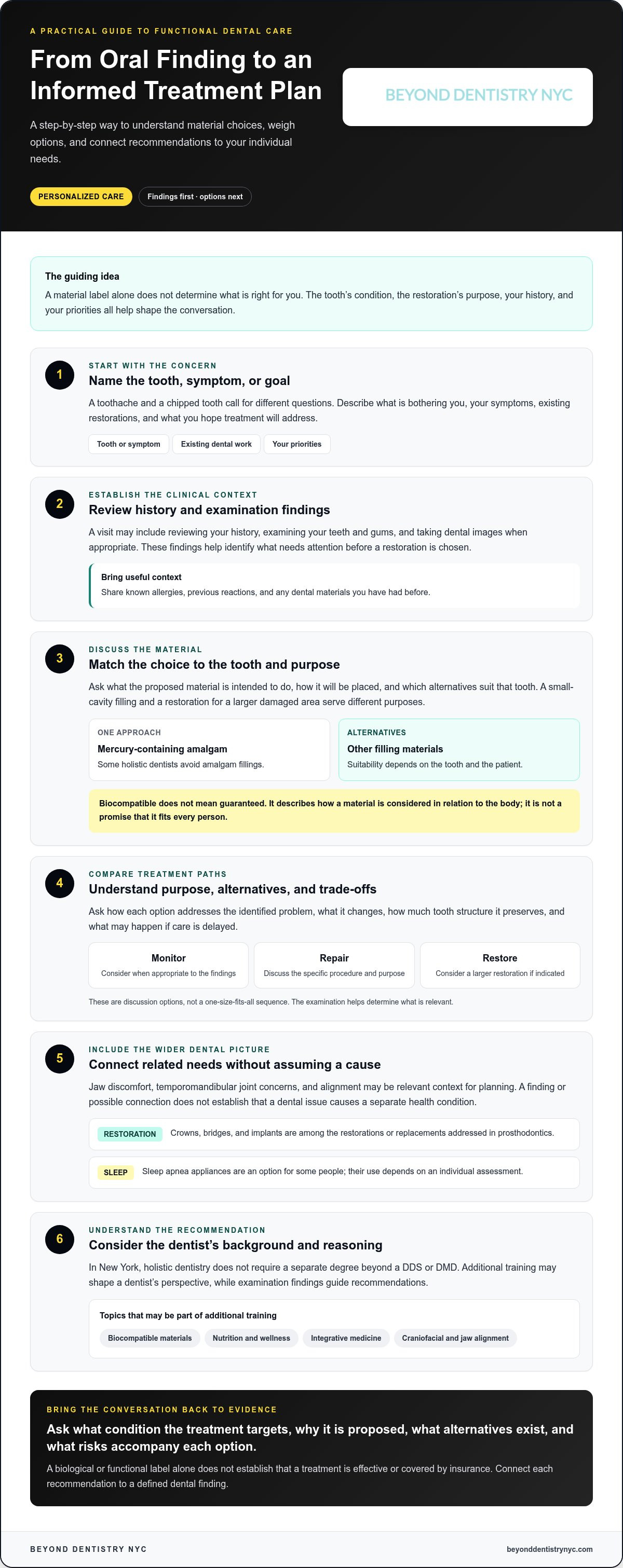
Material choice is one practical part of personalized dental care. Some holistic dentists avoid mercury-containing amalgam fillings and use alternative materials. That preference doesn’t mean every alternative suits every tooth or patient. A dentist considers the tooth’s condition, the restoration’s purpose, and your health history. A filling for a small cavity, for example, serves a different purpose from a restoration replacing a larger damaged area. Discussing these factors helps explain why a particular material is proposed.
“Biocompatible” describes how a material is considered in relation to the body, but it doesn’t guarantee a perfect fit for every person. A useful conversation covers the material’s intended use, how it will be placed, and any relevant sensitivities or past reactions you report. Bring a list of known allergies and previous dental materials to your appointment. This gives the dentist helpful context for comparing options. Ask which alternatives suit the tooth and how each supports its function.
Early disease detection starts with a focused assessment, not a material label. A dental visit may include reviewing your history, examining your teeth and gums, and taking dental images when appropriate. These steps help identify what needs attention before a restoration is chosen. A cavity, cracked tooth, and gum concern each call for a different evaluation. The dentist can explain the findings and how they shape the plan, making it easier to weigh treatment choices.
Prosthodontics addresses the restoration or replacement of teeth, including crowns, bridges, and implants. The choice depends on the teeth involved, surrounding structures, and the restoration’s intended function. Dental sleep medicine is a separate area. Sleep apnea appliances are a treatment option for some people with sleep apnea, and their use depends on an individual assessment. Discussing an appliance should connect the oral examination with the broader care plan.
Whole-person dental care considers how oral conditions and treatment decisions may relate to overall well-being. A dentist may ask about jaw discomfort or a history of temporomandibular joint concerns when planning care. Some holistic dentists study approaches to jaw alignment and temporomandibular joint disorders. These questions add context, but don’t establish that a dental issue causes a separate health condition. A careful discussion distinguishes an observed oral finding from a possible connection that needs further evaluation.
For a practical consultation, organize your concerns around three points: the tooth or symptom, your material preferences, and your medical or dental history. Then ask which options address the identified problem and why. Holistic dentists may pursue additional training in biocompatible materials, nutrition and wellness, integrative medicine, and craniofacial and jaw alignment techniques. Training can shape a dentist’s perspective, while examination findings guide recommendations. This balanced approach supports informed choices without treating “non-toxic” as a universal material guarantee.
Individualized treatment planning
A personalized plan connects examination findings with your priorities, symptoms, and treatment choices. A toothache and a chipped tooth, for example, call for different questions before care begins.
Treatment Planning Considerations
A useful plan identifies the concern, proposed treatment, purpose, and alternatives. A dentist may consider your symptoms, examination findings, existing restorations, and goals before recommending a next step. Ask how each option addresses the diagnosed problem and what may happen if treatment is delayed. This makes the reasoning easier to follow, especially when advanced technology or biological approaches are part of the discussion.
To compare reviews, services, and prices, look for comments about communication and treatment explanations, then compare relevant services and written estimates. Insurance coverage depends on your plan and procedure; “functional” or “biological” alone doesn’t establish whether a service is covered.
Conservative Treatment Planning
A conservative approach weighs the least invasive option that can address the identified concern. For a damaged tooth, the discussion might compare monitoring, repair, or a larger restoration, depending on examination findings. Ask what each option changes, how much tooth structure it preserves, and how it supports function. “Minimally invasive” should describe a specific procedure, not promise that every treatment is minimally invasive.
Integrated Treatment Planning
Integrated planning considers how decisions relate across dental needs. A bite or alignment concern, for example, may affect restoration planning, while jaw symptoms can inform a discussion of temporomandibular joint care. Biological dentistry may also involve conversations about materials and overall wellness. These connections can help organize your questions, but each proposed treatment should still address a defined dental finding.
For mercury amalgam fillings, ask whether a filling needs repair or replacement and which alternatives could address that tooth. If removal is being considered, the discussion should explain the reason, proposed approach, and relevant risks. The word “safe” alone isn’t enough to describe an individual treatment.
Risks and evidence depend on the specific treatment and its purpose. Ask what condition it targets, what evidence supports that use, what alternatives exist, and what risks accompany each option. A biological label alone doesn’t establish effectiveness, so connect each recommendation to an examination finding and a clear treatment goal.
For a coordinated plan, review the sequence of care, including which concern comes first and how later steps depend on it. A dental implant, for instance, requires planning around the site and intended restoration. Functional dental care can provide a setting to discuss how individualized planning connects treatment choices with your oral health priorities.
Holistic dentistry and whole-health evaluation
Holistic dental care considers oral conditions and treatment decisions in relation to a patient’s overall well-being. A whole-health evaluation adds context to a dental examination without replacing diagnosis or treatment of oral disease.
Patient Benefits
A whole-health discussion gives patients room to connect symptoms, priorities, and dental findings. Describing jaw discomfort alongside a tooth concern, for example, helps the dentist understand what else to assess. Sharing relevant health history and current concerns also keeps the conversation focused. The benefit is a clearer understanding of a recommendation, not a promise that dental care will resolve unrelated health conditions.
Prepare by noting when a symptom occurs, what affects it, and which questions matter most. If chewing feels uncomfortable, describe which foods or movements bring it on. That detail can guide an examination of your teeth, bite, and jaw. The dentist can then distinguish an observed finding from a broader wellness concern that needs separate attention.
Holistic and Biological Approaches
Holistic and biological dentistry describe approaches that consider how dental conditions and treatments may relate to overall well-being. A conversation might include material preferences, oral symptoms, and the purpose of a proposed procedure. Biocompatible materials are one part of that decision, alongside the tooth’s condition and the restoration’s function.
Whole-health care also makes room for habits that affect oral health. Sugary and acidic foods can wear away tooth enamel, while foods rich in vitamin C are good for gums. Dairy products can neutralize acids that would otherwise wear away teeth. These examples can inform practical discussions about diet, but they don’t replace an examination for disease.
Functional and Conventional Dentistry
A functional dentist considers dental findings and treatment choices in the context of a patient’s overall well-being. Conventional dentistry also evaluates and treats oral disease; the distinction is generally one of emphasis and approach, not a separate dental degree. In New York, holistic dentistry doesn’t require a separate degree beyond a DDS or DMD.
A dentist may assess jaw alignment when a patient reports discomfort, then discuss whether the findings relate to a dental concern. Some holistic dentists study methods for addressing jaw misalignment and temporomandibular joint disorders. Ask what the examination identified, how it informs the plan, and which outcome each proposed step is intended to address.
To make an evaluation useful, bring a concise history of your symptoms, relevant health details, and material concerns. Then discuss how each recommendation relates to a specific oral finding. This step-by-step conversation keeps wellness in view while grounding decisions in the examination and your dental needs.
Biological dentistry and the mouth-body connection
Biological dentistry considers oral findings alongside a patient’s broader health history. That connection can inform questions about treatment, materials, and daily habits, but it doesn’t prove that a dental condition causes a separate illness. A dentist can document gum inflammation, explain its oral significance, and discuss appropriate care without claiming it explains symptoms elsewhere. A holistic dentist should distinguish examination findings from possible health connections and clarify the purpose of each recommendation.
Root canal therapy is one example where clear explanations matter. The dentist assesses the tooth, reviews examination findings, and explains whether treatment is intended to address a problem inside it. Ask for the diagnosis, relevant alternatives, and an explanation of how the recommended approach relates to the tooth’s structure. Biological endodontics may emphasize preserving healthy structure and considering materials, but a label alone doesn’t establish that a procedure is safer or more effective.
For a tooth with extensive damage, the plan might compare root canal therapy and restoration with removal and replacement. The discussion should focus on the tooth’s condition, the purpose of each option, and how each affects function. Ask the dentist to explain the expected steps in plain language, including what treatment addresses and what it cannot address. This keeps broader wellness goals from obscuring the specific dental decision.
Biologic restorative and cosmetic dentistry applies these questions to visible and functional changes. A veneer changes the visible surface of a tooth, while an implant replaces a missing tooth. Each option has a different purpose and different considerations for surrounding teeth and oral structures. Discuss appearance, function, material preferences, and the area’s condition before choosing. A sound plan connects the desired result to a specific dental finding.
Biological dentistry may suit patients who want treatment discussions to include material preferences, health history, and oral findings. Before an appointment, note any previous reactions to dental materials, current concerns, and the result you hope to achieve. Then ask how each proposed treatment supports oral health and which evidence or examination findings inform it. These steps make the approach concrete without treating “biological” as a substitute for diagnosis.
For children, biological dental care can include discussions about prevention, developing teeth, and age-appropriate restorative choices. A parent can share the child’s health history, describe sensitivity, and ask what a recommended filling is meant to repair. The dentist can explain how the material and procedure relate to the tooth’s needs. If a child has pain or visible damage, start with an assessment of the affected area rather than assumptions about whole-body inflammation.
Dentist background and experience
To find a qualified functional dentist in New York City, review the dentist’s education, clinical experience, and training related to your concerns. New York dentists must pass the National Board Dental Examinations and a state licensing exam after dental school to practice.
Start with credentials, then look beyond titles. In New York, holistic dentistry doesn’t require a separate degree beyond a DDS or DMD, so “holistic” or “biological” describes an approach, not an additional degree. Ask what experience informs the dentist’s treatment plan and how it relates to your needs, such as a restoration, jaw concern, or material preference.
Experience matters most when it relates to the decision in front of you. If you’re considering a dental implant, ask how the dentist evaluates the site, plans the restoration, and explains alternatives. For jaw discomfort, ask how the examination considers bite and temporomandibular joint findings. These questions can show whether the discussion is comprehensive and specific to your case.
Training can add perspective. Holistic dentists may pursue additional study in biocompatible materials, nutrition and wellness, integrative medicine, or craniofacial and jaw alignment techniques. Ask which areas inform the recommendation you’re discussing. A dentist’s background should clarify the reasoning, not replace an explanation of the diagnosis, options, and intended outcome.
Look for communication that supports comfort and informed choices. A useful consultation explains what the examination found, why treatment is proposed, and how alternatives compare. If a dentist recommends replacing a restoration, for instance, ask what condition calls for that step and what the plan aims to preserve. Clear answers help distinguish a personalized recommendation from a broad claim about systemic health.
Evaluating a dentist can be straightforward. Review their stated education and experience, then consider whether their clinical focus matches your concern. Discuss your health history and priorities, and note whether the treatment plan responds to them. A dentist using advanced technology should also explain how a particular tool contributes to diagnosis or planning. Technology is most useful when its role is clear.
Experience doesn’t mean every dentist has the same approach or expertise. Choose based on the fit between your needs and the dentist’s demonstrated background, communication, and treatment reasoning. To discuss how functional dentistry can inform an individualized treatment plan, explore functional dental care.
Beyond Dentistry NYC: Smile Gallery Restorations
Beyond Dentistry NYC offers Smile Gallery Restorations for patients considering restorative dental care. Its functional dentistry approach and innovative technology treatments support care discussions grounded in your oral health needs and goals. For sleep apnea, diagnosis and appliance treatment are distinct steps; a mandibular advancement device (MAD) is one type of oral appliance discussed as a treatment option. The practice offers sleep apnea appliances, as well as implants and TMD care.
If you’re exploring a smile makeover, Beyond Dentistry NYC also offers veneer expertise. Bring your questions and desired outcomes to guide a focused discussion about which restorative option fits your goals. Contact Beyond Dentistry NYC or visit beyonddentistrynyc.com to take the next step.
Make Your Next Dental Conversation Count
Start with the outcome you want from care, not a label. A functional dentist in NYC may be a fit if you want treatment decisions to reflect your priorities as well as your oral health.
Before an appointment, choose the concern you most want to address and note what you hope to understand. You might want to discuss material choices, clarify a restorative recommendation, or feel more prepared to weigh options. You don’t need every answer in advance. A clear starting point can help you take part in a focused conversation about care.
Use that discussion to establish a shared direction: what matters now, which questions remain, and how you’ll consider possible next steps. This makes your priorities easier to communicate and helps you take part in decisions about your dental care.
Contact Beyond Dentistry NYC to start the conversation. Move forward at a pace that feels right for you.
Frequently Asked Questions
How do biocompatible materials benefit my oral health?
Biocompatible materials can help align a restoration choice with your preferences and clinical needs, but they don’t guarantee broader health benefits. Ask why a material suits the tooth being treated, what alternatives could serve the same purpose, and what limitations matter. If you’ve reacted to a dental material before, describe what happened and when so that information can guide the discussion.
What should I expect during my first holistic dental consultation?
Expect to discuss your main concern and relevant health history, followed by a dental assessment and a conversation about possible next steps. Bring a current medication list, notes about previous material reactions, and questions about symptoms such as sensitivity while eating. Recent dental records can add useful context. Before leaving, make sure you understand what the dentist recommends addressing first and why.
Which NYC dentists offer functional, biological, or holistic dentistry?
Beyond Dentistry NYC offers functional and restorative dentistry in New York City. The practice is led by Dr. Morgan Herman and Dr. Michael Herman. Its services include Smile Gallery Restorations, implants, sleep apnea appliances, Botox, and TMD therapy, along with smile makeovers, veneer expertise, and innovative technology treatments. Connect the service you’re interested in with the specific concern you want addressed.
What credentials and training should I look for in a functional dentist?
Look for a dentist with a DDS or DMD, then consider whether additional training relates to your concerns. Ask how study in biocompatible materials informs a materials discussion, or how training in craniofacial methods relates to jaw concerns. A useful conversation connects the dentist’s background to your proposed care. You can also ask for a plain-language explanation of how that experience shapes the treatment plan.
What treatments do functional dentists in NYC provide?
Treatments vary by practice. Beyond Dentistry NYC offers functional dentistry, restorative care, Smile Gallery Restorations, implants, sleep apnea appliances, Botox, and TMD therapy. The practice also provides smile makeovers, veneer expertise, and innovative technology treatments. The relevant option depends on your concern: a missing tooth may lead to an implant discussion, while a sleep-apnea appliance addresses a different treatment need. Ask how the proposed service relates to your goal.


