

Could choosing a mercury free dentist be about more than avoiding one filling material? If you’ve heard conflicting claims about dental amalgam or wondered whether an older silver filling should come out, it’s understandable to want clear, balanced guidance. A mercury-free preference is a material priority, not automatically a treatment plan. The right approach depends on the tooth, your needs, and the options your dentist considers appropriate.
This guide explains what “mercury-free” means, how amalgam and composite fillings differ, and why a serviceable existing filling isn’t automatically a reason for removal. You’ll also find practical questions to bring to a dental visit, including what to ask about material choices and how a restoration fits your oral health goals. At Beyond Dentistry NYC in Manhattan, restorative decisions are part of an individualized conversation about function, comfort, and your smile. Knowing the basics can help you make that conversation more useful.
Key Takeaways
- “Mercury-free,” “mercury-safe,” “holistic,” and “biocompatible” can mean different things. Ask what a mercury free dentist means by the term.
- Compare amalgam and composite with your dentist, considering appearance, tooth location, restoration size, and your clinical findings.
- Bring your material preferences and relevant dental history to the consultation. Ask how the dentist weighs clinical needs and informed consent.
- An existing silver filling doesn’t automatically need replacement. Its condition and examination findings help guide the decision.
- In Manhattan, discuss how restorative material choices fit your broader goals for dental function and your smile.
What Does “Mercury-Free Dentist” Mean for NYC Patients?
Mercury-free dentistry generally means avoiding dental materials that contain mercury. In everyday use, the phrase often refers to a preference not to place new dental amalgam fillings. If you’re looking for a mercury free dentist in NYC, treat the phrase as a starting point for a conversation, not as a guarantee of one particular treatment philosophy or approach.
A mercury-free preference describes materials a patient wants to avoid; it doesn’t determine what treatment a tooth needs. The dentist evaluates the tooth and any existing restoration, then discusses options in light of the clinical findings. Your preferences matter, too. The goal is to understand how they fit your individual dental needs.
What does mercury-free mean in dental care?
Dental amalgam is a restorative filling material made with mercury and other metals, including silver, tin, and copper. A mercury-free approach generally means avoiding materials that contain mercury, such as amalgam, when choosing a new restoration. It doesn’t automatically mean removing existing amalgam fillings.
Choosing a material for a new filling and deciding what to do about an older restoration are separate questions. An existing filling is assessed based on its condition and the dentist’s examination, not replaced solely because you prefer not to use mercury-containing materials in future treatment. The label alone also doesn’t establish one standard protocol among dentists.
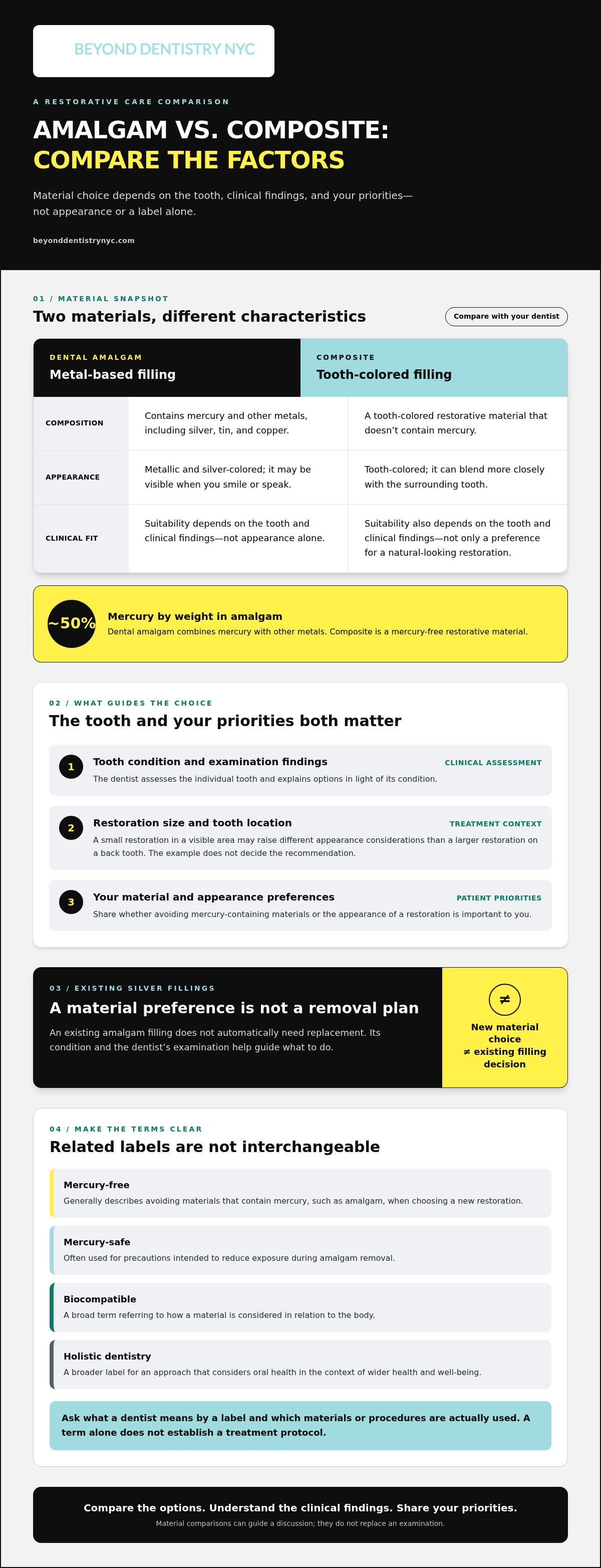
Related terms can add to the confusion. “Mercury-safe” is often used to describe precautions intended to reduce exposure during amalgam removal, while “biocompatible” refers broadly to how a material is considered in relation to the body. These labels aren’t interchangeable with mercury-free, and they don’t tell you by themselves which materials or procedures a dentist uses.
How is mercury-free dentistry different from holistic dentistry?
Mercury-free describes a material preference. Holistic dentistry is a broader label for an approach that considers oral health in the context of a person’s wider health and well-being. Functional dentistry also takes a broader view of oral and restorative care, with attention to function as well as the restoration itself. These approaches may overlap, but one term doesn’t automatically imply the others.
For example, you may prefer a mercury-free material for a new filling and also want to understand how that restoration fits your bite, oral function, and broader restorative goals. Those considerations are related, but they call for an individualized clinical discussion. For an overview of the broader approach, read this guide to functional dentistry.
At Beyond Dentistry NYC, functional and restorative care provides a setting for discussing these priorities together. Patients in Manhattan can share their material preferences and dental history as part of a conversation about their dental needs and the role of a restoration in their care. Clear definitions help: a label can describe a preference, but thoughtful treatment planning starts with the person and the tooth.
Dental Amalgam and Mercury-Free Filling Alternatives: What to Compare
Amalgam and composite are two filling materials patients may discuss when a tooth needs a restoration. They differ in composition and appearance, but neither is right for every situation. A useful comparison considers the condition of the tooth, the size and location of the restoration, and your priorities, not just the material’s label.
| Factor | Dental amalgam | Composite |
|---|---|---|
| Composition | A metal-based material containing mercury and other metals. Mercury makes up about 50% of amalgam by weight. | A tooth-colored restorative material that doesn’t contain mercury. |
| Appearance | Metallic and silver-colored, so it can be visible when you smile or speak. | Tooth-colored, allowing it to blend more closely with the surrounding tooth. |
| Clinical considerations | Whether it’s appropriate depends on the tooth and the clinical findings, not on appearance alone. | Whether it’s appropriate also depends on the tooth and the clinical findings, not simply on a preference for a natural-looking restoration. |
How do amalgam and composite fillings differ?
The most noticeable difference is often appearance: amalgam is metallic, while composite is tooth-colored. Their compositions differ, too. Amalgam contains mercury combined with other metals; composite is a mercury-free restorative material. These distinctions can help you explain your preferences, but they don’t establish which option is clinically suitable for a particular tooth.
Neither material should be described as universally safer or stronger based on its category alone. How a filling performs depends on the specific restoration and a dentist’s clinical assessment. Use a material comparison to guide an informed discussion, not as a substitute for an examination.
What should guide a filling-material decision?
Filling-material selection depends on the clinical context as well as your priorities. The dentist considers the tooth’s condition and location, how much restoration is needed, and the examination findings. Your preferences matter, too, including whether appearance or avoiding mercury-containing materials is important to you.
For example, a small restoration in a visible area may raise different appearance considerations than a larger restoration on a back tooth. That example doesn’t determine the recommendation. The dentist needs to assess the individual tooth and explain the options in light of its condition. Ask which findings are guiding the discussion and what trade-offs apply to your case. Those specifics are more useful than choosing by a label alone.
If you’re considering a mercury free dentist in Manhattan, bring your material priorities into a conversation about your broader restorative goals. Beyond Dentistry NYC provides functional and restorative care that considers individual needs and priorities. You can explore Beyond Dentistry NYC as you consider what you’d like to discuss about your dental care.
How to Evaluate a Mercury-Free Dentist in Manhattan
A useful consultation makes room for both your material preferences and the clinical findings. If you’re considering a mercury free dentist in Manhattan, look for a conversation that explains the reasoning behind a recommendation rather than relying on a label alone. You don’t need to arrive with a diagnosis. Describe what concerns you, share relevant dental history, and ask for clear explanations.
Which questions should you ask about filling materials?
Bring a short list of questions to keep the focus on understanding your options, rather than trying to reach a clinical conclusion yourself. You might ask:
- Which materials are you considering for this tooth, and why? Ask the dentist to connect the recommendation to the tooth’s location, condition, and the amount of restoration needed.
- What are the benefits and limitations of each option? A useful explanation should clarify relevant trade-offs without presenting one material as ideal for everyone.
- Are there alternatives, and how do they compare for my situation? Ask which options are appropriate based on the examination, rather than requesting a general list of materials.
- How does my existing dental work affect the plan? Mention fillings, crowns, or other restorations you know about, and ask how they factor into the assessment.
- What would I be agreeing to? Before treatment, make sure you understand the proposed procedure, material, and alternatives well enough to give informed consent.
What does a clear restorative consultation look like?
A clear discussion begins with an examination and your dental history, then connects the findings to possible treatment choices. You should have room to express priorities, such as avoiding mercury-containing materials or considering how visible a restoration may be. The dentist’s explanation should address those preferences alongside the condition of the tooth and the purpose of restoring it.
Restorative decisions can involve function as well as appearance. The conversation may consider how a tooth fits into your broader oral health and restorative goals while staying focused on the clinical question at hand. If something is unclear, ask the dentist to explain it in everyday language or clarify why an option is recommended. You don’t need technical terms or a diagnosis to raise a concern.
Manhattan is a practical part of the decision, too. Consider whether the location works for your routine and whether the consultation gives you the clarity you need to understand a treatment plan. Beyond Dentistry NYC focuses on functional and restorative dentistry, with care framed around individual restorative priorities. A thoughtful conversation should leave you better informed about the findings and choices ahead, without treating a material label as a promise of a particular outcome.
Do Existing Silver Fillings Need to Be Removed?
No. An existing silver filling doesn’t automatically need to be replaced. If you have an amalgam restoration that’s in good condition, its mercury content alone isn’t generally a reason to remove it. The U.S. Food and Drug Administration (FDA) advises against removing intact amalgam fillings when there’s no medical need, and the American Dental Association (ADA) does not support removing serviceable amalgam solely because it contains mercury.
That can be reassuring if you’ve encountered alarming or conflicting claims online. A preference to avoid mercury-containing materials in future dental work is different from a clinical reason to replace an existing restoration. A dentist can assess the filling and tooth, explain the examination findings, and discuss whether monitoring or treatment is appropriate. You don’t need to make the decision based on a label or an online post.
When might a dentist assess an existing amalgam filling?
A dental assessment may be appropriate if a filling appears damaged, has changed, or is associated with a concern such as discomfort. These signs don’t establish what’s happening; appearance and symptoms alone can’t determine whether a filling needs replacement. The dentist evaluates the restoration and tooth, considers your dental history, and explains any recommended next steps. If something feels different, describe what you’ve noticed rather than trying to diagnose the cause.
Why is routine removal not a decision to make from online claims?
Removing a filling is a dental procedure, not simply a material swap. It involves working on the existing restoration and may involve altering some tooth structure. The decision should reflect an individual clinical assessment, including the condition of the filling and tooth, rather than generalized fear or a broad claim about mercury.
Guidance from the FDA and ADA supports a measured approach: a serviceable restoration isn’t routinely removed just because it contains mercury. That doesn’t mean every filling should be left unchanged in every circumstance. If examination findings show a problem, the dentist can explain why treatment may be considered and which options are relevant to your situation. If the restoration is stable, the discussion may instead focus on its condition and ongoing care.
If you’re concerned about an existing filling, write down what you’ve noticed, when it began, and any relevant dental history. Share those details during an evaluation, and ask the dentist to explain the findings in plain language. This keeps the decision grounded in the tooth’s condition, rather than an assumption based on how the filling looks or what it’s made of.
A mercury free dentist preference can guide future material choices, but it doesn’t by itself determine whether an existing restoration should come out. At Beyond Dentistry NYC, functional and restorative care centers on an individualized discussion of dental needs and priorities. Schedule a restorative dental evaluation to discuss an existing filling and understand your options.
A Thoughtful Next Step for Mercury-Free Dental Care in NYC
Choosing a filling material is one part of deciding how to care for a tooth. Start by understanding what the material is, then consider the tooth’s clinical needs and the priorities you want your dentist to know about. A preference for mercury-free materials can inform the discussion, but it doesn’t replace an examination or determine which treatment is right for you.
For NYC patients, a restorative conversation can also consider how proposed treatment fits broader goals for comfort, function, and appearance. Beyond Dentistry NYC focuses on functional and restorative dentistry, supported by advanced clinical care. The aim is an individualized discussion grounded in your needs, not a promise based on a material label.
How can material preferences fit into functional restorative care?
A filling choice doesn’t stand alone. The dentist considers the tooth and the purpose of the restoration, while your preferences help shape the discussion about appropriate options. If you’re also thinking about more extensive changes, such as rebuilding or refining your smile, consider how each decision fits into the larger plan. This smile reconstruction guide explores how functional and aesthetic goals can be considered together.
Functional dentistry considers how restorative care fits into oral function as well as appearance. That broader perspective doesn’t make a particular material or outcome right for everyone. It gives you a way to discuss the role of each proposed treatment within your overall restorative priorities.
What should you bring to a dental conversation in NYC?
A little preparation can make the discussion more useful. Before your visit, consider noting:
- Your questions or concerns about filling materials and existing dental work.
- Relevant dental history, including restorations you know about and any changes you’ve noticed.
- Health information you feel may be relevant to dental treatment.
- Your priorities, such as appearance, function, or avoiding certain materials where clinically appropriate.
You don’t need to diagnose a problem or arrive with a treatment plan. Share what you know, and let the clinician assess your teeth, explain the findings, and discuss the options. A good conversation makes space for questions and helps you understand how your preferences relate to the clinical picture.
If you’re looking for a mercury free dentist in NYC, bring your questions and restorative goals to a personalized conversation. Explore care at Beyond Dentistry NYC and take a thoughtful next step toward understanding your options.
Make Your Next Dental Conversation Count
Your next step doesn’t need to be a decision about a specific filling. It can be a chance to explain what matters to you, understand the clinical picture, and consider how restorative care fits your goals. A mercury free dentist preference is one part of that conversation, and your questions deserve thoughtful, individualized answers.
Beyond Dentistry NYC offers smile makeovers, veneers, and dental implants, alongside innovative technology treatments. If you’re considering restorative care in NYC, bring your priorities and questions to a conversation with the team. Schedule a conversation about your restorative goals with Beyond Dentistry NYC. A clear discussion can help you feel more confident about the choices ahead.
Frequently Asked Questions
What does mercury-free dentistry mean?
Mercury-free dentistry generally means avoiding mercury-containing materials, particularly amalgam, in dental treatment. It describes a material preference, not one standardized model of care. If you’re choosing a mercury free dentist, ask how the dentist assesses the tooth, which materials are being considered, and how your preferences fit the treatment plan. Clear explanations help you understand the recommendation without relying on a label alone.
Are white fillings always mercury-free?
Not necessarily. Composite resin is a common tooth-colored filling material and doesn’t contain mercury, but color alone can’t confirm what a restoration is made from. If you’re discussing a new filling, ask the dentist to identify the proposed material and explain why it’s appropriate for that tooth. The restoration’s size and location, clinical findings, and your priorities all help shape the discussion.
Are composite fillings as durable as amalgam fillings?
There isn’t one durability answer that applies to every tooth. The restoration’s size and location, the forces on the tooth, and the clinical approach can all matter. For example, a filling on a tooth that takes substantial biting pressure may raise different considerations than a small restoration elsewhere. Ask which factors matter in your case and what care the restoration may need over time.
Should I replace an intact amalgam filling if I prefer mercury-free dentistry?
No, a material preference alone doesn’t mean an intact amalgam filling should be replaced. The dentist can evaluate the restoration and tooth, then explain whether there’s a clinical reason to treat it. Removal is a procedure, so understand the reason, alternatives, and implications before deciding. If you have concerns, describe them during an examination rather than making a decision based only on online claims.
Is mercury-free dentistry the same as holistic dentistry?
No. Mercury-free usually refers to avoiding a material containing mercury, while holistic or functional dentistry describes a broader perspective on care. The terms may overlap, but neither label tells you exactly how a dentist will approach your needs. In a consultation, discuss how the proposed restoration relates to your oral function and other dental priorities, and ask for an explanation of the clinical reasoning behind the plan.
Does dental insurance cover composite fillings in New York City?
Coverage depends on the details of your individual plan, the tooth being treated, and the circumstances of the procedure. Some policies may handle materials differently, so don’t assume a preference for composite determines what your benefits will cover. Review your plan documents or contact your insurer for benefit details. Before treatment, make sure you understand any estimate you receive and what assumptions it includes.
How can I tell whether my current filling is amalgam?
A metallic appearance may suggest amalgam, but it can’t confirm the material or show whether the filling is in good condition. Dental records may identify the restoration, and an examination can help clarify what’s present. If you don’t have records, mention the filling at your next dental visit and ask the clinician to explain what they observe. Don’t try to scrape, test, or alter the restoration yourself.


