

Learning how to clean dental implants starts with a gentle routine that reaches the restoration and the gumline around it. If you’re unsure whether you’re cleaning the areas that need attention, especially around and between implant teeth, you’re not alone. The shape of an implant restoration can make some spots harder to reach than others.
A steady routine can help you clean the visible restoration and nearby gums without scrubbing forcefully. Your dental team can also give you instructions suited to your specific implant and show you how to reach any difficult areas.
This guide explains which surfaces to brush, why cleaning between teeth matters, and how tools such as a soft-bristled toothbrush and interdental cleaner may fit into daily care. It also covers changes around an implant that deserve professional attention. Use the checklist to make implant care easier to repeat at home in New York or wherever you live.
Key Takeaways
- Clean the visible implant restoration, the nearby gumline, and the spaces around it.
- Use a simple sequence that can be adapted to your restoration and cleaning needs.
- Choose cleaning tools based on the space around your implant and how comfortably they fit.
- Use a daily checklist to build consistency and notice changes around your gums.
- Discuss hard-to-reach areas or recurring irritation with your dental team for personalized guidance.
How to Clean Dental Implants: What Needs Cleaning Every Day?
Dental implants can feel unfamiliar to care for at first, but the daily goal is straightforward: gently clean the restoration and the gum tissue around it. An implant is a replacement tooth structure anchored in the jaw. The implant is the part placed in the jawbone, the abutment connects it to the restoration, and the visible crown or prosthesis is the part you see in your mouth. The Dental implant overview explains these components and how the implant relates to the jawbone.
Implant home care means gently cleaning the visible restoration, the gumline around it, and nearby spaces with methods suited to your specific restoration. The restoration is artificial, but the gums and other surrounding tissues are living tissue. They still need routine plaque removal.
Which parts of a dental implant should you clean?
Pay attention to the visible crown or prosthesis, especially where it meets the gumline. Plaque and food debris can collect along this edge, so include it when brushing instead of focusing only on the broad, easy-to-reach surface.
Clean the nearby gum tissue and the spaces between teeth as well. These areas can be easy to miss, particularly where an implant sits beside a natural tooth or another restoration. Implant crowns and prostheses differ in shape, so the access points won’t be identical for everyone.
How is implant care different from cleaning natural teeth?
The everyday principle is familiar: remove plaque from tooth surfaces and around the gumline. This matters around both implants and natural teeth, even though an implant restoration isn’t a natural tooth. The tissues around an implant still need gentle, consistent attention.
The main difference is access. The restoration’s design can affect how easily you reach underneath or between surfaces, and which cleaning tool fits comfortably. If you’re unsure where debris gathers or a spot is difficult to reach, your dental team can show you how to clean your specific restoration. Personalized instructions can make the routine more practical and comfortable.
So, how to clean dental implants depends partly on the restoration in your mouth. First identify the surfaces and nearby tissues that need attention, then follow a gentle routine suited to your implant.
How to Clean Dental Implants With a Gentle Daily Routine
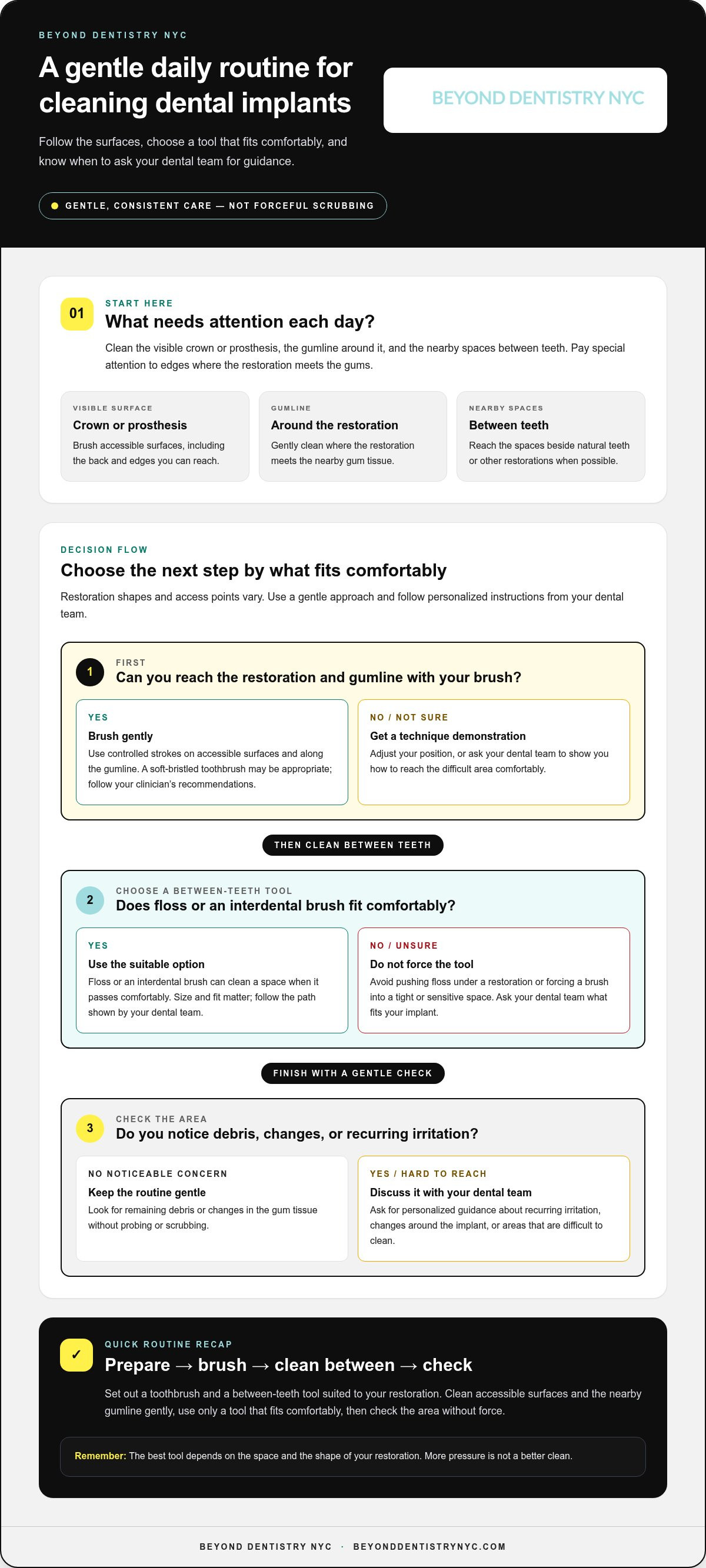
A repeatable routine can make implant care feel straightforward. Set out the supplies recommended for your mouth, brush the restoration and nearby gumline gently, clean between teeth, then check the area. The American Academy of Periodontology emphasizes at-home oral care alongside regular dental visits as part of implant maintenance.
In short, gently brush accessible surfaces and the gumline, clean between teeth with a suitable tool, and look for changes around the implant.
- Prepare: Set out a toothbrush and the between-teeth cleaning tool that fits your restoration.
- Brush: Use controlled, gentle strokes on the crown or prosthesis and the gumline around it.
- Clean between: Use floss or an interdental brush if it fits comfortably in the space.
- Check: Look for remaining debris or changes in the gum tissue without probing or scrubbing.
A soft-bristled toothbrush and fluoride toothpaste may be appropriate, but follow your dental clinician’s recommendations for your restoration and oral health needs. Focus on reaching the edges carefully, not on scrubbing harder.
How should you brush around an implant crown?
Move the brush gently over the crown or prosthesis and along the nearby gumline, using controlled strokes rather than pressing hard. Clean every accessible side, including the back of the restoration, where plaque can be easy to overlook. If a surface is awkward to reach, adjust your position or ask your dental team to demonstrate a comfortable technique.
How do you clean between implants and natural teeth?
Floss and interdental brushes are options for cleaning between teeth, but the right choice depends on the space and the shape of your restoration. Guide the tool carefully. Don’t force it into a tight or sensitive area. If you’re uncertain about its fit or movement, ask your dental team to show you a technique suited to your implant.
With practice, how to clean dental implants becomes less about guesswork and more about a calm, consistent habit. If you have questions about your restoration or cleaning approach, discuss personalized implant care with the Beyond Dentistry NYC team.
Which Dental Implant Cleaning Tools Are Right for Your Routine?
The most useful tool is one that reaches your restoration and the spaces around it without causing discomfort. Implant crowns and prostheses vary, so a tool that works well for one person may not fit another. The American Academy of Periodontology notes that at-home oral care for implants includes familiar habits such as brushing and flossing, with choices guided by individual needs.
More pressure doesn’t mean a better clean. Hard brushing can irritate delicate gum tissue. A gentle, thorough approach helps you reach accessible surfaces without forceful scrubbing. Consider these tools as options, not a must-use list:
| Tool | Possible use | What to keep in mind |
|---|---|---|
| Soft-bristled toothbrush | Cleaning accessible restoration surfaces and the gumline | Use gently; reach the back and edges you can access. |
| Floss | Cleaning between teeth where it can pass comfortably | Follow the path shown by your dental team; don’t force it under a restoration. |
| Interdental brush | Cleaning a suitable space between teeth or around a restoration | Size and fit matter. Don’t push a brush into a tight space. |
| Water flosser | Rinsing debris from accessible areas around teeth and restorations | It can complement brushing, not replace it. Follow individualized instructions. |
Can you use an interdental brush or floss around an implant?
Either may help clean between teeth when appropriately sized and used gently. Choose the option that moves comfortably through the space, and don’t force floss or a brush beneath a restoration. If you’re unsure where the tool should go, ask your dental team to demonstrate a technique that suits your implant and nearby teeth.
Is a water flosser safe for dental implants?
A water flosser may be a useful addition for cleaning accessible areas, but it isn’t a substitute for brushing. Comfort and access can depend on the restoration and gum tissue, so follow your dental team’s guidance if the area is sensitive or difficult to clean. Don’t increase the pressure to compensate for a spot you can’t reach.
If brushing or cleaning between teeth causes discomfort, or you notice recurring bleeding or ongoing difficulty accessing an area, don’t switch to a firmer brush or push harder. Bring the concern to your dental team. Personalized guidance can help you choose tools and a technique suited to your restoration. Knowing how to clean dental implants also means recognizing when a tool doesn’t feel right.
Dental Implant Cleaning Checklist: Daily Habits and Signs to Notice
A short checklist makes implant care easier to repeat without making it complicated. Follow the instructions for your restoration, and use a calm visual check to notice changes. Avoid repeatedly touching or probing a sore area.
What belongs on a dental implant care checklist?
- Brush gently: Clean the accessible surfaces of the restoration and the gumline around it.
- Clean between teeth: Use the floss, interdental brush, or other method recommended for the spaces around your implant.
- Look and notice: Check for visible food debris or changes in the gums, such as swelling or redness.
- Make a note of changes: If an area feels different or stays uncomfortable, note what you’ve noticed rather than repeatedly prodding it.
You don’t need extra steps or harder scrubbing to make the checklist useful. A gentle, consistent routine that follows your personalized instructions is a practical way to support implant care. The basics of how to clean dental implants are to attend to the restoration and nearby tissues, then notice how the area feels over time.
When should you contact your dental team about an implant?
Get in touch with your dental team if you notice persistent or worsening bleeding, swelling, or discomfort around an implant. These signs don’t point to one specific cause on their own, and an article can’t diagnose what’s happening. A clinician can assess the area, consider your restoration and symptoms, and adjust your home-care guidance if needed.
Describe when you first noticed the change, whether it has persisted or worsened, and which cleaning steps seem to affect it. Avoid repeatedly testing a tender spot or changing your technique by applying more pressure. If you’re uncertain whether a change merits attention, your dental team can help clarify the next step.
For personalized guidance on implant care or a concern you’ve noticed, discuss your implant-care questions with the Beyond Dentistry NYC team.
Keep Dental Implants Clean With Personalized Professional Guidance
A home routine works best when it fits the restoration you have. Dental visits give you an opportunity to discuss implant health, review how you’re cleaning, and raise questions about areas that feel difficult to reach. This personalized guidance complements daily care and can help make your routine more comfortable and practical.
What can an implant-care appointment help clarify?
Bring up anything you’ve noticed while cleaning, such as a tight space, an awkward edge, or recurring irritation. You can also describe which tools you use and where they’re difficult to guide. Your dental team can review your restoration and oral-health needs, then offer guidance suited to your situation. If a technique feels uncertain, ask for a demonstration so you can see how to approach the area without forcing a tool.
It can help to note what has changed and when you first noticed it. That context gives your clinician a clearer starting point for discussing your concern. Use your visit to review your technique and ask which parts of the routine need more explanation. The goal is to leave with practical instructions for caring for your implant at home.
How do implant restorations compare with other tooth-replacement options?
Implants, bridges, and dentures are different types of tooth replacement, and their care needs can differ too. You don’t need to compare treatment choices to build a useful implant-cleaning routine. If you’re curious about how replacement options vary, that’s a separate conversation from daily implant maintenance.
Learning how to clean dental implants is one part of caring for a restoration over time. Follow the instructions tailored to your implant, and share questions about cleaning access, tools, or persistent irritation with your dental team. Individualized guidance can help you feel more confident caring for your restoration between visits.
If you’re in New York City and would like personalized guidance, explore implant care with the team at Beyond Dentistry NYC.
Make Implant Care a Confident Daily Habit
Knowing how to clean dental implants starts with a simple principle: care for both the restoration and the gumline around it. Brush gently, clean between teeth with a tool suited to your restoration, and notice changes rather than applying more pressure. If a space is hard to reach or irritation keeps returning, your dental team can help tailor your routine.
Daily care and professional guidance work together as part of restorative dental care. Beyond Dentistry NYC provides dental implant care and uses innovative technology treatments for restorative dentistry, with guidance shaped around your individual needs.
Have questions about caring for your implant? Explore dental implant care at Beyond Dentistry NYC in New York City and take the next step toward a routine suited to your restoration.
Frequently Asked Questions
Can you clean dental implants the same way as natural teeth?
Daily brushing and cleaning between teeth matter for both natural teeth and implants, but an implant restoration may have different contours or access points. Gently clean its visible surfaces and the surrounding gumline, then use a tool that fits the space without force. Restorations vary, so follow the technique demonstrated for yours rather than assuming one method works for every implant.
What is the best way to clean dental implants at home?
A practical routine for how to clean dental implants includes gentle brushing around the restoration and gumline, plus cleaning between teeth or around the implant with a suitable tool. The right approach depends on your restoration and the spaces around it. If floss or a brush feels difficult to guide, ask your dental team to demonstrate a technique that fits your situation.
Can you use an electric toothbrush on dental implants?
Yes, an electric toothbrush may be part of an implant-care routine if you can use it comfortably and gently. Brush the accessible restoration surfaces and nearby gums, following the toothbrush instructions and your dental team’s advice. An electric brush isn’t the right choice for everyone, and technique matters more than choosing one brush type. If an area is difficult to reach or brushing causes discomfort, ask for personalized guidance.
Is floss safe to use around dental implants?
Floss may help clean between teeth when it passes comfortably and you can use it without force. Because implant restorations differ in shape, the best path or cleaning tool can vary. Don’t push floss into a sore or difficult-to-reach area. If you’re unsure how to clean around your restoration, ask your dental team to show you a comfortable technique suited to your implant.
What happens if the gum around a dental implant bleeds during cleaning?
Bleeding can have different causes, so it doesn’t identify a specific problem on its own. Avoid forceful scrubbing or repeatedly probing the area, and notice whether bleeding persists or occurs with swelling or discomfort. Contact your dental team about ongoing or worsening changes. They can assess your symptoms and review your cleaning technique. In New York City, Beyond Dentistry NYC provides dental implant care and guidance tailored to individual needs.
How often should dental implants be professionally cleaned?
The right schedule for professional implant care depends on your oral health, restoration, and your dental team’s assessment. Keep the follow-up visits recommended for you, and ask which cleaning approach and interval fit your needs. Professional care complements home hygiene; it doesn’t replace gentle brushing and cleaning between teeth. An online schedule can’t account for your individual situation, so follow the guidance provided by your dental team.
Can a water flosser replace brushing around dental implants?
No. A water flosser may help some people clean accessible areas, but it shouldn’t be assumed to replace brushing the restoration and nearby gumline. The useful combination of tools depends on your restoration design and access. If you’re considering a water flosser or aren’t sure how it fits your routine, ask your dental team for instructions tailored to your implant and oral-health needs.


