

What is digital smile design nyc, and how can it help you think through a smile makeover? It is a visual planning approach that can make it easier to discuss possible changes before choosing treatment. The most useful preview is not a promise of exactly how your teeth will look, but a starting point for a better conversation about what feels right for you.
When considering a smile makeover, it is natural to want reassurance that the result will feel personal rather than one-size-fits-all. A digital concept can help you talk about tooth shape, proportion, and aesthetic goals, but it cannot guarantee the finished result. Your oral health, facial features, bite, and the treatment selected all matter.
This guide explains how digital smile design can support planning, what a preview can and cannot show, and what to discuss when comparing options such as veneers and other restorative treatments. Beyond Dentistry NYC brings a functional dentistry perspective to aesthetic choices, helping patients in New York consider appearance alongside oral health and function.
Key Takeaways
- A clear answer to what is digital smile design nyc begins with seeing it as a planning conversation, not a guarantee of your final appearance.
- A digital visualization or, when used, a physical mock-up can help you discuss a proposed look. Neither establishes the exact finished result.
- Ask how your goals, teeth, bite, and restorative needs shape the proposed smile makeover plan.
- Consider aesthetic preferences alongside function and oral health when discussing veneers and other restorative options.
What Is Digital Smile Design in NYC, and What Does It Help You Plan?
Digital smile design uses visual and clinical planning to help a patient and dental professional discuss a possible smile transformation. Rather than choosing a tooth shape in isolation, the conversation can consider how the smile relates to facial features, existing teeth, and oral function. For New York patients asking what is digital smile design nyc, the practical answer is that it can help make aesthetic goals easier to describe and compare before deciding whether to pursue treatment.
Tools and workflows differ. Depending on the clinician and the patient’s needs, planning may involve reviewing images or models and discussing tooth shape, proportion, shade, and how the smile looks in relation to the face. These are ways to communicate about goals, not a guarantee that a particular treatment can achieve every preference. As part of the broader field of cosmetic dentistry, smile design can help connect aesthetic ideas with clinical considerations.
A visual conversation can be useful if you are unsure how a proposed change might suit you. Describe what looks natural to you, what you would like to change, and what you want to preserve. Those details can help frame a discussion of restorative options such as veneers.
How is digital smile design different from simply choosing veneers?
Veneers are one possible treatment; smile design is a broader way to discuss the overall result you are hoping for. Planning can take your goals, facial appearance, current teeth, and function into account before a specific option is considered. For example, you might discuss whether you prefer a subtle change in tooth shape or a more noticeable change to the overall smile. A veneer may suit some concerns, while another approach or no cosmetic treatment may better fit the clinical picture. For more context on combining aesthetics and function, see this Smile Makeover NYC guide.
Who might explore digital smile design in New York City?
This kind of planning conversation may be helpful if you are considering a smile makeover, veneers, or changes to existing dental work. It can give you space to explain what you want a natural-looking result to mean, ask how proposed restorations may relate to your teeth and bite, and describe any concerns about your current smile. Not everyone needs digital design or cosmetic treatment. The right next step depends on your priorities and oral health.
A planning visualization can help you discuss a possible result, but it cannot guarantee the finished treatment outcome. Its purpose is to support an informed conversation, so aesthetic preferences can be considered alongside restorative needs and function.
How Does Digital Smile Design Work From First Discussion to Treatment Planning?
There is no single workflow used in every case. If you are exploring what is digital smile design nyc, think of it as a series of planning steps that may include discussing your goals, assessing your oral health, and reviewing visual information. The clinician tailors the approach to your needs. Photographs, scans, or visual simulations may be used in some workflows, but they are not required in every case.
A review of the Digital Smile Designing (DSD) technique describes the approach as a way to support communication and treatment planning. The key distinction is that visual planning helps frame a discussion. It does not determine by itself which treatment is suitable or what the final result will be.
What happens during the smile goals and assessment conversation?
Start with what matters to you. You might want to discuss a tooth that draws your attention, a preference for a subtle change, or a concern that previous dental work looks or feels unlike you. It is just as useful to describe what you want to preserve, such as familiar tooth shapes or the character of your smile.
Appearance is only part of the picture. A thoughtful assessment considers oral health and function alongside aesthetic preferences, including how your existing teeth and bite relate to proposed changes. Clinical assessment informs whether a proposed design is appropriate for your teeth, bite, and oral health. That evaluation helps guide whether restorative options should be discussed and which may fit your situation.
How might a digital preview inform treatment discussions?
If a workflow includes a visual simulation, it may help you communicate preferences about tooth shape, proportions, or the overall impression of a smile. Point out what feels right and what does not, then clarify the goal before discussing possible restorative care. A preview can make the conversation more concrete, but it remains a planning aid, not a physical result or clinical guarantee.
In practical terms, the planning conversation may move through these considerations:
- Your priorities: What would you like to change, and what should remain recognizably yours?
- Clinical context: How do your current teeth, bite, and oral health affect the options?
- Possible next steps: Which restorative approaches, if any, align with both your goals and clinical needs?
You do not need to settle on a treatment just because you have reviewed a design. The purpose is to clarify your preferences and support an informed discussion. To learn more about Beyond Dentistry NYC’s restorative approach, explore smile makeover and veneer care.
Digital Smile Design vs. a Final Result: What Can an NYC Patient Reliably Compare?
A polished digital preview can make a proposed change easier to picture, but it is not a photograph of your future smile. Understanding what is digital smile design nyc includes recognizing that a visualization, a physical mock-up when used, and completed treatment each serve a different purpose. They are not interchangeable.
| Stage | Purpose | What you can discuss | What it can’t establish on its own |
|---|---|---|---|
| Digital visualization | Show a visual concept for planning. | Tooth shape, proportions, and aesthetic preferences. | Whether a treatment is clinically suitable or the exact finished appearance. |
| Physical mock-up, when used | Offer a different, in-person way to consider a proposed design. | How the concept looks in context and whether it aligns with your preferences. | How the completed restoration will look, feel, or function. |
| Completed treatment | Deliver the result of the selected care. | How the restorations fit your goals and clinical needs as treatment progresses. | It can’t be predicted exactly by a preview alone. |
Digital planning is not automatically better than every other way of discussing treatment. Its value depends on whether it helps you and your dental professional communicate clearly and consider your individual clinical needs.
Does a digital smile preview guarantee the finished smile?
No. A preview is a planning and communication tool, not a promise that the finished smile will look identical. Clinical findings, material choices, individual anatomy, and treatment decisions all influence the result. Even a carefully considered design cannot show every detail of how restorations will ultimately look or function.
Use the preview to guide a conversation. Ask what the image is intended to represent, which features are illustrative, and what remains uncertain until treatment is planned and completed. A clear explanation can help you distinguish an aesthetic preference from a clinical expectation.
How does digital planning compare with a physical mock-up?
A digital visualization presents an on-screen concept. A physical mock-up, when used, is a different kind of preview that lets you consider a proposed design in person. Each can support discussion in its own way, but neither is the completed restoration. Whether either approach is suitable depends on the clinician’s planning method and the individual case.
The practical comparison is not simply digital versus physical. It is whether the planning approach helps you express your preferences while keeping expectations grounded in your teeth, bite, and restorative needs. The final treatment plan should reflect clinical assessment, not the visual alone.
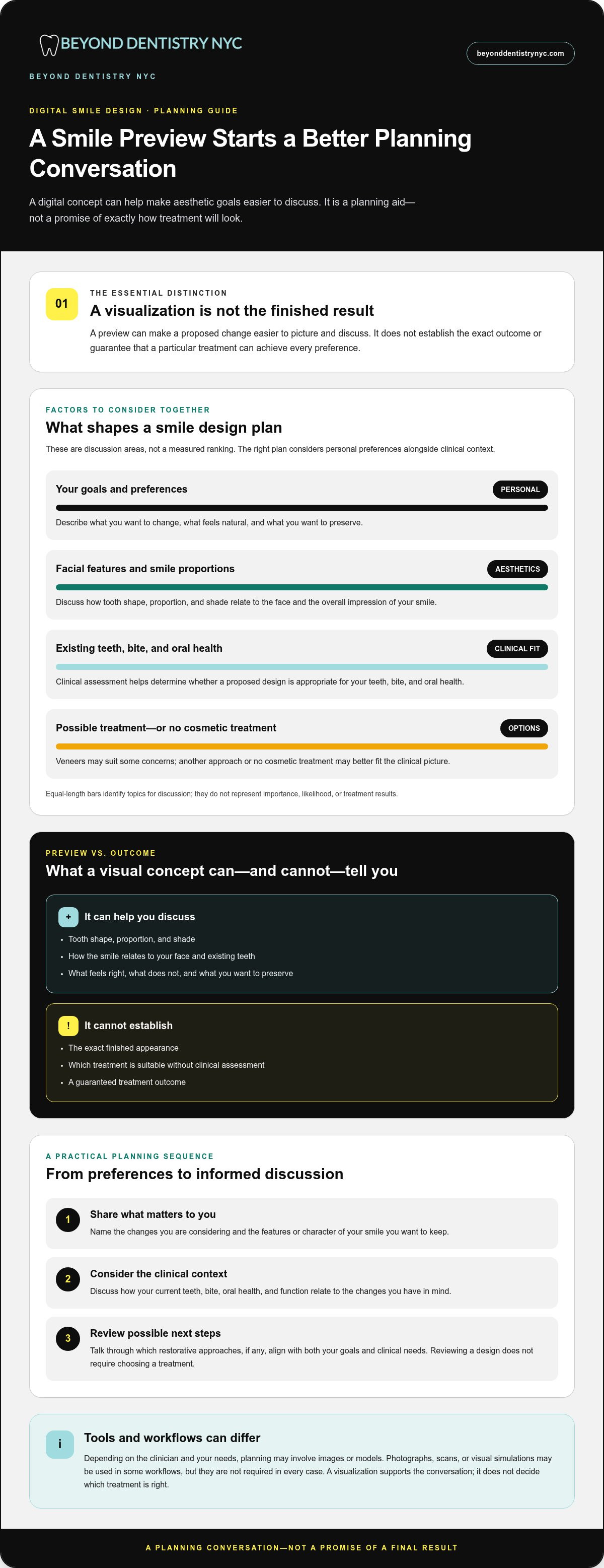
How to Evaluate a Digital Smile Design Plan Before a Smile Makeover in NYC
A design is most useful when you can connect it to your priorities and understand how clinical needs shape the options. The question of what is digital smile design nyc is only a starting point. Evaluating a plan means looking beyond whether you like the image. Consider what the proposed changes involve, how they relate to your existing teeth and bite, and what questions still need answers before you decide.
What should you discuss when reviewing a proposed smile?
Start by describing the change you want, including how subtle or noticeable you would like it to be. Explain what you appreciate about your current smile, too. Then discuss how aesthetic goals relate to oral health, function, and any existing restorations. A patient-centered plan should make room for your preferences while explaining which restorative options may fit your clinical needs and why.
- Goals: Which features are you hoping to change, and what would you prefer to keep?
- Clinical context: How do your existing teeth, bite, oral health, and restorations affect the design?
- Treatment options: Which approaches are being considered, and how does each relate to your goals and needs?
- Expectations: Which elements of the design are preferences, and which outcomes depend on clinical findings or treatment decisions?
These questions can help you understand the reasoning behind a proposal rather than treating a visual concept as a complete treatment plan. A functional dentistry perspective considers appearance alongside the health and function of your teeth. For more on that approach, read the functional dentistry guide.
How can you prepare for a smile design consultation in NYC?
Bring reference images if they help explain what you like, but treat them as conversation starters, not exact templates. Make a short note of specific concerns, such as a tooth’s shape or how existing dental work looks. Also identify what you like about your current smile. This balance can make it easier to describe a natural-looking result that still feels personal.
Before settling on a direction, make sure you understand how the proposed design relates to your bite and restorative needs, which treatment options are being considered, and what remains uncertain. You do not have to decide on cosmetic treatment just because you have reviewed a design. If you are exploring options, explore smile makeover care at Beyond Dentistry NYC.
How Beyond Dentistry NYC Connects Smile Design Goals With Restorative Care
A smile makeover is about more than the appearance of individual teeth. At Beyond Dentistry NYC, smile makeovers, veneers, restorative expertise, and functional dentistry provide context for discussing how aesthetic preferences relate to oral health and function. A useful answer to what is digital smile design nyc starts with that distinction: visual planning can support the conversation, while clinical judgment helps shape appropriate care.
Why should smile design consider function as well as appearance?
A design that looks appealing in an image still needs to make sense for the person’s teeth and bite. Existing restorations, oral health, and everyday function belong in the discussion alongside details such as tooth shape and overall appearance. Considering these elements together can help patients understand why a proposed restorative option may suit their needs, or why a different approach deserves consideration.
Functional dentistry offers a useful perspective without assuming a diagnosis or prescribing treatment based on appearance alone. It keeps the focus on the whole smile: what you hope to change, what needs clinical attention, and how those factors relate. Smile Gallery Restorations offers a related example of the practice’s restorative focus.
What is a comfortable next step for patients considering a smile makeover?
Bring your questions and priorities into a personalized discussion. Describe the changes you are considering, what you like about your current smile, and any concerns about how proposed care could relate to your teeth, bite, or existing restorations. You do not need to arrive with a treatment decision already made. The conversation can help clarify your goals and explore restorative options in light of your individual needs.
Digital design, when used as part of planning, can help people communicate about aesthetic preferences. It should remain one part of a thoughtful process, alongside clinical assessment and a clear discussion of treatment choices. At Beyond Dentistry NYC, smile makeover and veneer expertise connects those preferences with restorative care that considers function and oral health, without treating a preview as a promise of the finished result.
If you are ready to explore your goals, discuss your smile makeover goals with Beyond Dentistry NYC.
Move Forward With a Smile Plan That Feels Like You
Understanding what is digital smile design nyc means recognizing its role as a planning aid, not a guarantee of an exact result. A visualization can help you express preferences, but clinical assessment, oral health, function, and the treatment selected all shape what is appropriate. The clearest plan makes room for both the smile you hope to see and the needs of your existing teeth.
Bring your questions, concerns, and ideas about what you would like to preserve into the discussion. Beyond Dentistry NYC brings together smile makeover and veneer expertise, a functional and restorative dentistry perspective, and innovative technology treatments to support thoughtful conversations about your options.
You deserve to feel heard and informed as you consider a change. Discuss your smile makeover goals with Beyond Dentistry NYC and take a confident next step toward care that reflects your preferences and oral health.
Frequently Asked Questions
What is digital smile design?
Digital smile design is a visual planning approach for discussing possible changes to a smile, not a treatment by itself. In New York, understanding what is digital smile design nyc means recognizing its role in communicating aesthetic goals. Depending on the clinician and case, images or digital visualizations may support the conversation. A clinical assessment helps determine appropriate options, and a preview should not be treated as a guarantee of a specific result.
How does digital smile design work?
A typical process begins with a conversation about your goals and an assessment of your smile. Depending on the clinician’s approach and your needs, photographs, scans, or digital visualizations may help communicate possible changes. You and your clinician can discuss the design and consider suitable treatment options together. The steps vary by patient, so do not assume a particular sequence or technology is part of every planning process.
Can digital smile design show exactly what my finished smile will look like?
No. A digital image can help communicate a possible direction, but it cannot predict the exact finished result. The outcome depends on clinical findings, individual factors, and the treatment selected. Use a preview to discuss what it represents, which details may change, and how the proposed design relates to your oral health. This keeps expectations grounded while making space for your preferences and questions.
Is digital smile design worth considering before veneers?
It may be useful if you want to discuss your overall smile goals before considering veneers. A design conversation can help clarify preferences, such as tooth shape or how noticeable you want a change to be. It does not determine whether veneers are appropriate on its own. Your teeth, oral health, function, and other restorative options also matter, so treatment choices should follow a personalized clinical discussion.
Does digital smile design replace a dental examination?
No. A visual design supports communication about a possible smile transformation, but it does not replace an examination or assessment of oral health and function. Before discussing suitable care, a clinician needs to consider your individual needs, including relevant features of your teeth and bite. Seeing a proposed design can help you explain what you like, but it does not establish whether a treatment is clinically appropriate.
How should I prepare for a digital smile design consultation in NYC?
Before a consultation, note what you would like to change, what you want to preserve, and any concerns about your smile. Reference images can help explain preferences, but treat them as conversation starters rather than exact templates. You can also prepare questions about how a proposed design relates to your teeth, bite, oral health, and possible treatment options. This preparation can make the discussion more personal and clarify what a preview can realistically communicate.


