

What if the best way to protect porcelain veneers is to care just as thoughtfully for the natural teeth beneath them? It’s a common question: do veneers need a special brushing routine, and can everyday habits damage them? Learning how to care for porcelain veneers starts with a few gentle, consistent habits that support your restorations and overall oral health.
You don’t need to feel anxious about every meal or change your entire routine. With a sensible approach, you can reduce avoidable wear and know which changes are worth bringing to a dentist’s attention.
This guide covers daily brushing and flossing, foods and habits that may put veneers at risk, and symptoms such as a chip, looseness, or new discomfort that warrant a call to your dentist. You’ll also learn when individualized guidance can help, especially if you grind your teeth or have questions about your smile. Veneer care is straightforward, and consistency can help you feel more confident protecting your smile.
Key Takeaways
- Learn how to care for porcelain veneers with a simple daily routine, and follow your dentist’s personalized instructions.
- Understand how everyday habits, including using your teeth as tools, can put veneers and natural teeth at risk.
- See why veneer care should also protect your gums and the teeth around each restoration.
- Know when a chip, movement, new discomfort, or bite change is a reason to contact a dental professional.
- Ask your dentist how often your veneers and overall oral health should be reviewed.
How to Care for Porcelain Veneers Every Day
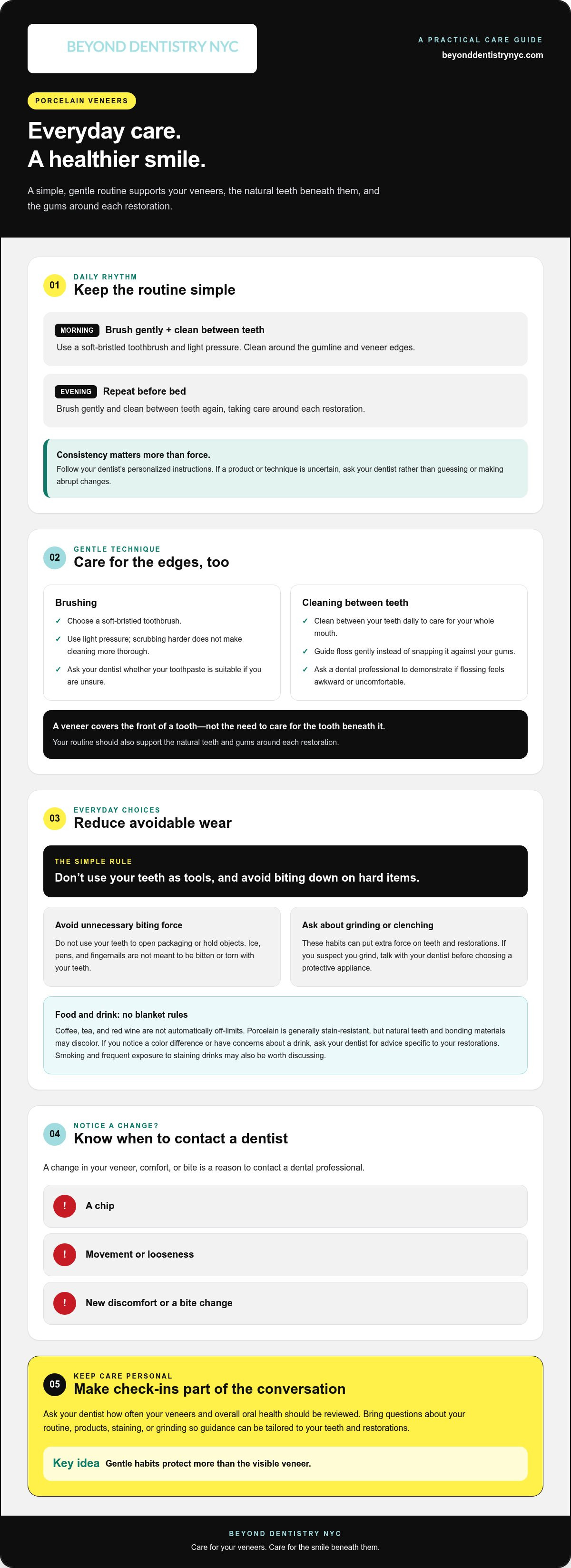
Caring for veneers doesn’t require a complicated new routine. Gentle brushing and cleaning between teeth help keep the natural teeth and gums around your restorations clean. A veneer covers the front of a tooth, as described in this overview of a dental veneer, but the tooth beneath it still needs daily care.
Veneer care is never a reason to neglect the natural tooth beneath the restoration. Your dentist may give you instructions based on your teeth and restorations, so follow those first. As a simple starting point:
- Morning: Brush gently with a soft-bristled toothbrush, then clean between your teeth.
- Evening: Repeat gentle brushing and interdental cleaning before bed, taking care around the gumline and veneer edges.
Consistency matters more than force. If you’re unsure whether your current products or technique are suitable, ask your dentist to review your routine rather than changing it based on a general recommendation.
Brushing porcelain veneers without unnecessary abrasion
Choose a soft-bristled toothbrush and use light pressure. Scrubbing harder doesn’t make cleaning more thorough. A gentle approach makes it easier to clean along the gumline and around restoration edges without pressing forcefully. Toothpaste options vary, so ask your dentist if you’re unsure whether a product is appropriate or abrasive. They can help you choose an approach suited to your mouth and restorations.
Flossing and cleaning around veneer edges
Clean between your teeth daily to care for your whole mouth, not just the visible veneer surfaces. Guide floss gently between the teeth instead of snapping it against your gums, and take care as you clean around each restoration. If flossing feels awkward or uncomfortable, ask a dental professional to demonstrate a technique that works for you. Small adjustments can make the habit easier to maintain.
Your daily routine supports more than appearance. Gentle brushing and interdental cleaning help care for surrounding teeth and gums, while your dentist can tailor advice to your needs. Bring questions about products or technique to your next visit rather than guessing or making abrupt changes.
Foods, Drinks, and Habits That Can Put Porcelain Veneers at Risk
Veneer care doesn’t mean giving up every favorite food or drink. Porcelain, natural teeth, and the bonding area may respond differently to staining and wear. Porcelain is generally stain-resistant, but surrounding teeth and bonding materials may discolor. That’s one reason to care for your whole smile, not just the visible veneer.
Coffee, tea, and red wine aren’t automatically off-limits. If you notice a color difference or have concerns about a particular drink, ask the dentist who placed your veneers for advice specific to your restorations. Smoking and frequent exposure to staining drinks may also be worth discussing. Cleveland Clinic offers additional general guidance on how to keep your veneers in good condition.
Can coffee, tea, or red wine stain porcelain veneers?
Porcelain and natural teeth can respond differently to staining, so a veneer’s shade may not change in the same way as that of neighboring teeth. That doesn’t mean a veneer is immune to every change in appearance, or that surrounding teeth and the gumline can be ignored. Keep up with your regular oral care, and ask your dentist about a specific drink or stain instead of relying on a blanket rule.
Force is another everyday consideration. Avoid using your teeth to open packaging or hold objects, and don’t bite down on hard items just because they’re within reach. Reducing unnecessary biting force is a simple, sensible way to help protect both veneers and natural teeth.
Protect veneers from biting force and teeth grinding
Ice, pens, fingernails, and packaging aren’t meant to be bitten or torn with your teeth. Clenching or grinding can also put extra force on teeth and restorations, sometimes without you realizing it. If you suspect you grind your teeth, mention it to your dentist before choosing a protective appliance. The right advice depends on your oral health and individual needs.
How to care for porcelain veneers also means noticing habits that may affect your smile over time, without treating every meal as a risk. If you’re unsure whether a drink, smoking, or a repeated habit matters for your veneers, ask for individualized guidance. You can also discuss veneer care with the NYC dental team as part of a conversation about your restorations and oral health.
Porcelain Veneers and Natural Teeth: What Your Care Routine Should Protect
A veneer is one part of a smile, not a substitute for caring for the rest of your mouth. The restoration, the tooth beneath it, your gums, and nearby teeth all need attention. That’s why knowing how to care for porcelain veneers includes routine brushing, cleaning between teeth, and professional checkups, as well as attention to the health and function of your whole smile.
Veneer materials and individual oral health needs can vary. Cleveland Clinic’s overview of veneers as cosmetic dentistry treatments offers helpful background, but your dentist is best placed to advise you about your specific restoration and care routine.
| What needs care | Why it matters | Care focus |
|---|---|---|
| Porcelain veneer surface | It forms the visible restoration. | Use gentle brushing and follow your dentist’s care advice. |
| Natural tooth structure | The tooth remains beneath the veneer. | Keep up with daily brushing and interdental cleaning. |
| Gums | They surround the teeth and restoration margins. | Clean carefully along the gumline. |
| Surrounding teeth | They remain part of your overall smile and oral health. | Maintain your usual whole-mouth hygiene routine. |
Do porcelain veneers need special toothpaste or a special toothbrush?
Not everyone with veneers needs the same products. A soft-bristled toothbrush and gentle technique are a sensible starting point, while toothpaste should be suitable for your teeth and restorations. If you’re unsure about your toothpaste, ask your dentist rather than switching products based on a general recommendation. Sensitivity or existing dental concerns are also good reasons to request tailored advice.
Why the tooth beneath a veneer still needs attention
A veneer covers part of a tooth; it doesn’t make oral hygiene optional. Brush as directed, clean between teeth, and keep up with professional care so your dentist can assess your overall oral health and restoration. If you’re exploring how veneers fit into broader treatment planning, read the Smile Makeover NYC guide. A smile makeover conversation can consider appearance alongside oral function and ongoing health.
Think of your routine as care for a complete smile, rather than maintenance for a single surface. Your dentist can adapt it to your needs and recommend how often your veneers and oral health should be reviewed.
When to Contact a Dentist About a Chipped, Loose, or Uncomfortable Veneer
Porcelain veneers are durable restorations, but they aren’t immune to damage or changes over time. A veneer can chip, feel loose, or become uncomfortable. A change in your bite is worth attention, too. These signs don’t identify the cause, but they are good reasons to contact a dental professional for guidance.
If you notice a visible chip, movement, new discomfort, or a bite that feels different, call the dentist who treats your veneers and explain what has changed. They can advise you on timing and whether an assessment is needed. Don’t wait for a routine checkup if something feels concerning.
What should you do if a porcelain veneer chips or feels loose?
Contact your treating dentist rather than trying to fix the veneer yourself. Don’t glue it back on, file it, or attempt another home repair, since that could make the situation harder to assess. If the veneer comes away, keep the piece somewhere safe and ask the dental office how they’d like you to handle it. The next step depends on an examination, so avoid assuming it can be repaired or reattached in a particular way.
While you’re waiting for guidance, take care around the affected area and avoid putting extra pressure on it. If you’re unsure what to do, call the office to ask whether you should arrange an appointment and what steps to take in the meantime.
Sensitivity, gum changes, or a bite that feels different
New sensitivity, gum changes near a veneer, discomfort when chewing, or an altered bite can have different causes. Symptoms alone can’t confirm whether the veneer is damaged or identify what’s happening, so let a dental professional assess the change. If a concern persists or bothers you, reach out rather than trying to diagnose it at home.
Not every change calls for the same timing. Contact your dental office, explain what you’re experiencing, and ask how soon they recommend an assessment. If symptoms feel severe or are worsening quickly, make that clear when you call so the office can advise you on the appropriate next step. This isn’t a substitute for emergency care when urgent symptoms arise; follow professional guidance for your situation.
Knowing how to care for porcelain veneers includes knowing when a new symptom deserves attention. If you have questions about a chip, looseness, or discomfort, you can discuss your veneer concerns with the NYC dental team.
Keep Porcelain Veneers Looking and Feeling Their Best Over Time
A sustainable veneer-care routine isn’t complicated. Gentle brushing, cleaning between your teeth, avoiding unnecessary biting force, and keeping up with professional follow-up all support your restorations and the natural teeth around them. The best routine is one you can maintain consistently and adjust with your dentist’s guidance.
A simple checklist for caring for porcelain veneers
- Brush gently and clean between your teeth as part of your regular daily routine.
- Avoid biting hard objects or using your teeth to open packaging.
- If you suspect clenching or grinding, discuss it with your dentist before choosing a protective appliance.
- Contact a dental professional if a veneer chips, feels loose, or becomes uncomfortable.
These habits offer a practical starting point for how to care for porcelain veneers, but they don’t replace personalized advice. Ask your dentist how often your particular veneers and overall oral health should be reviewed. The right follow-up schedule depends on your circumstances, so don’t guess based on someone else’s routine.
Getting personalized veneer-care guidance in New York City
Veneer care is connected to the health and function of your whole smile. Your dentist can consider your restorations alongside your oral health and help you make sense of questions about products, habits, or changes you’ve noticed. Beyond Dentistry NYC serves patients in New York City with veneer expertise and smile makeovers as part of a functional and restorative dentistry approach. For more context on that approach, explore Smile Gallery Restorations.
If you’re exploring how veneers may fit into broader smile planning, you can also explore veneer and smile makeover care. New York City readers with questions about existing veneers can contact Beyond Dentistry NYC to discuss their individual concerns with the dental team. A conversation can help you understand what guidance may suit your smile, without assuming every patient needs the same routine or next step.
Build a Veneer-Care Routine That Works for You
Knowing how to care for porcelain veneers comes down to steady, gentle habits and paying attention to changes. Brush carefully, clean between your teeth, and avoid habits that put unnecessary force on veneers. Just as importantly, remember that restorations are part of a whole smile: your natural teeth and gums need ongoing care, too.
If a veneer chips, feels loose, or becomes uncomfortable, contact a dental professional for guidance instead of trying to repair it yourself. Your dentist can also recommend how often your veneers and oral health should be reviewed based on your individual needs.
Veneer care questions are personal, and you don’t have to figure them out alone. Beyond Dentistry NYC offers veneer expertise and smile makeovers with a focus on functional and restorative dentistry. Discuss your porcelain veneer care with Beyond Dentistry NYC and ask for guidance tailored to your smile.
Frequently Asked Questions
Is it hard to care for porcelain veneers?
No, most patients can care for veneers with a consistent, gentle oral hygiene routine. Brush carefully, clean between your teeth, and follow the instructions from the dentist who knows your restoration. Veneers don’t remove the need to care for natural teeth and gums. If you have sensitivity, suspect grinding, or aren’t sure about a product or technique, ask your dentist for personalized guidance on how to care for porcelain veneers.
Can you brush porcelain veneers with regular toothpaste?
Many people brush veneers as part of their usual routine, but the right toothpaste can depend on individual circumstances. Use a gentle brushing technique, and ask your dentist whether your toothpaste is suitable, especially if you’re unsure about its abrasiveness. Don’t assume a whitening toothpaste is right for every restoration or that it will change the shade of porcelain. Your dentist can advise you based on your teeth and veneers.
Can coffee or tea stain porcelain veneers?
Porcelain and natural teeth may respond differently to staining, so a veneer and nearby teeth might not change in appearance in the same way. Continue your regular oral hygiene routine, and ask your dentist about a noticeable color difference. Whitening products shouldn’t be relied on to change the shade of porcelain. If you have a cosmetic concern, discuss it with the dental professional familiar with your restoration and oral health.
What foods should you avoid with porcelain veneers?
You don’t need to treat every food as off-limits, but avoid biting hard objects such as ice, pens, or fingernails. Biting force may also be a concern if you clench or grind your teeth. Ask your dentist for recommendations that account for your veneers, bite, and eating habits instead of following a one-size-fits-all restriction list. This can help you make sensible choices without feeling anxious about every meal.
What happens if a porcelain veneer chips or comes loose?
Contact the dentist who placed or currently cares for the veneer, and describe what has changed. Don’t try to glue, file, or repair it at home. If a piece comes away, keep it safe and ask the dental office whether you should bring it. A dentist needs to assess the veneer and surrounding tooth before advising you on next steps, so avoid assuming a specific repair or outcome.
Do porcelain veneers need professional checkups?
Yes, continue routine dental visits and ask your dentist how your veneers should be monitored alongside your overall oral health. A checkup gives the dental professional an opportunity to discuss the restoration, gums, bite, and any changes you’ve noticed. The appropriate follow-up schedule depends on your circumstances, so use the guidance of the clinician familiar with your care. In New York City, Beyond Dentistry NYC can discuss veneer questions as part of its restorative and functional dentistry focus.
Can teeth grinding damage porcelain veneers?
Clenching or grinding may put additional force on teeth and restorations, so tell your dentist if you suspect it’s happening. Morning jaw discomfort or noticing that you clench can be useful details to share, but they don’t confirm a diagnosis on their own. A dental professional can assess your situation and explain whether a protective approach may be appropriate. Don’t choose an appliance without first discussing your needs with a dentist.


