

A chipped tooth won’t heal on its own, but the right restoration can help it look and function like itself again. To fix a chipped tooth in NYC, a dentist may use bonding for a small chip or a crown when more of the tooth is damaged. The best option depends on how much tooth structure is affected and whether the damage reaches deeper layers.
It’s understandable to hope a painless chip can wait. But even without discomfort, visible damage deserves attention, since the tooth may need protection from further wear or injury. Until you’re seen, avoid chewing on that side and keep the area clean; according to the American Dental Association, rinsing with warm water is a helpful first step.
This guide explains why a chipped tooth won’t mend by itself, how to protect it, and how bonding or a crown can restore function and appearance. You’ll also learn which signs call for faster care and what a dentist considers when choosing a treatment.
Key Takeaways
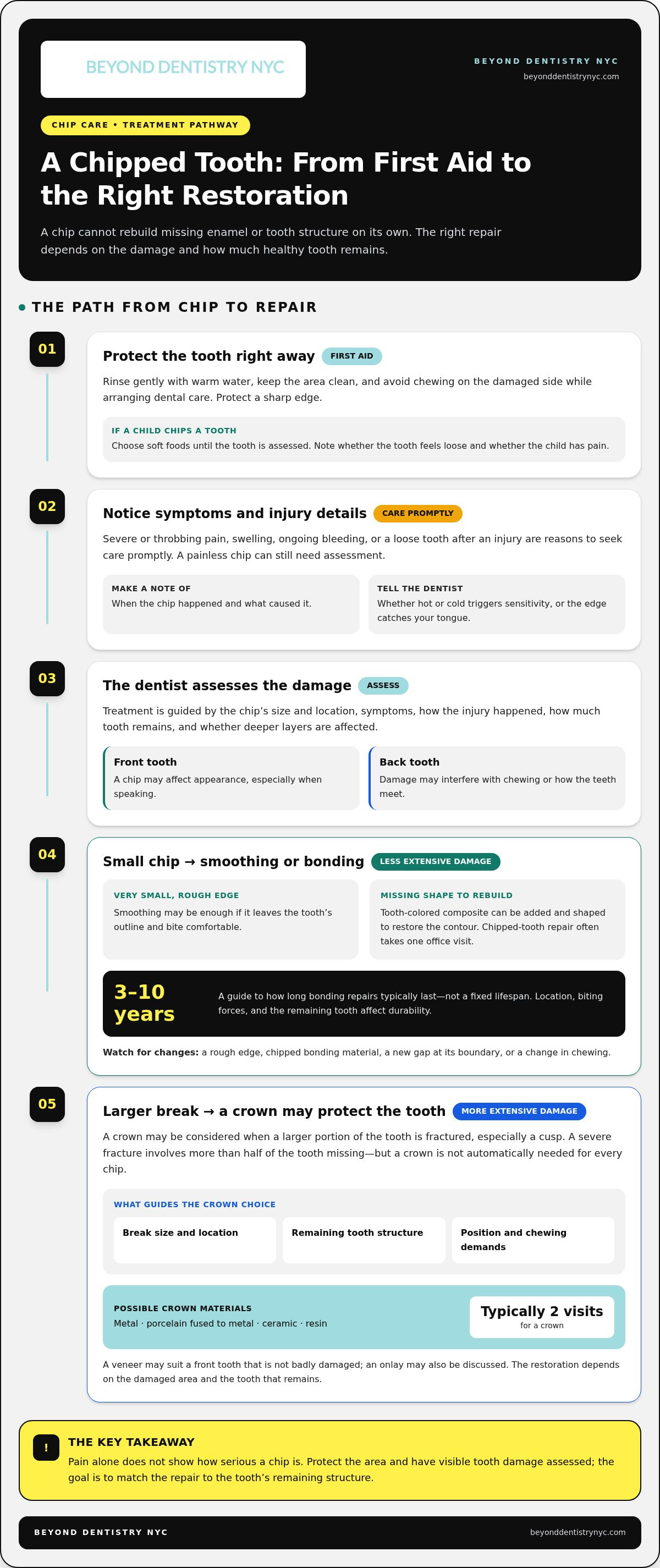
- A chipped tooth won’t heal on its own, and even a painless chip can need professional assessment.
- Rinse gently with warm water, avoid chewing on the damaged side, and protect any sharp edge while arranging dental care.
- Bonding may restore a small chip, while a crown can protect a tooth with more extensive damage.
- Severe pain, swelling, ongoing bleeding, or a loose tooth after an injury are reasons to seek care promptly.
- The right restoration depends on the chip’s size and location, the remaining tooth structure, and whether deeper layers are affected.
Can a chipped tooth heal on its own?
No. A chipped tooth cannot rebuild missing enamel or tooth structure on its own. A tiny edge chip may feel smooth and painless, while a deeper break can expose sensitive inner layers. Either way, visible damage deserves a dentist’s assessment. The size and location of the chip, your symptoms, how the injury happened, and how much tooth remains all help guide care. A front-tooth chip may affect appearance, while damage on a back tooth can interfere with chewing. To fix a chipped tooth in NYC, describe the injury and any changes in comfort or function.
A sudden impact can chip a tooth, but everyday habits can contribute too. Biting hard objects such as ice or a pen puts concentrated force on a tooth edge. Sports injuries and facial trauma can break a tooth on impact. Weakened enamel may also leave a tooth more vulnerable during ordinary chewing. The American Association of Endodontists identifies chipped teeth as accounting for a majority of dental injuries. That doesn’t mean every chip is severe, but a dentist should assess the damage rather than judge it by pain alone.
Cracks and breaks can look different from a small chip. A hard bite may break a cusp or corner, while a fall can fracture a tooth more extensively. Existing enamel weakness may make a tooth less able to withstand biting forces. A painless break isn’t automatically harmless. A chip that feels fine may still affect the tooth’s structure, while sensitivity or a sharp edge can signal a need for prompt attention. A dentist considers these signs, the tooth’s position, and what caused the damage.
A chipped primary tooth still deserves a dental assessment. “Baby tooth” describes a tooth that will eventually be replaced, not a reason to ignore a break. Note whether the injury followed a fall or blow, whether the tooth feels loose, and whether the child reports pain. Share those details with the dentist. If a child chips a front tooth while playing, avoid testing the edge with hard foods and choose soft foods until it’s assessed.
Before an appointment, note when the chip happened and what caused it, such as a sports collision or biting a hard snack. Record whether hot or cold foods trigger sensitivity and whether the edge catches your tongue. These details help explain the injury clearly. To fix a chipped tooth in NYC, report severe or throbbing pain, swelling, or a loose tooth after impact when seeking care. An evaluation can distinguish a minor surface chip from damage that needs more protection.
Dental bonding
Dental bonding can rebuild a small chipped area with tooth-colored composite material. The right repair depends on the chip’s size and location, and on how much tooth structure remains. For a small chip, bonding can help fix a chipped tooth in NYC by restoring its outline without automatically requiring a crown.
Composite Resin Bonding
With composite resin bonding, a dentist adds tooth-colored material to the damaged area and shapes it to restore the tooth’s contour. For example, resin can fill a small notch in a front tooth and make the edge look more even. The dentist considers the chip’s position and how much material is needed. In many cases, chipped-tooth repair takes one office visit.
Bonding is one option among several restorations. A veneer may suit a front tooth that isn’t badly damaged, while a crown may be considered for a larger break. An onlay may also be discussed as another restoration option. The amount of remaining tooth and the damaged area help guide the comparison. If you’re weighing cosmetic treatment while deciding how to fix a chipped tooth in NYC, consider whether appearance, function, or both are your priority. Veneer options for chipped teeth may be part of that discussion.
Smoothing Small Chips
A very small chip may need only smoothing to remove a rough edge, while composite can rebuild missing shape. The dentist evaluates whether smoothing alone will leave the tooth’s outline and bite comfortable. A tiny uneven corner might be gently refined, while a visible notch may benefit from tooth-colored material. The aim is to address the edge without treating every chip as though it needs a crown.
Location matters. A chip on a front tooth may be especially noticeable when you speak, while damage on a chewing surface can change how your teeth meet. Ask what bonding is intended to change: the tooth’s contour, its function, or both. That explanation can clarify why smoothing, bonding, or another restoration best fits the damage.
Bonding Durability
Dental bonding repairs typically last 3-10 years. That range is a guide, not a fixed lifespan for every bonded tooth. The location of the repair and the forces it handles matter; a tooth used for biting may face different demands than a front tooth. The condition of the remaining tooth also affects how much support the restoration has.
Watch for changes such as a rough edge, a chip in the bonded material, or a new gap along its boundary. Tell a dentist, especially if chewing feels different. Bonding can restore a small defect, but it doesn’t make the tooth immune to future damage. The restoration should suit both the chip and the tooth’s remaining structure.
Dental crowns for larger breaks
A crown may protect a tooth when a fracture removes a larger portion, especially a cusp. A severe fracture involves more than half of the tooth missing, but a crown isn’t automatically needed for every chip. The dentist considers the break’s size and location, how much tooth remains, and whether the tooth can support a restoration. The goal is to restore useful shape while covering vulnerable tooth structure.
Crown materials include metal, porcelain fused to metal, ceramic, and resin. The choice depends on the tooth’s position, the amount of visible tooth, and the restoration’s demands during chewing. A crown typically requires two visits. The dentist prepares the damaged tooth and places a crown; the precise steps depend on the tooth and treatment plan. With excellent hygiene, dental crowns often last 15 to 25 years, though care and use affect their longevity.
If a fracture exposes the tooth’s pulp, root canal treatment may be needed to remove damaged pulp and protect against infection, followed by a crown. A crack extending below the gum line may require extraction if the tooth can’t be saved. After tooth loss, a dental bridge can replace the gap. Options include fixed or traditional, Maryland, cantilever, and implant-supported bridges. Each type connects replacement teeth differently, so the missing tooth’s position and neighboring teeth matter.
Not every front-tooth chip calls for a crown. A veneer may be an option when a front tooth isn’t badly damaged. It can address appearance while preserving a different treatment approach from covering the tooth with a crown. The deciding factors include how much tooth remains and whether the damage affects strength or mainly appearance. During a consultation, ask how each proposed restoration addresses the fracture and supports the tooth’s function.
Seek faster dental attention for severe or throbbing pain, lingering sensitivity to hot or cold, swelling, uncontrolled bleeding, or a loose or displaced tooth after an accident. These signs can indicate more than a surface chip. A crown consultation can assess the break, but pronounced symptoms or impact-related looseness call for prompt attention rather than waiting to address appearance concerns.
For readers considering care in Midtown Manhattan, the dental office at 209 East 56th Street is three blocks from the listed subway access. A consultation can help clarify whether a crown, veneer, root canal followed by a crown, or replacement for a missing tooth addresses the specific damage. The choice depends on the fracture’s extent and the condition of the surrounding teeth, not simply the fact that a tooth chipped.
Immediate care and temporary protection for a chipped tooth
After chipping a tooth, rinse gently with warm water, avoid chewing on that side, and contact a dentist promptly. If a fragment is missing, keep it in milk or saline in a clean container and bring it along.
Immediate First Aid
Start with a gentle warm-water rinse to clear the mouth. The American Dental Association advises rinsing after a tooth chips. If the area is bleeding, place clean gauze over it. For bleeding that continues, apply pressure to the outside of the mouth in intervals of about 10 minutes. A cold compress against the cheek may help with swelling after an impact.
Notice what changed immediately after the injury. Severe or throbbing pain, lingering sensitivity to hot or cold, swelling, uncontrolled bleeding, or a loose tooth after impact call for faster care. If an accident broke a tooth and a fragment is missing, save it in milk or saline. Don’t try to glue it back yourself.
Steps to Take at Home
Until a dentist assesses the damage, choose soft foods or fluids and avoid chewing on the affected side. This reduces pressure on the broken surface while you arrange care. If cold air or drinks cause discomfort, clean, moist gauze or cloth can provide temporary comfort over the sensitive area. Keep your mouth clean with gentle rinsing rather than probing the chip with fingers or objects.
For pain, use over-the-counter medicine according to the product’s directions while traveling to the dentist. Never place aspirin directly on the tooth or gum tissue, because it can irritate the tissue. A warm salt-water rinse is another temporary measure for a chipped or broken tooth. These steps may help in the moment, but they don’t repair missing tooth structure or prevent every complication.
Temporary Tooth Protection
A sharp edge can rub against your lip, tongue, or cheek. Sugarless gum or paraffin wax can cover the edge temporarily. Place it gently without pressing into the chip. This barrier is for comfort, not a permanent repair. Don’t use household glue or try to attach a broken fragment yourself, as that can complicate professional treatment.
Keep the saved fragment clean and contained, and bring it to your dental visit. A chip that exposes the tooth’s pulp may need treatment to protect against infection. Seek faster care for severe pain, swelling, ongoing bleeding, or a loose tooth after impact. Temporary protection can limit irritation while you arrange an assessment, but it cannot restore the tooth’s original strength.
Restoring tooth function and appearance
A successful restoration should do more than hide a chip. It should help the tooth meet neighboring teeth comfortably during chewing and preserve a natural-looking outline. A front tooth affects your smile and speech, while a chipped molar takes pressure during chewing. Treatment planning balances appearance with the tooth’s structure and role in your bite.
Function starts with the damaged area. A rough or uneven edge can catch your tongue or irritate nearby tissue, while a changed biting surface may make chewing feel awkward. The dentist considers the tooth’s position, the enamel that remains, and how the upper and lower teeth meet. Describe practical changes, such as discomfort biting into a sandwich or an edge that catches while speaking. These details help shape a restoration around everyday use.
Cosmetic contouring can refine a small irregularity by removing one to two millimeters of enamel from the tooth’s surface. The dentist sculpts the shape to improve how it fits with surrounding teeth. This approach changes the outline rather than replacing missing tooth structure, so it suits only minor unevenness. A deeper notch or weakened tooth calls for a different repair. The key question is whether reshaping alone can restore a comfortable edge and balanced appearance.
For a larger chip, bonding can rebuild missing contours, while a crown covers more of the tooth. The choice depends on the break’s location, the remaining structure, and the demands placed on the tooth. If a crack exposes the nerve, root canal treatment may remove the pulp, followed by a crown. This sequence addresses internal damage as well as the visible fracture. A restoration focused only on appearance cannot resolve infected or irreversibly damaged pulp.
A natural result also depends on how the repaired tooth blends with its neighbors. Color, shape, and visible edges all matter, especially on front teeth. Describe what feels different when you smile, speak, or bite, then discuss which concern matters most. Restoring a chipped incisor, for example, may require attention to both its visible edge and its contact with the opposing tooth. The aim is a comfortable, cohesive result, not simply a covered defect.
After treatment, use the repaired tooth as directed and keep up daily brushing and flossing. If the bite feels uneven or a new rough edge appears, report that change during follow-up care. A restoration should support function as well as appearance, and small adjustments can address how the teeth meet. Explore restorative dental care to discuss a plan for repairing a chipped tooth and restoring a natural-looking smile.
Beyond Dentistry NYC: Smile Gallery Restorations
Beyond Dentistry NYC offers Smile Gallery Restorations for people considering how to address a damaged tooth while balancing function and appearance. If a chip has changed your bite or smile, discussing your priorities can help shape the next step. The practice also offers functional dentistry, innovative technology treatments, veneers, and smile makeovers. These services may be relevant when weighing a tooth restoration alongside broader cosmetic goals. The conversation starts with the specific tooth, the damage, and how you want your smile to feel and look. Contact Beyond Dentistry NYC to discuss restoring your smile.
Take the Next Step Toward a Comfortable Smile
A damaged tooth can affect more than the way your smile looks. It may change how confidently you bite, speak, or show your teeth in photos. Explain what matters most to you, whether that’s a natural-looking edge, a comfortable bite, or both. If you’re deciding how to fix a chipped tooth in NYC, sharing those priorities can focus the discussion on a restoration that fits your needs.
Beyond Dentistry NYC offers Smile Gallery Restorations and innovative technology treatments. You can also discuss whether its other dental offerings relate to your broader goals. Bring questions about the tooth’s appearance and everyday function, and describe any change you’ve noticed since the damage. A clear conversation can make the next step feel more manageable and help you understand your options.
Arrange a conversation about your chipped tooth and take a thoughtful step toward feeling comfortable with your smile again.
Frequently Asked Questions
What should I do if I chip a tooth?
Arrange a dental assessment and note how the chip happened. If you saved a fragment, bring it in a clean container. Mention whether the tooth hurts when you bite or reacts to temperature, since these details help describe what changed. Until it’s assessed, avoid testing the edge with hard foods. A dentist can evaluate the damage and discuss a repair suited to the tooth.
What if you don’t have insurance?
You can ask for an examination and a written treatment plan. Request that the plan describe the proposed restoration and explain which features of the damage make it appropriate. If you have a health savings or flexible spending account, review its rules for dental expenses before using it. Costs depend on the tooth, extent of damage, and treatment involved. A quote request is the way to obtain pricing for your case.
When is a broken tooth more urgent?
Seek faster dental attention for severe or throbbing pain, lingering hot or cold sensitivity, swelling, uncontrolled bleeding, or a loose or displaced tooth after impact. A tooth that shifts after a collision needs prompt assessment, even if the visible chip seems small. Tell the dental office how the injury occurred and when symptoms began so they can understand the situation.
Why do teeth chip?
Common causes include facial trauma, sports injuries, biting hard objects, and weakened enamel. A chip can happen during a fall or while biting something hard, such as ice. Existing tooth weakness may make ordinary chewing forces more likely to cause damage. Children can chip primary teeth during play or a fall, too. Describe the event and which tooth is affected when arranging an assessment.
Where can I get emergency treatment for a chipped tooth in NYC?
In NYC, contact a dental office directly and describe the injury, your symptoms, and when it happened. Ask for urgent assessment if you have severe pain, swelling, uncontrolled bleeding, or a loose tooth after impact. Beyond Dentistry NYC is in Central Park South, but its location alone doesn’t establish emergency availability. Give the office clear details so the next step can be discussed appropriately.
Does NYC dental insurance cover chipped tooth repair?
Many dental insurance plans cover chipped-tooth repair, but benefits vary by plan and treatment. Before proceeding, review your plan’s explanation of benefits and compare it with the proposed treatment plan. Ask how the insurer classifies the recommended procedure and what portion may be your responsibility. Bonding and a crown may be handled differently, so don’t assume coverage for one applies to the other.
What are the treatment options for a chipped tooth, and how do they compare?
The repair depends on the extent of damage and the tooth’s condition. Smoothing may refine a minor uneven edge, while bonding can rebuild a small chip. A veneer may suit a front tooth that isn’t badly damaged, and a crown can cover a more extensively broken tooth. If the pulp is affected, root canal treatment may be needed alongside restorative care. Compare what each option repairs, not appearance alone.
How does a dentist repair a chipped tooth with bonding, veneers, or a crown?
For bonding, a dentist shapes tooth-colored composite resin over the damaged area. A veneer is a facing that may restore the appearance of a front tooth with limited damage. A crown covers more of the tooth when a larger break needs protection. The dentist examines the tooth’s location, remaining structure, and bite before recommending an approach. Ask how the proposed restoration supports both appearance and everyday function.


