

In NYC, cosmetic dental bonding cost depends on how many teeth need treatment and how much shaping or repair each one requires. A small chip in one tooth is different from bonding several teeth to create a more even-looking smile, so the treatment details matter more than a one-size-fits-all estimate.
Bonding uses tooth-colored composite resin to address concerns such as chips, small gaps, and discoloration. The material is shaped directly on the tooth, and a visit usually takes 30 to 60 minutes. It can be a relatively straightforward way to refine a smile, but the right approach depends on the tooth’s condition and the result you want.
This guide explains what dental bonding involves, which factors affect its cost in New York City, and how treating one tooth compares with bonding several. You’ll also learn why a repair’s location and extent can shape the treatment plan, and when another cosmetic option may be worth considering. Understanding what goes into an estimate can help you make a more informed decision.
Key Takeaways
- Bonding uses tooth-colored composite shaped directly on a tooth, with preparation tailored to the repair.
- Tooth location can affect the detail and shaping involved, especially when the repair is visible or exposed to bite pressure.
- Treating several teeth means considering how the color, shape, and overall smile will look together, not just the work on each tooth.
- Bonding and porcelain veneers differ in material and approach, so the extent of the change you want can help guide the comparison.
- Damage, treatment complexity, and the number of teeth involved all help shape an NYC bonding estimate.
Does bonding cost more if it's on a front tooth versus a back tooth?
A front tooth doesn’t automatically cost more to bond than a back tooth. Aggregated market offers place bonding between $350 and $400, with a median of about $375. The tooth’s position can affect the work involved: a visible front tooth calls for careful shade matching and shaping, while a back tooth faces chewing pressure.
A repair on a front tooth is especially noticeable when you speak or smile. The dentist applies composite in layers, shaping it to follow the tooth’s contour and blend with neighboring teeth. A small chip may need less reshaping than a larger defect. On a back tooth, the bonded area must also fit the bite comfortably. Because back teeth handle chewing pressure, the location and amount of material needed can affect the procedure.
Risks and limitations include chipping, breaking, or staining over time; composite may not suit extensive damage or a severely decayed tooth. Bonding usually lasts three to 10 years, and hard foods can damage it, especially soon after placement. Unlike porcelain, the resin can discolor and doesn’t change color during teeth whitening. A tooth that has had a root canal may also be too brittle to support a bond.
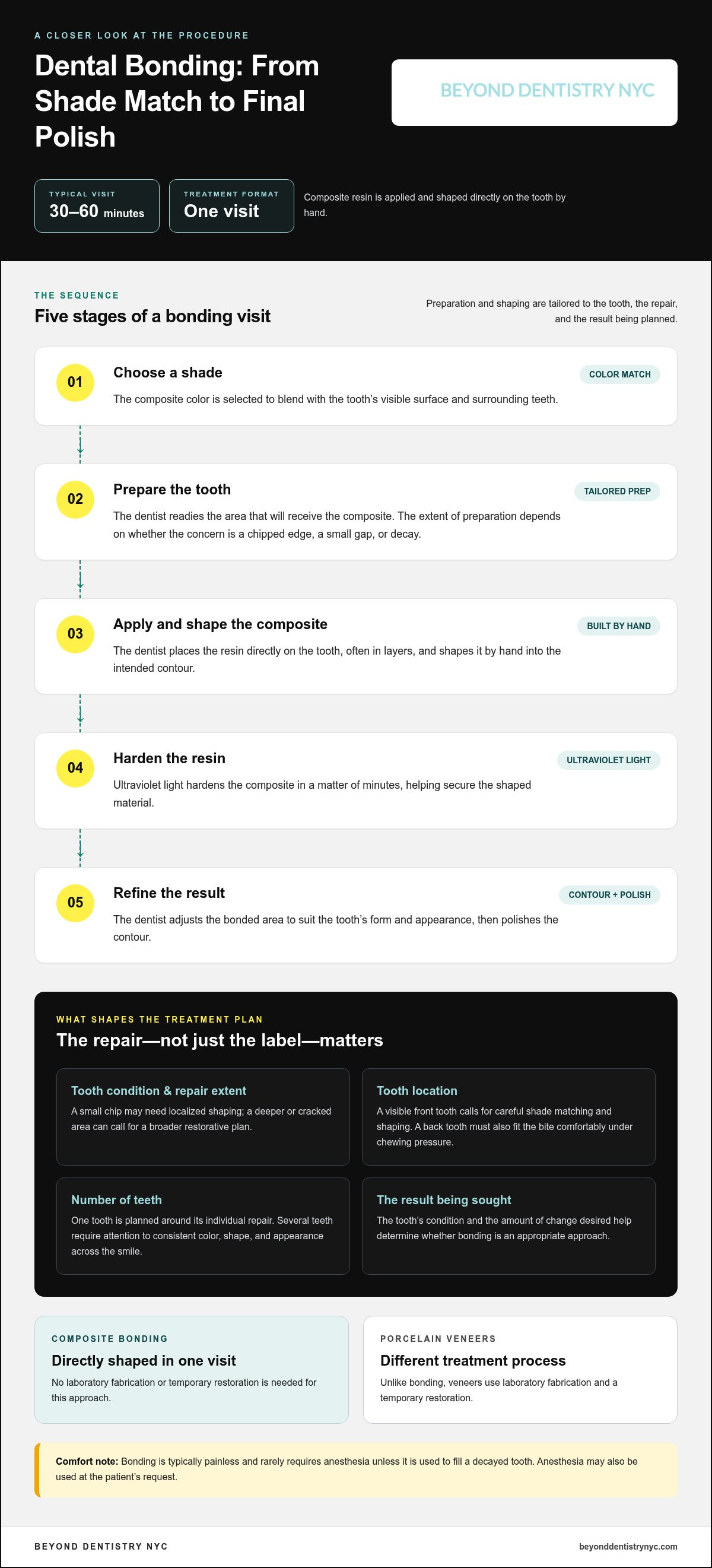
The procedure generally starts with preparing the tooth’s surface so composite can adhere. The dentist selects a shade, applies the material, shapes it, and hardens it with ultraviolet light. A final polish refines the contour. A bonding visit usually takes 30 to 60 minutes, and composite is applied directly by hand in one visit. Unlike porcelain veneers, this approach doesn’t require laboratory fabrication or a temporary restoration.
Composite and amalgam fillings differ in appearance, strength, and tooth preparation. Composite can match the tooth’s color and requires removal of less natural tooth than amalgam. However, composite isn’t as strong as amalgam, which usually lasts 10 to 15 years. Those distinctions matter when comparing a cosmetic repair with a filling intended to restore a damaged area. The best material depends on the tooth and the repair’s function.
Longevity figures describe different outcomes, not a promise for an individual tooth. One multicenter study followed 667 direct composite restorations for up to 15 years; overall survival declined to about 78% by year 15. Functional survival stayed near 98.5%, according to The multicenter study authors. For a patient, the distinction helps explain why a restoration may remain functional even when it needs repair or replacement to maintain its appearance.
What Is Dental Bonding?
Dental bonding uses tooth-colored composite resin to change a tooth’s appearance. It can address a chipped edge, small gap, or discoloration by adding material directly to the tooth. Unlike a restoration made in a laboratory, composite is shaped by hand during the visit. Bonding can be a direct solution for selected repairs, but it is not suitable for every extensive defect.
Preparation depends on the tooth and the goal of treatment. A small chip may need only localized reshaping, while filling a cavity involves treating decay. The dentist considers the area to be restored and the appearance you want. Bonding is typically painless and rarely requires anesthesia unless it is used to fill a decayed tooth. Anesthesia may also be used at the patient’s request.
The procedure follows a sequence that allows the dentist to refine the composite before you leave:
- Choose a shade. The composite color is selected to blend with the tooth’s visible surface and surrounding teeth.
- Prepare the tooth. The dentist readies the area that will receive the bonded material. The extent of preparation depends on whether the concern is a chipped edge, a small gap, or decay.
- Apply and shape the composite. The dentist places the resin directly on the tooth and works it into the intended contour by hand.
- Harden the resin. Ultraviolet light hardens the composite in a matter of minutes, helping secure the shaped material.
- Refine the result. The dentist adjusts the bonded area so it suits the tooth’s form and appearance.
A bonding visit usually takes 30 to 60 minutes. The time depends on the tooth and the work involved, so a straightforward chip and a cavity filling don’t necessarily follow identical appointments. Composite bonding is completed in a single visit, without the laboratory fabrication and temporary restoration used for porcelain veneers. That distinction can make bonding less involved as a cosmetic procedure, though an extensive repair may call for a different approach.
Bonding does not require removing substantial tooth structure for every cosmetic concern. Composite fillings require removing less natural tooth than amalgam fillings. Still, treatment needs to match the problem: a small chipped corner is different from severe damage or decay. Preparation and shaping should reflect the tooth’s condition, the location of the concern, and the amount of composite needed.
Single-tooth versus multiple-tooth treatment
A single bonded tooth is planned around its individual repair. Treating several teeth also requires a consistent appearance across the smile. The number of teeth, the damage involved, and the amount of matching needed all shape the treatment plan.
Chipped Tooth Repair Costs
Chipped-tooth repair uses composite to rebuild a damaged edge or surface. The work depends on the chip’s size and location: a small chip may need localized shaping, while a deeper or cracked area can require a broader restorative plan. The treatment depends on the repair itself, not just the label “bonding.” A consultation assesses the tooth’s condition and your desired result.
For a front tooth, shade matching and contouring are central to a natural-looking result. The composite should blend with nearby teeth, and the repaired edge should suit the tooth’s shape when you smile. If several visible teeth need bonding, their color and proportions must work together. A single-tooth repair can focus on one contour; treatment across multiple teeth adds the challenge of consistency.
Per-Tooth and Full-Smile Pricing
Per-tooth pricing refers to the charge for treating an individual tooth, while a full-smile estimate reflects the combined treatment plan. At Beyond Dentistry NYC, bonding costs per tooth vary with the repair’s complexity and the amount of composite needed. For a full smile in New York City, the total depends on the number of teeth and the shaping and matching required. There is no single total for every smile.
An estimate should specify which teeth and procedures it covers. Consultation charges and later repairs are separate from the planned bonding, so clarify whether they are included. This distinction matters when comparing a repair to one chipped tooth with bonding across several teeth, since the treatment plan and included work may differ.
Porcelain veneers and crowns are alternatives for some situations, but they use different restorative approaches. Bonding may suit a modest chip or small cosmetic change; more extensive damage may call for another option. Veneers can change the appearance of several teeth, while crowns restore a tooth with broader damage. Consider cosmetic dental bonding cost in NYC alongside your desired result, the tooth’s condition, and the extent of treatment, not just the number of teeth.
When bonding several teeth, planning also considers how they look together and meet the bite. For example, a darker tooth beside lighter teeth may need careful shade selection to avoid a noticeable mismatch. If a tooth is cracked or extensively damaged, bonding may not address the underlying problem. A consultation at Beyond Dentistry NYC helps determine which teeth are suitable and whether bonding, veneers, or crowns better fit your needs.
How Much Does Cosmetic Dentistry Cost in NYC?
NYC market prices vary with the treatment, the tooth’s condition, and the extent of the change. When assessing a cosmetic dentist, look for a clear explanation of the recommended procedure, its purpose, and how it addresses your goals.
Bonding and Porcelain Veneer Costs
Bonding and porcelain veneers use different materials and approaches, so their market prices are not directly comparable. This comparison can help frame your decision, but the lower price alone does not determine which treatment suits a particular tooth or smile.
Composite bonding can address small chips, gaps, and discoloration. Porcelain veneers can change the visible appearance of teeth more extensively, and porcelain resists staining better than composite. Bonded composite may last three to 10 years, while the right option depends on the tooth’s condition and the desired change.
Factors Affecting Cosmetic Dentistry Costs
Cosmetic dentistry costs depend on the procedure, the number of teeth treated, and how much repair or reshaping each tooth needs. A small chip is different from extensive damage, and a multi-tooth plan also requires coordinating the smile’s appearance. A case-specific price is provided after a quote request.
Insurance may cover a crown used to restore a tooth after a deep cavity, root canal, or damage. Cosmetic treatment is generally not covered unless it also serves a functional purpose. Insurers may also assess bonding differently when it restores function after an injury-related chip or fracture.
Cosmetic Bonding Uses and Costs
Cosmetic bonding applies tooth-colored composite to improve minor appearance concerns, such as a chipped edge, small gap, or discoloration. The number of teeth and the repair’s complexity shape the estimate, so a straightforward repair may differ in cost from a more detailed cosmetic change.
Whitening changes tooth color, while bonding reshapes or repairs selected areas. Bonded material does not change color during whitening, so treatment order matters when both are part of a smile plan. A dentist can compare the options based on whether your concern is overall shade or the shape of a specific tooth.
Dental bonding cost factors in New York
In New York, a bonding estimate reflects more than the number of teeth. The size of each repair, the tooth’s condition, and the planned result all affect the work involved. A small chip on one tooth differs from rebuilding a broader area or coordinating several visible teeth. Compare treatment plans by what they include, not just by the final figure.
Cosmetic dental bonding cost in NYC depends on the amount and complexity of treatment. A case-specific price depends on the number of teeth, the extent of damage, and the shaping required, and is provided after a quote request. For example, matching composite across neighboring front teeth may involve different planning from repairing one small, less-visible area.
- Number of teeth: Treating several teeth involves planning their color and contours together, not simply repeating one isolated repair.
- Extent of damage: A minor chip may need limited restorative work; a larger defect can require more composite and careful shaping.
- Tooth location: A front tooth’s visible surface makes shade and contour especially important. A back tooth’s function and bite also shape the plan.
- Tooth condition: Decay or extensive breakdown can change whether bonding suits the dental health need.
- Purpose of treatment: Insurers may treat bonding differently when restoring function after an injury-related chip or fracture.
These distinctions matter when comparing an affordable cosmetic change with restorative care. Composite bonding can improve a small gap, discoloration, or chipped edge, but extensive defects or severely decayed teeth may be less suitable. Treatment should address the tooth’s condition as well as your desired appearance. An estimate is easier to understand when it identifies the teeth being treated and the work planned for each.
Insurance is another consideration, especially when a repair serves a functional purpose after an injury. Cosmetic dentistry is generally not covered unless treatment also serves a functional purpose. The reason for bonding can matter alongside the procedure itself: an insurer may assess a purely aesthetic change differently from the restoration of a fractured tooth.
Before comparing estimates, check whether each plan covers the same teeth and repair goals. One may involve a single composite repair, while another includes shaping several teeth for a consistent smile. The plans are not equivalent just because both use bonding. Focus on the condition being treated, the material applied, and the intended restorative or aesthetic result.
Explore how a personalized bonding treatment plan can address your smile goals.
Cost depends on the number of teeth treated, the extent of damage, and the shaping required. A case-specific price is provided after a quote request.
Beyond Dentistry NYC: Smile Gallery Restorations
Beyond Dentistry NYC offers Smile Gallery Restorations for patients considering how to address a chipped tooth or refine their smile. If you are considering bonding, a broader discussion can help clarify whether a focused restoration or a more comprehensive change better suits your goals. The practice also offers innovative technology treatments, smile makeovers, and veneer expertise, connecting cosmetic choices with the overall appearance you want to achieve. Discussing your teeth, priorities, and treatment options can help you understand the next steps without assuming one approach fits every situation. To explore care that considers both appearance and function, contact Beyond Dentistry NYC about your smile goals.
Choose a Next Step That Fits Your Smile
Before your conversation, identify what you want to change and what matters most in the result. This can make a discussion about cosmetic dental bonding costs in NYC more focused, especially if you are weighing a small repair against a broader smile update. Describe the concern, such as a chipped edge or uneven appearance, and ask how the tooth’s condition affects the treatment approach.
Beyond Dentistry NYC offers Smile Gallery Restorations and innovative technology treatments, along with dental implants, sleep apnea appliances, Botox, and TMD services. These offerings address different dental needs, while a bonding discussion can stay focused on your smile goals and suitable restorative options.
Contact Beyond Dentistry NYC to discuss your next step. A thoughtful conversation can help you move forward with greater clarity and confidence.
Frequently Asked Questions
What Is Teeth Bonding, and Why Is It Performed?
Dental bonding uses tooth-colored composite to make a targeted change to a tooth’s shape or surface. A dentist may recommend it for a minor chip, small gap, or localized discoloration when the surrounding tooth structure can support the repair. For example, bonding can restore the outline of a front tooth without changing every tooth in the smile. The aim is a focused cosmetic or restorative improvement.
Can I get an exact price before my visit?
An exact price depends on the treatment plan and is provided after a quote request. A useful estimate accounts for the teeth involved, the extent of damage, and whether the goal is cosmetic or functional. When describing your concern, mention whether the tooth is chipped, cracked, discolored, or uncomfortable. These details help clarify the proposed treatment and what may affect the final estimate.
Does Insurance Cover It?
Dental insurance generally does not cover cosmetic treatment unless it also serves a functional purpose. For example, an injury-related repair may be assessed differently from bonding chosen only to change a tooth’s appearance. Coverage depends on the plan and the purpose of treatment. Review the proposed procedure and its documented reason with your insurer to understand how your benefits apply to your case.
How much does it cost to fix a chipped or damaged tooth?
Cost varies with the tooth’s condition and the repair required. A small chip may involve a limited cosmetic repair, while a fracture or decay can require a restorative approach. NYC market estimates for bonding vary, and the amount of composite and shaping needed affects the treatment plan. A damaged tooth that causes discomfort or changes your bite should be evaluated as a health concern, not only an appearance issue.
How often will I need touch-ups, and does that add to the total cost over time?
There is no fixed touch-up schedule for every bonded tooth. A new chip, rough edge, or visible mismatch can signal that the area needs attention. A dentist can assess whether it needs polishing, repair, or replacement. Additional procedures can affect long-term spending, so include maintenance and possible repairs in your planning rather than comparing only the initial estimate.
What is the average cost of cosmetic dental bonding per tooth in NYC?
That range is a market estimate, not a price for every practice or treatment plan. A small repair and more involved reshaping can require different amounts of work. To compare estimates meaningfully, note which tooth is treated, the concern being addressed, and whether the proposed fee covers the same scope of treatment.
What factors affect dental bonding prices in NYC?
The main factors include the number of teeth, the size and location of each repair, and the shaping needed to achieve the intended result. A visible front tooth may require careful attention to symmetry, while damage that affects function changes the restorative goal. The amount of material and the tooth’s condition also matter. In NYC, comparing treatment details helps explain why estimates can differ.
How do NYC dental bonding costs compare with veneers and crowns?
Bonding generally has a lower market price per tooth than porcelain veneers or crowns in NYC, but the treatments address different needs. Bonding can suit a localized cosmetic concern; veneers change the visible surface, and crowns restore a tooth with more extensive damage. A cost comparison is useful only when the options suit the same tooth and goal. The tooth’s condition and the desired change should guide the comparison.


