

Sleep-related teeth grinding can leave clues by morning, even if you never hear it happen. A dentist for teeth grinding in NYC can assess jaw soreness, headaches, tooth sensitivity, or worn teeth and help determine whether treatment may be appropriate. Bruxism can happen during sleep or while you’re awake, and care depends on its effects and possible contributing factors.
A tight jaw or morning headache is easy to overlook or attribute to something else. Many cases are mild and may not need treatment, while more severe bruxism can damage teeth and contribute to jaw pain, tiredness, or headaches, according to the National Institute of Dental & Craniofacial Research.
This guide explains how to recognize sleep-related and daytime grinding, what may contribute to it, and how a dental evaluation can guide care. It also covers options such as oral appliances, approaches to daytime clenching, and Botox for jaw clenching, including what each may address.
Key Takeaways
- Morning jaw soreness, headaches, tooth sensitivity, or visible wear can point to grinding during sleep, even if you don’t remember it happening.
- Stress, disrupted sleep, some medications, and other factors may contribute to clenching; identifying possible triggers helps guide care.
- Custom mouth guards and dental splints can help protect teeth, while treatment choices depend on symptoms and the extent of damage.
- Botox may be considered for severe clenching because it can temporarily reduce jaw-muscle force; discuss its potential benefits and risks during an evaluation.
- Seek a dental assessment for persistent jaw pain, clicking, difficulty opening your mouth, or teeth that appear chipped or worn.
What symptoms or side effects are associated with Teeth Grinding?
Bruxism can happen during sleep or while you’re awake, and its symptoms aren’t always obvious. You might wake with jaw pain or a headache, or notice that your teeth feel unusually sensitive. The National Institute of Dental & Craniofacial Research notes that mild cases may need no treatment, while severe bruxism can damage teeth and cause jaw pain, tiredness, or headaches.
Look for changes to your teeth as well as discomfort. Repeated grinding can flatten or wear down enamel, chip teeth, and contribute to cracks. Existing fillings and crowns may also be affected. Enamel lost through grinding doesn’t grow back, so pay attention to a new rough edge or sensitivity to cold drinks.
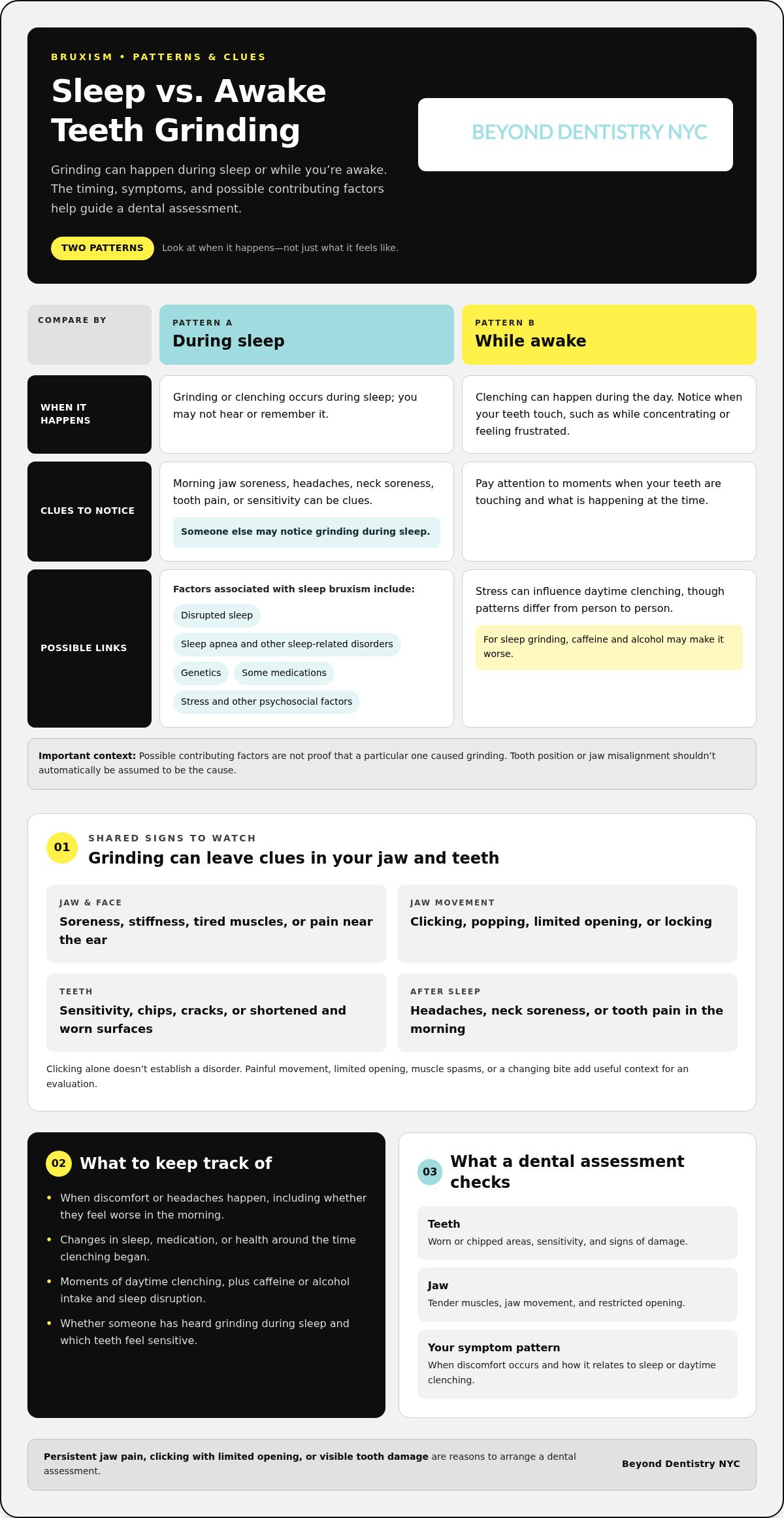
- Jaw and face: soreness, stiffness, tired muscles, or pain near the ear.
- Movement: clicking, popping, limited opening, or a jaw that locks.
- Teeth: sensitivity, chips, fractures, or shortened, worn surfaces.
- Morning clues: headaches, neck soreness, or tooth pain after sleep.
These signs can overlap with temporomandibular disorders, often called TMD. The temporomandibular joint connects the jaw to the skull and supports chewing, speaking, and yawning. Clicking alone doesn’t establish a disorder; painful movement, limited opening, muscle spasms, or a changing bite provide more context. A dentist for teeth grinding in NYC can assess your teeth, jaw movement, and symptoms together.
Diagnosis starts with a conversation about when discomfort occurs, including whether it feels worse in the morning. A dental professional checks for worn or chipped teeth, tender jaw muscles, and restricted movement. Bring examples: note when headaches happen, whether someone hears grinding during sleep, and which teeth feel sensitive. TMD can be challenging to diagnose because the joint and its muscles work together.
Arrange a dental assessment for persistent jaw pain, clicking with limited opening, or visible tooth damage. When looking for a NYC dentist who evaluates bruxism or TMD, choose a practice that examines both tooth wear and jaw function, then explains how the findings relate to your symptoms. “Best-reviewed” is subjective; review counts alone can’t establish which dentist is right for a particular diagnosis.
Evening appointments and payment plans are specific to each practice, not features of bruxism treatment. When arranging care, describe symptoms such as morning headaches or jaw stiffness and discuss scheduling and payment terms.
Daily habits can help reduce strain: keep your teeth apart when you’re awake, relax your jaw, and avoid habitual chewing. A consistent sleep routine is another practical step; adults should allow 7 to 9 hours every night as part of good sleep habits that may help with bruxism. Stress management and regular dental check-ups can also support prevention, while persistent symptoms still warrant an evaluation.
What Causes Teeth Clenching At Night & Teeth Grinding At Night?
Bruxism can occur while you’re awake or asleep, and it may have several contributing factors rather than one clear trigger. Thinking about what changed around the time clenching began can help focus your dental appointment.
Possible Causes of Teeth Grinding
Sleep bruxism may be linked to disrupted sleep, altered brain chemistry, genetics, or certain medications, including some antidepressants and ADD/ADHD medications. Sleep apnea and other sleep-related disorders are also associated with a greater likelihood of grinding. Note when symptoms began and whether changes in sleep, medication, or health occurred around that time.
Stress, anxiety, fear, frustration, limited social support, and personality are among the psychosocial factors associated with sleep bruxism. Caffeine and alcohol may worsen grinding during sleep, while nutritional deficiencies such as calcium or magnesium are also possible contributing factors. These are possible influences, not proof that any one factor caused your grinding.
Stress and Other Contributing Factors
Stress can influence daytime clenching as well as nighttime grinding, though patterns differ from person to person. Notice when your teeth touch during the day, such as when you’re concentrating or feeling frustrated. A brief record of those moments, caffeine or alcohol intake, and sleep disruption can provide useful context for an appointment.
Misaligned teeth or jaw position shouldn’t automatically be treated as the cause. Experts don’t generally believe tooth position or jaw misalignment causes grinding and jaw pain. A dental evaluation considers the full pattern, including sleep factors, medications, stress, and signs of jaw dysfunction, rather than assuming a single explanation.
Grinding can cause damage that may need restorative care once the source and extent of wear have been assessed. Dental bonding, crowns, or veneers may be used to repair damage caused by bruxism. The appropriate procedure depends on the tooth and type of damage, such as a chipped edge or a weakened, worn surface. Restoring a tooth addresses the damage, but doesn’t by itself explain why grinding occurs.
TMD, or temporomandibular dysfunction, can involve the jaw joint, its disc, or the muscles that move the jaw. Contributing factors may include jaw trauma, arthritis, systemic disease, congenital anomalies, a bad bite, and repeated clenching or grinding. Because TMD has multiple possible causes, describe specific experiences, such as pain after an injury or difficulty moving your jaw, to help guide assessment.
If jaw clenching or tooth damage is affecting daily comfort, a dental assessment of jaw function can help connect symptoms with possible causes and restorative needs. Patients can schedule an appointment to discuss changes in sleep, stress, medication, and tooth condition.
How is Teeth Grinding (Bruxism) Treated?
Treatment starts by connecting your symptoms with tooth wear and jaw function. An examination helps determine whether protecting your teeth, addressing jaw discomfort, or restoring damage should come first.
Dental Evaluation and Diagnosis
A dental evaluation looks for wear, fractures, tender muscles, and changes in how your jaw opens and closes. Share examples such as morning facial soreness, a new chip, or discomfort near the ear. The dentist also considers whether symptoms suggest bruxism alone or a temporomandibular disorder, since those findings can shape treatment options.
When should grinding be treated? Seek an evaluation if you notice persistent jaw pain, damaged teeth, or difficulty opening your mouth. Ongoing grinding can wear down teeth and damage restorations, while jaw symptoms may make comfortable movement difficult.
Custom Guards and Dental Splints
A custom-fitted mouth guard can protect teeth from grinding and reduce pressure on the temporomandibular joint. A dental splint or bite plate may also be recommended if grinding is progressive or jaw symptoms call for additional protection. The appliance is intended to limit tooth-to-tooth contact, not identify or eliminate every cause of clenching.
A comfortable fit supports consistent use. Many patients adapt to a custom night guard within a week or two. Tell your dentist if an appliance feels uncomfortable or changes how your bite comes together, so the fit and treatment plan can be reviewed.
Choosing Between Guard Types
What’s the difference between a dentist-made night guard and an over-the-counter guard? A dentist-made guard is custom fitted to your teeth after an examination; an over-the-counter guard is chosen without an individualized dental assessment. A dentist can assess tooth wear and jaw symptoms to help determine which option suits your needs.
For example, someone with a cracked tooth or jaw tenderness needs more than a decision based on which appliance is available. An examination can show whether a guard alone addresses the concern or whether other care is needed.
Treatment Questions and Fees
Ask what the examination found, what the appliance is intended to protect, and how follow-up will assess its fit. For fees, ask what the proposed care includes and which factors affect the total. Treatment costs depend on the case and are provided after a quote request; factors include the appliance and any additional dental care.
Does NYC dental insurance cover night guards? Coverage depends on your individual plan and the care being considered; review your benefits for appliance coverage. Ask your dentist to explain the recommendation and any costs before proceeding.
These steps help you weigh protection, comfort, and jaw function instead of choosing an appliance by appearance alone. In Manhattan or elsewhere in NYC, bring a clear example of what changed, such as a worn tooth or morning stiffness, to your appointment.
Botox injections for jaw clenching
Botox is one option for severe sleep bruxism, not the starting point for every case. Its purpose is to temporarily reduce jaw-muscle force, while guards and other approaches address different needs.
Botox as a Treatment Option
For severe sleep bruxism, Botox is an off-label treatment that temporarily weakens jaw muscles and decreases clenching forces. The decision involves weighing the intensity of clenching, jaw symptoms, tooth protection needs, and possible side effects. Botox doesn’t repair worn or fractured teeth, so dental damage may need separate care.
Relief from jaw Botox injections often lasts 3-4 months. Oral surgeons recommend 3-4 injections annually for bruxism. These figures describe reported treatment timing, not a schedule that applies to every patient. Ask how the proposed plan relates to your symptoms and what other care may be appropriate.
Botox for Jaw Muscle Pain
Jaw muscle pain can accompany clenching, but pain alone doesn’t establish that Botox is the right treatment. A clinician considers the location and pattern of discomfort, jaw movement, and signs of bruxism. For example, pain while chewing alongside forceful nighttime clenching calls for a broader assessment than an isolated sore spot.
Discuss possible side effects before treatment. Rarely, Botox for bruxism has been associated with decreased jaw bone density and unwanted changes to facial appearance. Understanding these risks can help you compare Botox with guards or other care, especially if tooth protection is also a concern.
What the Injection Process Involves
Before an injection appointment, describe when clenching occurs and whether jaw pain affects eating or speaking. Share details about previous treatments, including whether guards felt comfortable and helped protect your teeth. This information helps the clinician consider Botox alongside your dental and jaw symptoms.
Ask which jaw muscles the treatment is intended to affect, what changes to expect, and how progress will be assessed. Botox temporarily reduces muscle force; it doesn’t correct every cause of bruxism or restore damaged enamel. Dental care may still be needed for chips, cracks, or worn teeth.
Botox results for TMJ treatment are described as lasting 3-6 months, while jaw Botox relief for bruxism is often reported as lasting 3-4 months. These timelines refer to different treatment descriptions, so ask which outcome applies to your diagnosis. A clear plan should explain the goal, possible risks, and how guards or other treatment options fit.
Botox may be considered when severe clenching continues to cause jaw-muscle concerns. A careful discussion of symptoms, dental effects, and side effects helps keep the decision focused on your needs.
Signs of sleep-related teeth grinding
Sleep bruxism happens unconsciously, so a person may not know it occurs. Teeth grinding and jaw clenching affect more than 1 in 10 adults while they’re asleep. Grinding forces during sleep can be greater than those produced consciously, making quiet nighttime activity relevant to tooth and jaw health.
A bed partner may hear grinding, but sound isn’t the only clue. Notice whether you wake with a tight jaw, neck soreness, tooth tenderness, or a headache. A repeated morning pattern can help distinguish nighttime discomfort from soreness that develops after daytime clenching.
Check for dental changes, too. Flattened biting edges, small chips, new sensitivity, or damage to a filling can signal repeated contact between teeth. These signs don’t reveal exactly when grinding occurs, but give a dentist concrete details to compare with your symptoms and jaw movement.
The temporomandibular joint connects your jawbone to your skull and supports chewing, talking, and yawning. Morning stiffness, clicking, limited opening, or discomfort near the joint may indicate jaw strain that deserves assessment. Note which movements cause discomfort, such as opening wide to yawn or chewing breakfast.
Sleep-related disorders matter, too. People with sleep disorders such as sleep apnea are more likely to have bruxism. If someone notices snoring or disrupted sleep alongside grinding, mention both during a dental consultation. This context can help the clinician consider sleep and jaw factors together, rather than focusing only on tooth wear.
A simple observation log can make a consultation more useful. Record when you wake with soreness, which teeth feel sensitive, whether a partner hears grinding, and any sleep disruption. If you use a mouth guard, note changes such as a new fit concern or visible wear. These examples help describe a pattern without relying on memory alone.
In New York City, arrange a dental evaluation if morning jaw discomfort persists, your teeth show new wear, or opening your mouth becomes difficult. A dentist can examine tooth surfaces, jaw movement, and the temporomandibular joint. Early assessment helps identify damage and clarify whether symptoms fit bruxism, a joint disorder, or another concern.
Grinding can occur nightly or only occasionally, so one quiet night doesn’t rule it out. Look for recurring morning symptoms and visible changes rather than waiting for someone to hear it. If these signs sound familiar, schedule a dental consultation about sleep-related grinding and discuss the clues you’ve observed.
Beyond Dentistry NYC: Smile Gallery Restorations
Beyond Dentistry NYC offers Smile Gallery Restorations for patients considering care for teeth affected by grinding. If clenching has contributed to tooth damage, a dental discussion can help distinguish restorative needs from jaw-related concerns. The practice also offers Botox and TMD therapy, which may be relevant when jaw clenching or discomfort is part of the picture. Each option serves a different purpose, so discuss the symptoms and dental changes you’ve noticed.
Beyond Dentistry NYC also provides innovative technology treatments, implants, and sleep apnea appliances, alongside smile makeovers and veneers. These offerings address distinct dental needs and aren’t interchangeable treatments for bruxism. If persistent jaw discomfort or tooth damage is affecting you, contact Beyond Dentistry NYC to discuss your care.
Take the Next Step Toward Comfortable Care
Your next appointment can be more productive when you know what you want clarified. Consider whether your priority is protecting your teeth, easing jaw tension, or understanding which treatment options fit your needs. Bring questions about the purpose of each recommendation, how progress will be assessed, and what follow-up may involve. A dentist for teeth grinding in NYC can use those priorities to guide a conversation around your concerns and goals.
You don’t need to arrive with a diagnosis or a perfect account of every detail. Start with what feels different and what you hope will improve. A clear, collaborative discussion can make decisions feel more manageable and help you care for your oral health with confidence.
Contact Beyond Dentistry NYC to discuss your concerns and explore a thoughtful next step.
Frequently Asked Questions
What is Bruxism?
Bruxism is repeated clenching or grinding of the teeth, either during sleep or while awake. You might, for example, press your teeth together while concentrating without noticing. The term describes the behavior, not necessarily a separate disorder or a sign that treatment is always needed. Dentists consider whether it affects your teeth, jaw comfort, or daily activities before discussing next steps.
How can Botox® injections help teeth grinding?
Botox® may help reduce jaw-muscle force in severe sleep bruxism, making it a possible part of a broader care plan. It doesn’t rebuild damaged teeth or address every contributing factor. Discuss its intended benefit alongside alternatives and potential risks, including rare changes to jaw bone density or facial appearance. This conversation helps clarify whether the goal is reducing clenching force or addressing another concern.
Should Your Upper & Lower Teeth Be In Contact During The Day?
No. During the day, your upper and lower teeth shouldn’t rest on or touch each other. If you notice contact while reading, driving, or working, relax your jaw and separate your teeth. A relaxed jaw posture can help you become more aware of daytime clenching. Repeatedly catching yourself pressing your teeth together is useful information to share during a dental visit.
What can TMJ Treatment treat?
TMJ treatment addresses symptoms related to dysfunction involving the jaw joint and surrounding muscles, such as painful movement, clicking, or limited opening. Depending on the diagnosis, possible approaches include medication, orthotic appliances, physical therapy, behavioral modification, or surgery. Treatment focuses on the person’s specific symptoms and findings. For example, a patient with painful jaw movement may need a different plan from someone whose main concern is clicking.
What is TMJ?
TMJ stands for temporomandibular joint, the joint connecting the lower jaw to the skull. You use these paired joints when chewing, speaking, or yawning. TMJ names the joint itself; TMD, or temporomandibular dysfunction, refers to disorders affecting the joint or related muscles. That distinction can make a dental conversation clearer: symptoms concern function, while TMJ identifies the body structure involved.
What dentists in NYC treat teeth grinding (bruxism)?
Look for a New York City dentist who evaluates tooth wear and jaw function, rather than focusing on one symptom alone. A dentist for teeth grinding in NYC can discuss whether clenching, tooth damage, or TMD symptoms need attention. Beyond Dentistry NYC offers Botox and TMD therapy, which may be relevant when discussing jaw clenching or discomfort.
How do dentists diagnose bruxism and assess tooth damage?
Dentists combine your account of symptoms with an examination of tooth surfaces and jaw movement. Mention when discomfort occurs, whether it follows sleep, and any changes, such as a rough tooth edge or a filling that feels different. The dentist can compare those observations with signs of wear or damage and assess whether jaw movement is restricted or painful.
What treatments do NYC dentists offer for teeth grinding besides night guards?
Depending on the findings, care may include dental splint therapy, Botox for severe sleep bruxism, or restoration of damaged teeth with bonding, crowns, or veneers. Behavioral approaches, including cognitive behavioral therapy, may address psychological drivers of grinding. These options serve different purposes: a restoration repairs tooth damage, while other approaches focus on clenching forces or related behaviors.


