

A small gap between teeth can often be closed by shaping tooth-colored composite resin onto the teeth. Dental bonding for gaps in teeth in Manhattan may suit spaces up to about 2-3 millimeters; very large gaps generally need a different approach. The resin is bonded to the tooth, shaped, and polished to blend with your smile.
It’s understandable to want a clear picture of the process before deciding on cosmetic care. Dental bonding for gaps in teeth is applied directly to the teeth, then hardened with a high-intensity light, so the shape and finish can be tailored to the space. The right option depends on the gap, your bite, and the change you want.
This guide explains how bonding works, what happens during application, and which factors can affect candidacy. You’ll also learn how bonding compares with porcelain veneers, when the two approaches may be used together, and how everyday care can help protect bonded teeth. Understanding the benefits and limitations can help you consider which option fits your smile goals.
Key Takeaways
- Bonding can preserve natural tooth structure, while porcelain veneers offer a different approach for broader smile changes.
- Small gaps between front teeth may be suitable for bonding; the size of the space and bite pressure help determine whether it’s a practical option.
- Compare bonding and veneers by considering the desired change, treatment process, and how long each may last with proper care.
- Protect bonded teeth by avoiding habits that put excess pressure on them, such as chewing ice or biting pens.
- Learn what to expect as the dentist prepares, applies, shapes, and polishes the composite resin.
What Is Dental Bonding?
Dental bonding uses tooth-colored composite resin to improve a tooth’s shape or repair a small flaw. For Manhattan patients, dental bonding for gaps in teeth can close a narrow space by adding and sculpting material along the tooth edges.
Composite resin bonds to enamel and can preserve natural tooth structure. Dentists may use it for small gaps, chips, cracks, stains, or discoloration. Bonding is generally more affordable than porcelain veneers, but may not last as long and can stain or chip over time. Veneers cover the front surfaces of teeth and usually require two or more visits.
In New York City, the cost of cosmetic bonding depends on the number of teeth, the size of each gap, and the work involved. The price is based on the case and provided after a quote request. These factors explain why a small repair and a broader smile change can require different treatment plans.
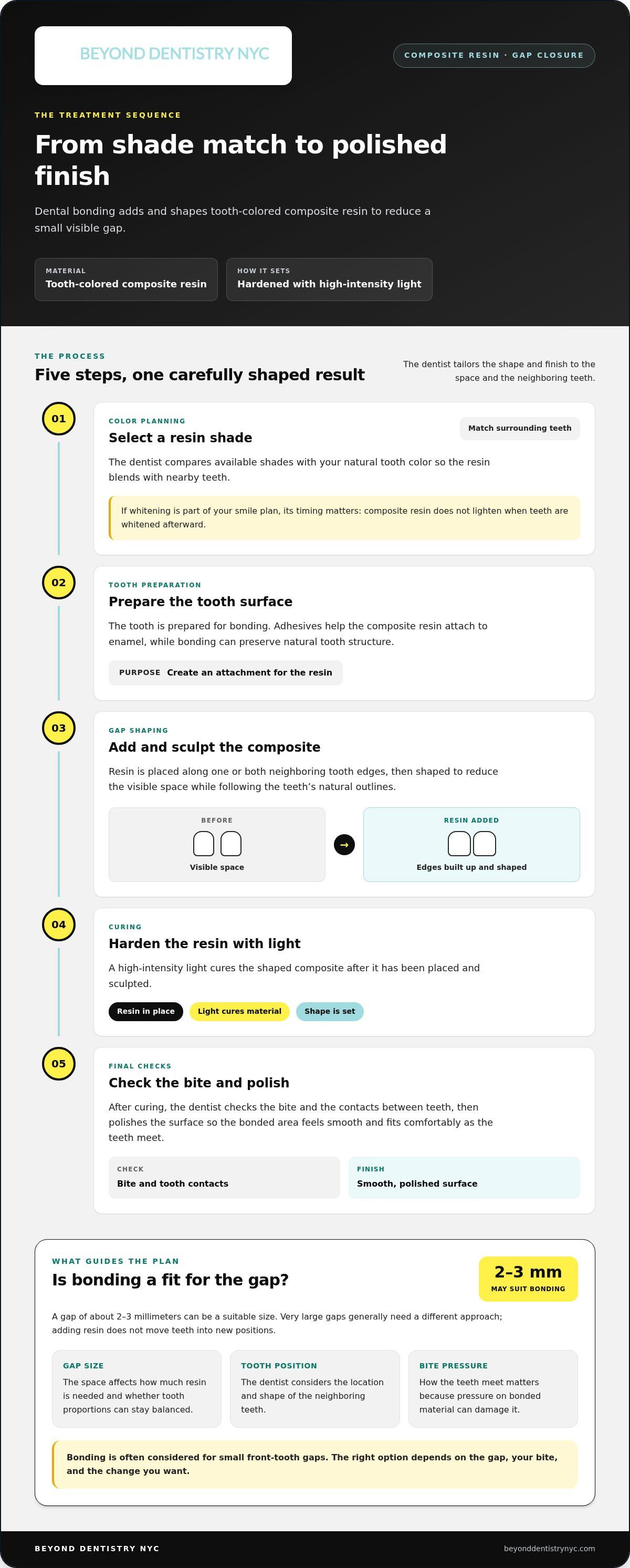
During a bonding appointment, the dentist selects a resin shade, prepares the tooth, applies and shapes the material, then hardens it with a high-intensity light. The number of visits depends on how many teeth need bonding and the treatment plan. Veneers generally require two or more visits.
When reviewing before-and-after photos and clinic reviews in Manhattan, look for consistent lighting, clear views of the teeth, and examples of gaps similar to yours. Reviews that describe natural-looking color, tooth shape, and comfort when biting can offer insight into patients’ experiences.
Matching Resin to Tooth Color
Matching resin means selecting a composite shade that blends with the surrounding teeth. Before placing the material, the dentist compares available shades with your natural tooth color, helping the resin blend in rather than stand out as a separate patch.
Shade selection matters because composite resin doesn’t lighten when teeth are whitened afterward. If whitening is part of your smile plan, its timing can affect the color match. The resin shade should reflect the tooth color you want to maintain, helping the finished repair look balanced beside nearby teeth.
Applying, Shaping, and Curing Resin
Bonding involves attaching composite resin to the tooth, sculpting its contours, and hardening it with light. The dentist places resin where it can close the gap, then shapes the edges to follow the tooth’s natural outline.
Adhesives help attach the material to enamel, and a high-intensity light cures it. After curing, the dentist checks the bite and contacts between teeth, then polishes the surface. These finishing steps help the bonded area feel smooth and fit comfortably as the teeth meet.
Am I good candidate for composite bonding?
Composite bonding is often considered for small spaces between front teeth, where material can add width along the tooth edges. The dentist considers the gap’s size, tooth position, and bite pressure to determine whether bonding can create a balanced result.
Bonding closes a gap by adding composite resin to one or both neighboring teeth, then shaping the material to reduce the visible space. For small gaps, this can change the appearance of the smile without moving the teeth.
How Composite Resin Closes Gaps
Composite resin closes a gap by building up the sides of the teeth beside it. The dentist shapes each addition so the teeth appear closer together while keeping their outlines proportionate.
The amount of material depends on the space and the shape of the neighboring teeth. A narrow gap may need only a subtle addition, while a wider one requires more resin and can make teeth look overly broad. For dental bonding for gaps in teeth in Manhattan, the visible space is one key factor in deciding whether this approach fits.
Bonding for Small Front-Tooth Gaps
Bonding is commonly used for minor cosmetic concerns, including small gaps between front teeth. It can work well in this area because front teeth generally experience less biting pressure than teeth used for chewing.
A gap of about 2-3 millimeters can be a suitable size for bonding; very large gaps aren’t well suited to this method. Bite pressure also matters: pressure on the bonded area can damage the material, so tooth position and how the teeth meet help guide the plan. A slightly uneven tooth beside a small gap can affect the shape needed to make both edges look natural.
Bonding changes the visible contours of teeth, but it doesn’t move them into new positions. If the space is large or the teeth need broader alignment changes, adding resin alone may not create the desired proportions. The gap’s width, tooth location, and amount of material needed all influence the result.
For a small space, a focused repair can be a more limited cosmetic change than a full smile makeover. For a wider smile goal, smile makeover planning can help frame the choice between bonding and other cosmetic approaches.
Bonding as a standalone treatment or with porcelain veneers
Composite bonding can be a standalone cosmetic procedure for a focused goal, such as closing a small gap between two front teeth. It can also be combined with porcelain veneers when different teeth need different changes. The choice depends on the scope of the smile makeover: bonding adds material to selected tooth edges, while veneers can address several visible concerns across a broader area.
A combined plan may use bonding for one or two teeth and veneers for others. For example, resin could close a small space while veneers address concerns affecting several neighboring teeth. This approach lets the dentist consider each tooth individually rather than assuming every visible difference needs the same treatment. The key question is whether you want to focus on a specific gap or create a more consistent change across the smile.
Whitening is another consideration in cosmetic planning. It changes the shade of natural teeth, while bonding and porcelain veneers involve restorations selected to suit a planned tooth color. If you want a brighter smile as well as gap closure, deciding on the shade before selecting restorative material helps coordinate the overall appearance. A smile plan should account for both the treated teeth and the surrounding natural teeth.
Bonding is generally more affordable than porcelain veneers for closing gaps, making it a comparatively economical option for a focused correction. The difference reflects the treatment and its scope, rather than one price that applies to every smile. A small, localized change and a makeover involving several teeth are different treatment plans, so compare the intended results as well as the materials.
Porcelain veneers may be considered when the goal extends beyond a small space to a broader change in the visible teeth. They typically last 10-15 years with proper care and, in this comparison, involve 2-3 visits. Bonding may not last as long, but composite and porcelain veneers can be used separately or together. Orthodontic treatment may be considered when the concern involves tooth position, since bonding changes tooth contours rather than moving teeth. That distinction helps separate a surface-shape goal from an alignment goal.
Care and maintenance of bonded teeth
Composite bonding typically lasts 5 to 8 years or longer with good care, though its lifespan varies with daily habits and the forces placed on teeth. The material can stain over time, chip, become damaged, or detach. Because composite has a shorter lifespan than crowns and veneers, bonded teeth need careful maintenance and attention to changes in their appearance or feel.
Everyday choices matter. Chewing ice, hard or sticky foods can stress bonded areas, as can biting pens or other objects. Avoid biting your nails or using bonded teeth as tools to open or tear items. For example, use your hands to open packaging instead of gripping it with a front tooth repaired to close a gap.
People who grind their teeth at night can use a night guard to help protect composite bonding. Grinding puts repeated pressure on teeth during sleep and may stress the resin. A night guard is a practical protective step, alongside avoiding daytime habits such as chewing pens or biting nails.
- Avoid chewing ice and hard or sticky foods with bonded teeth.
- Keep pens and other objects away from your teeth.
- Don’t bite fingernails or use teeth as tools.
- Consider a night guard if you grind your teeth at night.
Bonding can be adjusted or repaired if it chips or becomes damaged. A small imperfection doesn’t automatically mean the entire bonded area needs replacement. A dentist can assess the affected material and make an appropriate repair. If resin detaches or an edge feels different, note which tooth is affected and describe the change at your dental consultation.
Staining is another reason to monitor bonded teeth over time. Composite resin can discolor, and its shade doesn’t lighten when natural teeth are whitened afterward. If you’re considering whitening, treatment order matters for keeping the visible color consistent. Discuss existing resin as part of that planning, especially when bonding is on front teeth.
Think of maintenance as protecting both the resin and the result. Notice changes such as a chipped edge, a rough surface, or a visible color difference, and arrange an assessment rather than trying to reshape the material yourself. Good care can help bonding last, but composite remains more vulnerable to damage and staining than crowns or veneers.
How dental bonding is applied
Composite bonding is built directly onto a tooth rather than fitted as a separate shell. To close a gap, the cosmetic dentist places tooth-colored material along selected tooth edges, then shapes it for a closer, balanced appearance. Shade, placement, contour, and bite all influence how the finished tooth looks and feels.
- Plan the shape. The dentist considers the gap and the neighboring natural teeth before adding material. This helps determine where resin should build out the edges without making the teeth look too wide. A small space between front teeth, for example, calls for a different contour than a chip on one edge.
- Select the shade. Composite comes in different shades, which the dentist compares with surrounding teeth. The goal is to blend the bonded area with the natural color, rather than leave a noticeably brighter or darker patch. Existing restorations and the planned tooth shade can affect this choice.
- Attach the resin. Adhesives help bond composite resin to enamel. Bonding usually doesn’t require drilling or anesthesia, according to descriptions of the procedure. The dentist applies the material where the tooth needs additional width or contour, instead of placing a separate veneer over its front surface.
- Sculpt the contour. The dentist shapes the resin to close the visible space while preserving a natural outline. For example, adding too much material at the edge could make a front tooth appear bulky. Careful sculpting helps the bonded area transition into the rest of the tooth.
- Cure and refine. A high-intensity light hardens the resin. The dentist then checks the bite and contacts between teeth, adjusting the shape as needed and polishing the surface. These checks help ensure the new contour doesn’t interfere with how the teeth meet.
Although tooth bonding may resemble a filling because both use restorative material, cosmetic bonding focuses on changing visible shape or repairing a small flaw. Closing a gap involves shaping resin across the tooth edge, not simply filling the space like a cavity. That distinction explains why contour and bite checks are part of finishing.
In New York City, the process is tailored to the teeth being treated and the result sought. For a gap, the dentist considers how much resin each tooth needs and how the added contours relate to the smile. To discuss how functional dentistry approaches a bonding plan, schedule a dental consultation.
Beyond Dentistry NYC: Smile Gallery Restorations
Beyond Dentistry NYC offers Smile Gallery Restorations for patients considering cosmetic changes to their smiles. If you’re weighing composite bonding against porcelain veneers, a discussion about the gap, tooth shape, and the result you want can help clarify your options.
The practice’s expertise in smile makeovers and veneers can help you consider whether your goal is a focused adjustment or a broader change across visible teeth. Innovative Technology Treatments are also part of its approach to care. Discussing appearance, bite, and maintenance helps keep the decision focused on your needs.
Contact Beyond Dentistry NYC in New York to discuss your smile goals and possible next steps.
Take the Next Step Toward a Smile That Feels Like Yours
Choosing dental bonding for gaps in teeth in Manhattan is a personal decision shaped by the smile you want and the changes that feel right for you. Before moving forward, consider what you’d most like to see when you smile: a subtle adjustment, a more even appearance, or a broader transformation. Clear priorities can make a conversation about treatment more useful and focused.
You can also ask how a proposed change may affect the shape and balance of your teeth. A thoughtful discussion should help you understand the options and how they relate to your goals. If your preferences shift as you explore them, that’s a valuable part of reaching a decision that feels comfortable.
Beyond Dentistry NYC offers Smile Gallery Restorations and Innovative Technology Treatments. To talk through your smile goals and possible next steps, contact Beyond Dentistry NYC. A considered plan can help you move toward a smile that feels natural to you.
Frequently Asked Questions
Does Insurance Cover It?
Cosmetic bonding done purely to improve appearance generally isn’t covered by dental insurance. Coverage may differ when bonding restores function after an injury-related chip or fracture. Keep information about an injury and the tooth’s functional problem available when discussing a claim. A cosmetic gap closure and a repair following an injury can be treated differently by insurers.
What Material Is Used in Teeth Bonding?
Tooth bonding uses tooth-colored composite resin, a material selected to repair or reshape a tooth. It isn’t porcelain like a veneer. For example, a dentist can add resin to change a tooth’s visible edge or repair a small chip. The shade and treatment area affect how the restoration blends with nearby teeth.
Can I get an exact price before my visit?
The exact price depends on the treatment plan, and pricing is provided after a quote request. Factors include how many teeth need treatment, the size of the gap, and the amount of shaping or repair involved. A single-tooth correction and bonding across several teeth involve different scopes of work, so a general estimate may not reflect your case.
Does bonding cost more if it's on a front tooth versus a back tooth?
Tooth location alone doesn’t determine the price; the work required for each tooth matters. A front tooth may need careful shaping for a visible cosmetic result, while the bite and function of a back tooth affect its treatment plan. The number of teeth, size of the area, and complexity of the repair also influence the quote. Compare plans by their scope, not location alone.
How long does it last?
Composite bonding typically lasts 5 to 8 years or longer with good care. Its lifespan can be affected by staining, chipping, detachment, and pressure on the bonded area. For instance, chewing ice or grinding teeth can place extra stress on resin. If an edge changes or feels rough, a dentist can assess whether an adjustment or repair is appropriate.
How often will I need touch-ups, and does that add to the total cost over time?
Touch-ups don’t follow a fixed interval. They’re considered when bonding is chipped, damaged, stained, or needs adjustment. The amount of repair depends on the resin’s condition and the affected area. Additional work affects the overall treatment cost, which depends on the case and is provided after a quote request. Avoiding hard objects and harmful biting habits can help protect the restoration.
Who is a good candidate for dental bonding for gaps?
Bonding may suit someone with a small gap between front teeth, especially when the teeth are otherwise positioned well and the bite doesn’t place heavy pressure on the repair. A gap around 2-3 millimeters can be appropriate for this approach; very large spaces may not. The dentist also considers whether adding resin would keep the teeth’s proportions looking balanced.
How much does dental bonding for gaps cost in Manhattan, NYC?
The cost in Manhattan depends on the case, and pricing is provided after a quote request. The number of teeth, gap size, and complexity of the planned correction all affect the treatment scope. For example, closing one small space differs from reshaping several teeth. Cosmetic bonding and bonding used to restore function after an injury may also have different insurance considerations.


