

A biological dentist in NYC considers the mouth as part of a person’s overall health, including treatment choices and dental materials. Biological and holistic dentistry are closely related terms, but neither replaces preventive, restorative, or cosmetic care. The difference is often a broader focus on how dental care fits a person’s health priorities.
It’s reasonable to want clear answers about what this approach means in practice, especially when weighing materials or considering treatment. This article explains the approach, how it compares with traditional dentistry, and what to know about biocompatible materials. It also covers services associated with biological care, including restorative options, to help you understand how a practice’s philosophy may shape treatment planning and which questions to ask about your dental care.
Key Takeaways
- Learn how a biological approach considers oral care alongside a person’s broader health priorities.
- Understand what to weigh when discussing dental materials, including how a material fits the treatment and your needs.
- See how biological and holistic dentistry overlap, and where individual practices may differ in their approach.
- Compare biological and traditional dentistry by looking at treatment planning, materials, and the care philosophy behind each.
- Explore how restorative, cosmetic, and functional services may fit into a broader dental care plan.
Biocompatible dental materials
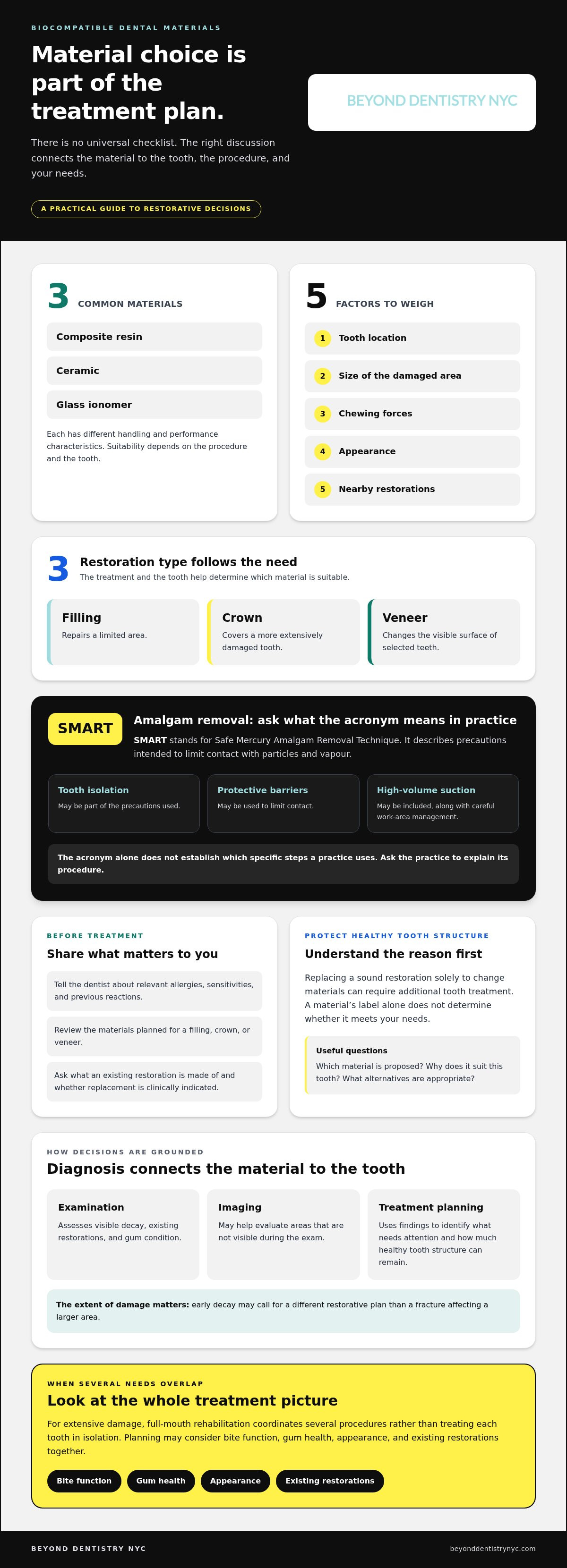
For amalgam removal, SMART stands for Safe Mercury Amalgam Removal Technique. It describes precautions intended to limit contact with particles and vapour. Measures may include isolating the tooth, using protective barriers and high-volume suction, and carefully managing the work area. The acronym alone doesn’t establish which steps a practice uses.
Material choice is part of treatment planning, not a universal checklist. A dentist considers the tooth’s location, the size of the damaged area, chewing forces, appearance, and nearby restorations. A visible front tooth and a heavily used back tooth, for example, may have different restorative priorities. Ask which material is proposed, why it suits that tooth, and what alternatives are appropriate.
Common materials include composite resin, ceramic, and glass ionomer. Each has different handling and performance characteristics, so suitability depends on the procedure and tooth. A filling repairs a limited area; a crown covers a more extensively damaged tooth. Veneers change the visible surface of selected teeth. A material’s label alone doesn’t determine whether it meets a person’s needs.
Reducing exposure to a potential irritant starts with a specific conversation. Share relevant allergies, sensitivities, and previous reactions before treatment, then review the materials planned for a filling, crown, or veneer. If you’re concerned about an existing restoration, ask what it’s made of and whether replacement is clinically indicated. Replacing a sound restoration solely to change materials can require additional tooth treatment, so understand the reason first.
Dental diagnostics help connect material decisions with tooth preservation. An examination can assess visible decay, existing restorations, and gum condition; imaging may help evaluate areas that aren’t visible during the exam. The dentist uses these findings to identify what needs attention and how much healthy tooth structure can remain. For example, early decay may call for a different restorative plan than a fracture affecting a larger area.
For extensive damage, full-mouth rehabilitation coordinates several procedures instead of treating each tooth in isolation. The plan may consider bite function, gum health, appearance, and existing restorations. In NYC, biologic, cosmetic, and restorative dental care can overlap: a patient might discuss a damaged tooth, nearby veneers, and long-term preservation together. This whole-person perspective connects dental care with broader wellness without treating a material choice as a substitute for diagnosis.
Dr. Curatola is described as having more than 41 years of restorative and cosmetic dental practice. Dr. Daniel Noor recommends regular dental checkups and teaches patients how to maintain a healthy smile to help prevent tooth decay and gum disease.
What Is Biological Dentistry?
Biological dentistry considers oral care alongside overall health, shaping prevention, diagnosis, and treatment choices. In New York, a biological dentist in NYC may explain how this wider perspective informs care, but the term itself doesn’t define one standardized method.
Oral and Systemic Health Connections
Biologic dentistry considers the mouth part of the body, not an isolated system. The oral microbiome includes organisms that naturally live in the mouth; daily habits, gum condition, and dental disease can influence its balance. During an exam, discuss bleeding gums, persistent dryness, or recurring infections, and share relevant health history so the dentist can consider the full picture.
Oral and systemic health are connected, but a dental finding alone doesn’t explain a whole-body condition. Gum inflammation, for example, calls for assessment and care in the mouth, along with communication about relevant medical concerns. A useful appointment covers symptoms, current medicines, and treatment priorities. Ask how each recommendation supports oral health and what changes you can make at home.
Integrated oral health means coordinating care decisions rather than treating each tooth as a separate problem. A dentist may consider gum health, bite function, and existing restorations before recommending a procedure. Biocompatible materials can be part of the discussion, with selection based on the tooth, treatment purpose, and sensitivities you report.
Gum Health and Jaw Alignment
Gum assessment and jaw function provide different but complementary information. A dentist checks gum tissue for visible inflammation and evaluates how the teeth meet when you bite. Bleeding during brushing, for example, deserves discussion, while jaw discomfort during chewing offers a separate clue about function. Share when symptoms occur and whether they affect eating, speaking, or sleep.
Alignment concerns can affect how pressure is distributed across teeth, while gum disease can threaten their support. A careful plan considers both before restorative work. If a tooth is worn or your bite feels uneven, ask how the dentist assessed its contact points and gum condition. These findings help connect the proposed treatment to a specific concern.
When choosing a biological dentist in NYC, look for a New York State dental license, dental education, and relevant training. Ask how the dentist’s background shapes their approach to your care.
If you want care that considers these factors together, explore functional dentistry and integrated oral health as a basis for discussing your priorities.
If you want care that considers these connections, ask the dentist to explain how findings in your gums, bite, and teeth influence the plan. In the United States, one out of every two adults over age 30 has periodontal disease. That prevalence makes gum assessment an important part of a broader oral-health conversation, but it does not establish an individual diagnosis. Ask what the examination showed, which concerns need attention, and how progress will be reviewed. You can also discuss material sensitivities and priorities before agreeing to treatment, so recommendations are clear and relevant to your situation.
Biological and holistic dentistry
Biological and holistic dentistry share an interest in considering oral care within a person’s broader health context. The terms can overlap, but neither names one standardized treatment plan. In Manhattan, compare a biological dentist in NYC by how they assess your needs, explain options, and connect dental recommendations with your health priorities.
“Holistic” often signals attention to the person as a whole, while “biological” emphasizes how dental procedures relate to the body. A dentist may consider symptoms, medical history, oral findings, and treatment goals together. For example, tell the dentist about a medication or health condition, then ask how it affects a proposed procedure. A biological dentist in NYC should be able to explain that connection in practical terms.
The distinction also has historical context. Gerry Curatola described dentistry and medicine as separated by a 150-year-old divide when he set out to unite the fields. His effort began in 1983. Those details illustrate a long-running interest in connecting oral care with systemic health, but they don’t establish a single definition followed by every holistic or biological practice.
For holistic dentistry in Manhattan, focus on how the dentist develops and explains an individualized treatment plan. A useful discussion might connect gum condition, bite, symptoms, and treatment priorities before recommending procedures. Notice whether recommendations explain the reason for care, its intended purpose, and alternatives. This shows how a practice applies a whole-person philosophy to your dental concerns.
Minimally invasive care is another idea often associated with these approaches. It prioritizes addressing a problem while preserving healthy tissue where possible. When assessing a small area of tooth damage, for example, the dentist can explain whether monitoring, repair, or a more extensive restoration fits the findings. Ask what supports the recommendation rather than assuming the least involved option is always appropriate.
Holistic care may also involve coordinating different decisions. If you’re considering cosmetic changes while managing discomfort, ask how the treatment sequence accounts for both. A biological dentist in NYC can explain how the plan distinguishes appearance goals from health needs and where your preferences shape the choices.
Labels can describe a philosophy, but communication helps you assess the care itself. Bring your concerns and current medicines to an appointment, then ask how the dentist’s recommendations relate to your health history. A clear explanation connects your goals and examination findings with the proposed next steps.
Biological dentistry services at a Manhattan practice
In Manhattan, biological dental care can be understood by looking at the services considered and how they fit a patient’s priorities. Functional dentistry focuses on how oral structures work alongside concerns such as comfort, appearance, and maintaining oral health. Ask how an examination connects your symptoms and goals to each proposed procedure.
The biological label alone doesn’t establish whether a practice is accepting new patients or what a consultation includes. A first appointment can give you space to describe concerns, share relevant health history, and understand possible next steps. Before arranging a visit, ask about new-patient availability and the consultation format so you know what to expect.
Make an appointment more useful by preparing a concise list beforehand. Include your main concern, such as a sore jaw, damaged tooth, or question about an existing restoration. Add current medicines and any previous dental reactions. These details help focus the discussion on your circumstances rather than a generic service description.
Someone seeking care for discomfort, for example, may want to discuss function before cosmetic changes. A patient interested in a smile makeover may have different priorities, including appearance and restoration options. In either case, ask which findings support each recommendation, what the procedure is intended to address, and how the treatment plan accounts for your goals.
Location matters for practical access. Beyond Dentistry NYC is located on Central Park South in Manhattan, New York City. Consider your travel route and the office address when planning a visit. Check the hours published for the Manhattan office rather than assuming a schedule. Clear appointment details can also help you plan follow-up care around work, travel, and other commitments.
Use the consultation to clarify the sequence of care. Ask whether the first step is an examination, discussion of symptoms, or review of existing dental records. If the plan includes several procedures, request a plain-language explanation of how they relate and which concern each addresses. This helps you understand the decision-making, not just the service names.
For patients considering holistic dentistry, a useful discussion connects personal health priorities with dental findings and functional needs. Bring questions about materials, comfort, and treatment alternatives, then note the answers. Whether you’re focused on a specific tooth or broader functional concerns, a clear explanation should make the next step understandable and relevant to your care.
Biological dentistry compared with traditional dentistry
The main difference is often emphasis, not a separate set of procedures. Traditional and biological approaches can both include prevention, restorative care, cosmetic treatment, and dental implants. A biological approach typically gives more attention to material choices and how dental decisions fit a patient’s broader wellness priorities. The label alone doesn’t tell you what treatment is appropriate.
Compare the proposed care, not just the philosophy. For a damaged tooth, ask what the examination found, which options could address it, and how each affects tooth structure and function. For dental implants, focus on why an implant is recommended and how the plan addresses the missing tooth. These questions make the treatment rationale easier to understand.
When comparing reviews, credentials, and treatment approaches, look for specific descriptions of communication and care rather than relying on broad praise. Consider whether explanations address your concerns and connect recommendations to examination findings. The fee depends on the treatment, materials, diagnostic needs, and complexity; Beyond Dentistry NYC provides pricing after a quote request.
Reviews can describe a patient’s experience, but they can’t establish whether a procedure suits your case. Credentials provide context about a dentist’s education and training, while a consultation can clarify how that background informs the plan. Ask why each procedure is proposed, what alternatives exist, and what role follow-up care is expected to play.
Consider evidence treatment by treatment. Established dental procedures have their own evidence and indications; a broad “biological” or “traditional” label doesn’t prove a claim about systemic wellness. Be especially careful with sweeping statements that a material or procedure will prevent or resolve health conditions beyond the mouth. Ask what evidence supports the specific recommendation and how the dentist weighs known benefits, limitations, and risks.
Controversy can arise when a philosophy is presented as a guarantee or treatment is recommended without a clear dental finding. Replacing a restoration, choosing a cosmetic procedure, or pursuing implants should each have a defined purpose. A sound discussion distinguishes your preference from a clinical need and explains how both shape the decision.
The clearest takeaway: compare how each dentist examines, explains, and individualizes care. If you’re considering a functional approach to treatment, explore functional dentistry options and prepare questions about your goals, materials, and proposed procedures.
Beyond Dentistry NYC: Smile Gallery Restorations
Beyond Dentistry NYC offers Smile Gallery Restorations for readers considering restorative dental care. If you’re exploring options after learning about biological dentistry, the practice also offers dental implants, sleep apnea appliances, Botox, TMD care, innovative technology treatments, smile makeovers, and veneers expertise.
These services may suit priorities such as replacing a missing tooth, addressing jaw concerns, or planning cosmetic changes. Share your goals and questions so the discussion can focus on the treatment area that matters to you.
For a conversation about your dental care, contact Beyond Dentistry NYC.
Choose a Next Step That Fits Your Goals
Choosing a biological dentist in NYC gives you an opportunity to make your priorities part of the care conversation from the start. Before your next visit, write down what matters most: preserving a tooth, improving comfort, addressing a functional concern, or changing your smile. Clear priorities can help focus the discussion and make treatment choices easier to understand.
Beyond Dentistry NYC offers Smile Gallery Restorations, dental implants, sleep apnea appliances, Botox, TMD care, and innovative technology treatments. These options address different needs, from restorative care to concerns involving jaw function or sleep. Start with a conversation about your goals and the care that may address them.
Take the next step at a pace that feels right for you. Contact Beyond Dentistry NYC to discuss your dental care and the questions you’d like answered. You deserve an informed, thoughtful path forward.
Frequently Asked Questions
What Is Holistic Dentistry?
Holistic dentistry considers dental care in the context of a person’s wider health and priorities. A patient discussing a restoration, for example, might also share relevant health history, sensitivities, and treatment goals. The approach emphasizes thoughtful coordination, but it doesn’t mean every dental concern has a cause outside the mouth. Ask how a recommendation relates to your examination findings and what practical steps you can take between visits.
What is a biological dentist, and how does biological dentistry differ from conventional dentistry?
A biological dentist considers oral care alongside broader health priorities. The distinction often lies in emphasis, not a completely separate set of procedures: both approaches may involve preventive, restorative, or cosmetic care. When comparing treatment plans, look at the specific procedure, its purpose, material choices, and alternatives. These details provide a more useful comparison than the “biological” or “conventional” label alone.
Where are biological dental offices located in Manhattan, Brooklyn, Queens, and the Bronx?
Beyond Dentistry NYC is located on Central Park South in Manhattan, New York City, and serves the New York market. The location gives Manhattan patients a clear starting point for planning a visit; the practice is not located in Brooklyn, Queens, or the Bronx. If you’re traveling from another borough, consider your route and the office address when arranging dental care.
What services do NYC biological dentists offer, including mercury filling removal and biocompatibility testing?
Services vary by practice. Beyond Dentistry NYC offers dental implants, sleep apnea appliances, Botox, TMD care, Smile Gallery Restorations, and smile makeovers with veneers expertise. Mercury filling removal and biocompatibility testing are specific services, not definitions of biological dentistry. For any proposed procedure or test, understand its purpose, what it involves, and how the findings would affect your dental treatment plan.
How much do biological dental exams, cleanings, and common procedures cost in NYC?
Dental fees depend on the care involved, including the procedure, materials, diagnostic needs, and complexity. An exam or cleaning differs from restorative work such as an implant or veneer, so one general figure wouldn’t describe every patient’s care. Beyond Dentistry NYC provides pricing after a quote request. A treatment plan helps clarify which procedures contribute to the total.
Do biological dentists in NYC accept dental insurance or offer financing?
Some dental insurance plans may cover parts of biological dental care, such as checkups and cleanings; coverage depends on the plan and service. Beyond Dentistry NYC doesn’t offer an in-house dental insurance plan. Insurance and financing are different matters, so review your benefits and the proposed treatment plan separately. Before deciding, understand which care is planned and how your insurance applies to it.


