

What if the materials used to restore your smile were quietly influencing your immune system every single day? It's a question many of our patients ask when they begin to connect the dots between their oral health and their systemic well-being. You likely understand that your body is an interconnected ecosystem, so the idea that a "one-size-fits-all" approach to dental fillings or crowns could trigger inflammation isn't just a worry; it's a valid health concern. The biocompatibility of dental materials is no longer just a clinical buzzword. It's the essential foundation of functional dentistry that ensures your dental work supports, rather than stresses, your biology.
We believe you deserve total confidence in every restoration. In this guide, you'll discover how the latest advancements in materials can protect you from heavy metal toxicity and chronic inflammation. We'll demystify complex terms and show you how to choose a mercury-free and fluoride-free partner in Manhattan who understands the oral-systemic link. From the shift toward zirconia to personalized serum testing, we're outlining the path to a smile that feels as good as it looks.
Key Takeaways
- Learn why "safe" materials aren't always optimal and how the biocompatibility of dental materials directly impacts your immune system and whole-body health.
- Compare the biological benefits of ceramic and porcelain restorations against traditional metals to find the most inert options for your smile.
- Discover how individualized serum testing can identify your unique sensitivities, ensuring your dental work is perfectly tailored to your body's chemistry.
- Understand the connection between functional dentistry and high-end aesthetics, where every smile makeover prioritizes long-term systemic wellness.
- Identify the risks of metal leaching and learn how modern clinical protocols minimize inflammation and support a mercury-free environment.
What is Biocompatibility in Modern Dentistry?
When you think about a filling or a crown, you likely think about how it looks or how long it will last. But have you considered how it speaks to your immune system? In the past, the definition of biocompatibility was often limited to whether a material was toxic to a general population. Today, we know that "safe" is just the starting point. Optimal health requires materials that harmonize with your specific chemistry. Your mouth isn't a static environment; it's a dynamic biological interface where materials interact with saliva, bacteria, and tissues every second. A material that works for one person might cause chronic fatigue or inflammation in another. This makes the old one-size-fits-all approach to the biocompatibility of dental materials completely obsolete in 2026.
Toxicity vs. Biocompatibility: Understanding the Difference
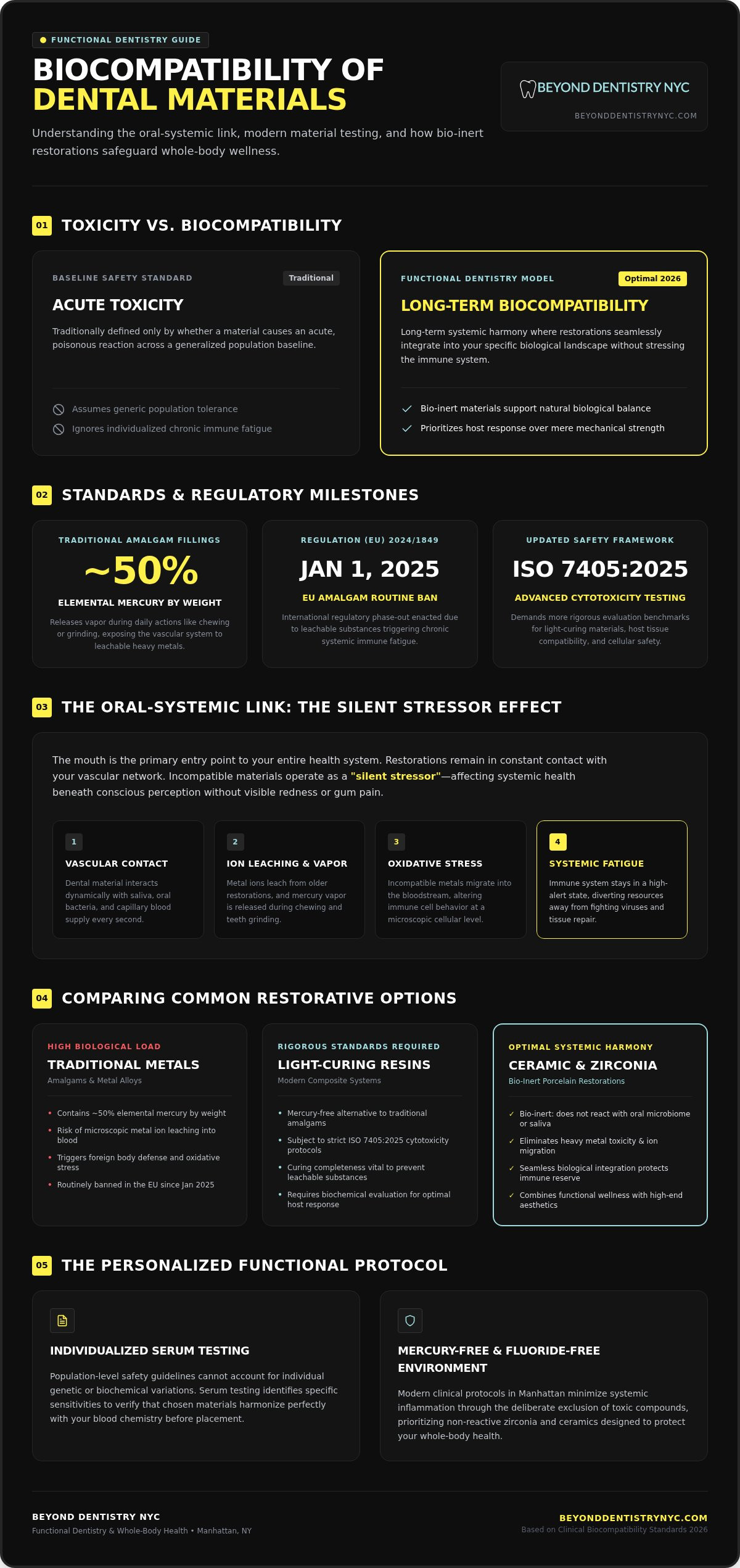
It's easy to confuse toxicity with a lack of biocompatibility. Toxicity usually refers to an acute, poisonous reaction. Biocompatibility, however, is about long-term systemic harmony. Take dental amalgam, for instance. It contains roughly 50% elemental mercury by weight. While it was the standard for decades, international bodies are moving away from it rapidly. Under Regulation (EU) 2024/1849, routine use was banned in the EU starting January 1, 2025. This shift happens because we now understand how leachable substances can trigger chronic immune fatigue. Your immune system is constantly scanning for foreign objects. If it identifies a material as a threat, it stays in a state of high alert. This persistent response can lead to systemic inflammation and a sense of being "run down" without a clear cause.
The Evolution of Material Safety Standards
Material standards have evolved significantly to protect your total wellness. We've moved from simple "non-toxic" substances to bio-inert and even bio-active materials that actively support tissue health. The updated ISO 7405:2025 standards now require even more rigorous testing for light-curing materials and cytotoxicity. These modern benchmarks help ensure that the biocompatibility of dental materials supports the goals of functional dentistry by prioritizing the host response over mere mechanical strength. Biocompatibility is the seamless integration of dental restorations into your unique biological landscape, ensuring that every material supports your whole-body health without triggering immune stress. By choosing materials that are bio-inert, we minimize the risk of allergic reactions and help your body maintain its natural balance.
The Oral-Systemic Link: Why Your Dental Materials Affect Your Whole Body
Your mouth isn't an island. It's the primary gateway to your entire health system, serving as the entry point for nutrition, breath, and unfortunately, potential toxins. This interconnectedness is the core of functional dentistry. When we place a material in your tooth, it's in constant contact with your vascular system. Over time, metal ions can leach from older restorations and enter the bloodstream. These microscopic particles don't just stay in the jaw; they migrate throughout the body. For many, this creates a state of systemic inflammation and immune fatigue that's often difficult to diagnose but deeply felt in daily energy levels.
Immunotoxicity and the Silent Stressor Effect
The body can react to a dental material without any visible redness or pain in the gums. We call this a "silent stressor" because it happens beneath the surface of conscious awareness. Incompatible metals can alter how your immune cells behave, triggering oxidative stress at a cellular level. While the FDA biocompatibility assessment guidelines provide a robust framework for population-level safety, they can't account for your specific genetic or biochemical sensitivities. A truly healthy smile must be healthy on a cellular level. If your body is constantly diverted to manage a "foreign" material in your tooth, it has fewer resources to fight off viruses or repair daily tissue damage.
Mercury-Free Dentistry and Whole-Body Wellness
Traditional silver amalgam fillings are actually composed of approximately 50% elemental mercury by weight. Research shows that mercury vapor is released during routine activities like chewing or teeth grinding. For busy NYC professionals managing high-stress careers, this added toxic load is an unnecessary burden on their wellness. Many of our patients find that prioritizing the biocompatibility of dental materials leads to surprising improvements in chronic conditions, including TMD and tension headaches. Galvanic currents, which are tiny electrical charges created between different metals in the mouth, can overstimulate the nerves and muscles in your jaw. By maintaining a mercury-free and fluoride-free environment, we help quiet these internal stressors.
Transitioning to biocompatible options is often the missing piece in a patient's broader wellness journey. If you've been searching for answers to persistent fatigue or inflammatory issues, it may be time to consider how personalized functional care can restore harmony to your entire system. Choosing materials that respect your biology is a powerful step toward long-term vitality.
Comparing Common Restorative Materials: Ceramics, Resins, and Metals
Choosing the right material for your dental work isn't just a matter of durability or cost. It's a decision that affects how your body functions every day. While the ADA overview of direct restorative materials offers a solid foundation for clinical properties, a functional approach looks deeper into how these substances interact with your unique biology. We generally categorize options into ceramics, resins, and metals, each carrying a different weight in the conversation regarding the biocompatibility of dental materials. Understanding these differences allows you to make an informed choice that supports both your smile and your systemic wellness.
The Rise of Metal-Free Ceramic Restorations
High-end restorative dentistry has shifted decisively toward bio-inert ceramics. Materials like porcelain and zirconia are now considered the gold standard for smile gallery restorations because they mimic the natural translucency and light-reflective qualities of real teeth. Beyond their beauty, these ceramics are incredibly stable. They don't corrode, leak ions, or trigger the inflammatory "gray line" often seen at the gumline of older metal-based crowns. For patients requiring implants, zirconia offers a compelling metal-free alternative to titanium, providing high biological inertness and excellent soft-tissue adherence without the risk of galvanic currents.
Understanding Resin and BPA-Free Options
Most modern "white fillings" are composed of resin-based composites. While these are a significant aesthetic improvement over silver amalgams, they aren't without their own biological considerations. Many traditional resins contain Bis-GMA, a monomer derived from Bisphenol A (BPA). Concerns regarding endocrine disruption have led to a demand for more stable chemistries. The stability of these resins depends heavily on the "curing" process; if not fully polymerized, unreacted monomers can leach into the oral environment. Beyond Dentistry NYC selects specific medical-grade resins that are BPA-free and monomer-stable to ensure your restorations never compromise your hormonal health.
We also take a firm stance against the use of metals like nickel, beryllium, and mercury. These materials are known allergens and neurotoxins that can trigger chronic immune responses in sensitive individuals. By prioritizing the biocompatibility of dental materials, we ensure that every crown, filling, and implant works in harmony with your body. This careful selection process is what allows us to deliver results that are as healthy as they are beautiful.
How We Test and Select Biocompatible Materials for Your Smile
Standardized safety tests often assume every patient responds the same way to a specific ceramic or resin. However, functional dentistry recognizes that your immune system is as unique as your fingerprint. We don't guess when it comes to the biocompatibility of dental materials. Instead, we use individualized diagnostic tools to ensure every restoration we place supports your systemic health. By evaluating your "bio-load", which is the cumulative effect of existing dental work like mixed metals or old amalgams, we can create a strategic plan for your smile makeover that reduces total body stress. This proactive approach ensures that your dental work never becomes a silent burden on your wellness.
The Clifford Testing Process
One of the most effective ways to personalize your care is through serum biocompatibility panels. While patients often ask about Clifford Materials Reactivity Testing, modern clinical standards in 2026 have transitioned to updated panels like BioComp, which screen for reactivity against over 9,500 trade-name products. This process begins with a simple blood draw to analyze your systemic antibodies against roughly 90 dental chemical groups. We then receive a detailed report categorizing materials as "highly reactive" or "non-reactive" for your specific biology. This data-driven approach removes the guesswork from your treatment in Manhattan, ensuring that the biocompatibility of dental materials used in your mouth won't trigger a delayed hypersensitivity response.
Advanced Diagnostics for Restorative Success
Innovation at Beyond Dentistry NYC goes beyond the choice of materials. We use high-precision digital impressions to ensure a perfect fit, which prevents the micro-leakage and tissue irritation that can lead to chronic inflammation. When materials aren't a biological match, they can contribute to muscle tension and TMJ and jaw pain. By selecting materials that harmonize with your body, we reduce the risk of these painful conditions. We also collaborate closely with your physician or nutritionist to ensure your dental restorations align with your broader medical goals, such as managing autoimmune conditions or reducing oxidative stress. This collaborative care model ensures your dental health is a pillar of your overall vitality.
Your health is too important for a "one-size-fits-all" solution. If you're ready to experience a higher standard of biological care, schedule your comprehensive biocompatibility assessment at our Manhattan office today. Let's ensure your next restoration is a perfect match for your body.
Personalized Biocompatible Solutions at Beyond Dentistry NYC
What does it mean to have a smile that is truly healthy? At Beyond Dentistry NYC, we believe that elite aesthetics and biological harmony are inseparable. Led by Dr. Morgan and Dr. Michael Herman, our practice provides a sophisticated sanctuary for patients who prioritize systemic wellness. We don't simply perform procedures; we curate smile makeovers that respect your body's unique chemistry. By placing the biocompatibility of dental materials at the heart of our philosophy, we ensure your restorative work supports your immune system rather than taxing it. Why should you have to choose between a radiant appearance and whole-body health?
Functional Aesthetics in the Heart of Manhattan
Our philosophy of "Functional Aesthetics" bridges the gap between the art of a beautiful smile and the science of biological safety. We consider our smile gallery restorations to be the pinnacle of this approach. These restorations are crafted from premium, bio-inert materials that avoid the inflammatory responses often associated with traditional dental metals. Because we utilize innovative technology treatments, our crowns and veneers offer a precision fit that protects the integrity of your gum tissue. The result is a restoration that not only looks indistinguishable from natural teeth but also promotes long-term periodontal health. In our high-end Manhattan environment, health-conscious New Yorkers find a standard of care that matches their own commitment to wellness.
Your Journey to a Healthier, More Radiant Smile
Your experience begins with a comprehensive consultation that looks far beyond your teeth. We conduct a holistic assessment of your oral-systemic health, considering factors like material sensitivities and your body's inflammatory load. Whether you're seeking veneers or ceramic implants, our customized material selection process ensures that every component is a biological match for your system. We maintain a strictly mercury-free and fluoride-free environment, providing you with a safe space to achieve your aesthetic goals. This empathetic, patient-centered approach is designed to alleviate the anxiety often felt in clinical settings. We invite you to schedule your functional dentistry evaluation at our NYC office, where the biocompatibility of dental materials is never a secondary thought; it's the foundation of your restorative success.
Prioritizing Your Systemic Health Through Biocompatible Care
Choosing the right dental materials is one of the most proactive steps you can take for your long-term wellness. You now understand that your restorations don't just sit in your teeth; they interact with your vascular and immune systems every single day. By prioritizing the biocompatibility of dental materials, you're choosing to reduce systemic inflammation and support your body's natural healing capacity. Whether it's opting for bio-inert zirconia or ensuring your environment is entirely mercury-free and fluoride-free, these decisions form the bedrock of functional dentistry.
Led by Dr. Morgan Herman and Dr. Michael Herman, Manhattan leaders in Functional Dentistry, our office is dedicated to this philosophy of care. We combine high-end clinical excellence with a deeply empathetic approach to ensure your experience is as comfortable as it is transformative. You deserve a smile that isn't just beautiful on the surface but also supports your health at a cellular level. It's time to align your dental work with your broader medical goals and systemic needs.
Experience the future of healthy aesthetics; schedule your biocompatibility consultation at Beyond Dentistry NYC today. We look forward to helping you achieve a radiant smile that harmonizes perfectly with your entire body.
Frequently Asked Questions
What exactly does "biocompatible" mean in dentistry?
Biocompatibility refers to a material's ability to perform with an appropriate host response in a specific situation. In our Manhattan practice, we view it as the seamless integration of dental work into your body's unique ecosystem. It's not just about avoiding toxicity; it's about ensuring the biocompatibility of dental materials supports your whole-body health. We prioritize materials that don't trigger immune stress or chronic inflammation, allowing your system to focus on wellness.
Can dental materials cause systemic health issues like headaches or fatigue?
Yes, dental materials can absolutely influence systemic wellness. If your body is reactive to certain metals or monomers, it can lead to chronic fatigue, brain fog, or headaches. Incompatible materials can also cause galvanic currents, which are tiny electrical shocks that overstimulate the jaw muscles. This often contributes to TMD symptoms. By choosing biocompatible options, we help quiet these internal stressors and restore balance to your functional health.
Are all white fillings biocompatible and BPA-free?
Not all white fillings are created equal. While composite resins look aesthetic, many traditional versions contain Bis-GMA, which is derived from BPA. These can leach endocrine disruptors into your system over time. We believe you shouldn't have to worry about hormonal health when fixing a cavity. That's why we specifically select medical-grade, BPA-free resins that offer superior stability and long-term biological safety for our patients in New York.
How do I know if I am allergic to my current dental work?
Symptoms of a material sensitivity can range from a persistent metallic taste or gum inflammation to systemic issues like joint pain or fatigue. Because these reactions are often delayed hypersensitivities, they can be difficult to track. The most reliable method is through individualized serum testing. We use advanced panels to identify your unique antibodies against specific chemical groups, ensuring your next restoration is a perfect match for your biology.
Is zirconia more biocompatible than titanium for dental implants?
Zirconia is widely considered the superior choice for patients seeking a metal-free, bio-inert option. While titanium is a standard implant material, zirconia doesn't corrode and has a lower risk of triggering peri-implantitis. It also offers excellent soft-tissue adherence and a more natural aesthetic at the gumline. For those concerned about the biocompatibility of dental materials, zirconia provides peace of mind by eliminating the risk of metal-related immune responses.
What is a mercury-free dentist, and why should I see one in NYC?
A mercury-free dentist avoids using silver amalgam fillings, which consist of roughly 50% elemental mercury. In a fast-paced city like New York, reducing your environmental toxic load is essential for maintaining peak performance and health. We maintain a strictly mercury-free and fluoride-free environment. This ensures that every treatment we provide aligns with a holistic, whole-body philosophy, protecting you from unnecessary exposure to neurotoxins during your routine dental care.
Does biocompatibility testing require a blood test?
Yes, comprehensive biocompatibility testing typically requires a blood draw. This allows laboratories to analyze your serum against thousands of specific dental products. By measuring how your immune system reacts to different chemical groups, we can generate a personalized report of safe materials. This data-driven approach is far more accurate than standardized population testing, giving us a precise roadmap for your restorative work or high-end smile makeover.
Will biocompatible materials look as good as traditional cosmetic options?
Biocompatible materials often provide aesthetic results that surpass traditional options. High-end ceramics and porcelains, such as those used in our Smile Gallery restorations, mimic the natural translucency and light reflection of real enamel. These materials don't just feel better; they look incredibly vibrant and don't develop the dark "gray lines" at the gumline often seen with metal-based crowns. You can achieve elite aesthetic outcomes while prioritizing your systemic wellness.


