

The gold standard treatment for your sleep apnea might actually be the very thing keeping you awake at night. If you've spent your nights wrestling with a tangled hose or waking up with skin irritation from a silicone mask, you aren't alone. Many patients find that the traditional machine feels more like a nightly crutch than a path to true vitality. When weighing an oral appliance vs cpap for sleep apnea, it's essential to look beyond the mechanical airflow and consider how your treatment integrates with your actual biology and lifestyle.
We understand that quality rest shouldn't come at the cost of your comfort or your partner's peace. You deserve a solution that travels easily from a Manhattan apartment to a global destination without a bulky suitcase of equipment. This guide explores how custom-fitted dental technology offers a silent, mask-free alternative that addresses the structural cause of your fatigue. We'll compare the clinical efficacy, lifestyle impact, and long-term health benefits of both options so you can finally wake up feeling truly restored. By understanding these differences, you can choose a path that provides lasting energy and quiet, effortless sleep.
Key Takeaways
- Learn how functional dentistry addresses the structural root cause of airway collapse by optimizing jaw and tongue position for a more natural night's rest.
- Compare the clinical efficacy of an oral appliance vs cpap for sleep apnea and why real-world compliance often makes dental therapy the more effective choice for long-term health.
- Explore the vital connection between sleep apnea and TMD therapy to ensure your treatment supports your jaw health while opening your airway.
- Understand how to transition from bulky, noisy machines to a discreet, travel-friendly solution that fits seamlessly into a fast-paced Manhattan lifestyle.
- Preview the innovative technology used in digital airway analysis to create a custom-fitted appliance tailored specifically to your unique anatomy.
Understanding the Sleep Apnea Treatment Landscape in 2026
Obstructive Sleep Apnea (OSA) is fundamentally a physical blockage. When you sleep, the soft tissues in your throat relax and collapse, cutting off your oxygen supply. This isn't just a lifestyle inconvenience; it's a structural failure of the airway. For decades, the medical community viewed this through a purely mechanical lens, but 2026 marks a significant shift. We now prioritize patient preference as a clinical necessity. If a treatment is effective on paper but impossible to live with, it's not a success. This realization has led many to weigh the benefits of an oral appliance vs cpap for sleep apnea with a focus on long-term compliance and quality of life. Modern care now integrates airway health into whole-body wellness, moving away from rigid prescriptions.
Functional dentistry has emerged as a leader in this transition. Instead of merely managing symptoms, this approach looks at how the jaw, teeth, and tongue interact to influence your breathing. By focusing on the underlying anatomy, providers can offer solutions that align with your biology rather than fighting against it. This shift ensures that patients don't just survive the night, but wake up feeling truly restored.
What is CPAP Therapy?
Continuous Positive Airway Pressure (CPAP) has long been the primary response to OSA. It functions like an invisible splint for your throat. A motorized bedside unit pumps pressurized air through a hose into a mask worn over your nose or mouth. This constant stream of air keeps the airway inflated, preventing collapse. While clinically effective at preventing apneas, the components can feel intrusive:
- A bedside motor that requires a consistent power source
- A flexible hose that can restrict movement during sleep
- A facial mask that requires a tight seal against the skin
For many, the challenge isn't the air pressure itself, but the physical burden of the equipment. If you can't tolerate the mask or the noise, the machine can't do its job. This often leads to a search for a more comfortable alternative.
What is an Oral Appliance for Sleep Apnea?
An oral appliance, specifically a Mandibular Advancement Device (MAD), takes a different approach. Instead of using air pressure, it physically repositions the lower jaw and tongue forward to keep the airway open. There's a massive difference between a generic "boil-and-bite" guard from a pharmacy and a custom-made clinical appliance. A custom device is engineered to your specific anatomy, ensuring comfort and precision. This is where functional dentistry plays a pivotal role. By looking at the relationship between your teeth, jaw, and airway, we create a solution that addresses the root cause of the collapse rather than just treating the symptom. When comparing an oral appliance vs cpap for sleep apnea, the appliance offers a structural correction that feels like a natural extension of your body, making it a preferred choice for those seeking a less invasive nightly routine.
CPAP vs. Oral Appliance: The Technical Breakdown
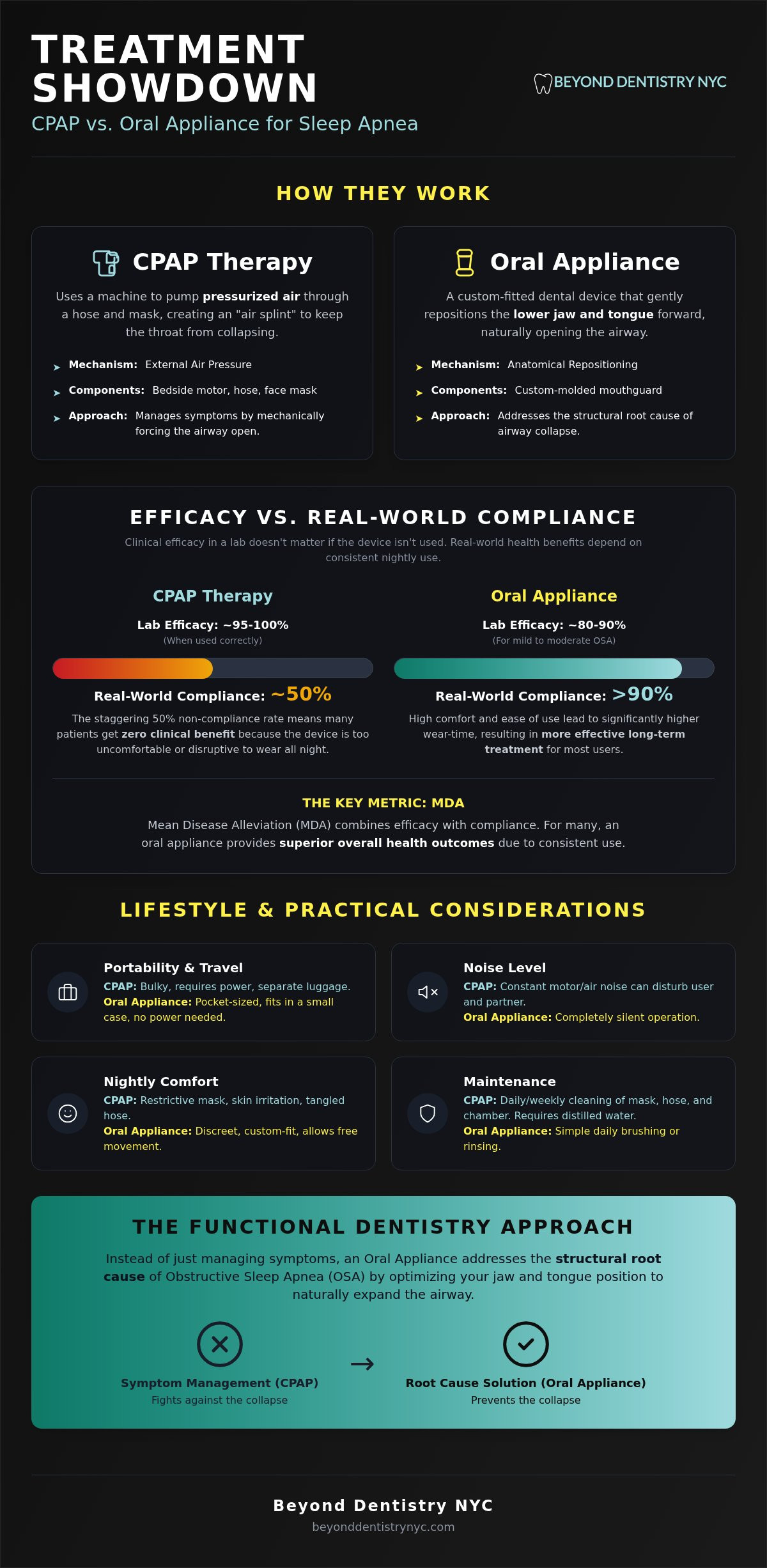
When you evaluate an oral appliance vs cpap for sleep apnea, looking at clinical efficacy alone only tells half the story. CPAP machines are often touted as the superior choice because they can technically eliminate nearly all apneas in a controlled lab setting. However, the medical community in 2026 now relies heavily on a metric called Mean Disease Alleviation (MDA). This calculation accounts for how well a device works combined with how many hours you actually wear it. If a CPAP is 100% effective but you rip the mask off after two hours, your overall health isn't truly protected.
Maintenance and noise levels also create a sharp divide in the user experience. CPAP units require distilled water, regular filter changes, and deep cleaning of the hose and mask to prevent mold and bacteria. They also produce a rhythmic mechanical sound that can disrupt a partner's rest. Conversely, a custom oral appliance is silent and requires only a simple daily rinse, making it a much lighter lift for a busy lifestyle.
Efficacy and Compliance: The Real-World Gap
The hidden failure of CPAP therapy is the staggering 50% non-compliance rate. Many patients find the sensation of forced air or the restriction of the hose too much to bear. A device that remains in its carrying case provides zero clinical benefit. In contrast, patients are far more likely to wear a slim, custom mouthguard for the entire duration of their sleep. Compliance-adjusted efficacy is the true measure of success in modern sleep medicine, favoring solutions that patients can comfortably maintain for seven to eight hours every single night.
Comfort and Side Effects
The side effects of CPAP often include dry nasal passages, skin breakouts from the mask seal, and a persistent feeling of claustrophobia. While oral appliances are generally more comfortable, they aren't without their own considerations. Some users experience initial jaw soreness or a slight change in their bite. This is exactly why a functional approach is so vital. Our team at Beyond Dentistry NYC leverages deep expertise in TMD therapy to ensure your appliance is perfectly calibrated. By using precise digital scans, we minimize the risk of tooth movement and jaw strain. This personalized fitting process ensures your solution feels like a natural part of your mouth rather than an intrusive foreign object.
Why Functional Dentistry Favors Oral Appliance Therapy
Functional dentistry moves beyond the "plumbing" approach to sleep medicine. While traditional models often view sleep apnea as a simple blockage to be overcome with air pressure, we recognize it as a symptom of structural misalignment. When you compare an oral appliance vs cpap for sleep apnea, the appliance offers the unique advantage of physically stabilizing the craniofacial system. By gently shifting the jaw into a forward position, the device prevents the tongue and soft tissues from collapsing into the throat. This isn't just about moving air; it's about creating a sustainable, anatomical environment where your body can breathe naturally.
One of the most significant holistic benefits of this approach is the promotion of nasal breathing. CPAP often forces air through the mouth or requires high pressure that can bypass the body's natural filtration system. A custom appliance, however, clears the path for you to breathe through your nose. Nasal breathing is vital for oxygen absorption and the production of nitric oxide, which supports cardiovascular health. By choosing a structural solution, you're supporting your body's innate biological processes rather than relying on a nightly mechanical intervention.
The Airway-Jaw Connection
Many patients in Manhattan struggle with a recessed or narrow jaw that leaves insufficient room for the tongue. When muscles relax during sleep, this limited space disappears entirely. As airway-focused dentists, we don't guess at the solution. We use innovative technology to measure the precise "optimal" position where your airway is widest and your jaw joints are most relaxed. This careful calibration is essential to prevent Temporomandibular Disorder (TMD). By balancing the needs of the airway with the health of the jaw joint, we ensure that your treatment provides relief without causing long-term joint pain or discomfort.
Protecting Your Dental Investment
There's a deep, often overlooked link between sleep apnea and bruxism, or teeth grinding. When the brain detects a drop in oxygen, it often signals the jaw to clench or grind in a desperate attempt to reopen the airway. This constant nocturnal friction can be devastating for your teeth. If you've invested in a smile makeover nyc or high-end restorations from our Smile Gallery, a custom oral appliance serves a dual purpose. It keeps your airway open for restorative sleep while acting as a protective shield for your veneers and natural enamel. This synergy between aesthetic excellence and functional health is why we prioritize appliance therapy as a comprehensive solution for our patients.
Practical Considerations: Travel, Lifestyle, and NYC Living
Living in a city that never sleeps means your rest must be as efficient and high-performing as your career. For many Manhattan professionals, the debate between an oral appliance vs cpap for sleep apnea isn't just about clinical metrics; it's about how the treatment survives a commute or a red-eye to London. A CPAP machine is a piece of medical equipment that demands space, power, and constant attention. In contrast, a custom oral appliance is a discreet lifestyle tool that integrates naturally into your existing routines without requiring a dedicated suitcase.
The Travel-Friendly Advantage
Traveling with a CPAP machine often feels like bringing a third passenger along. You have to navigate TSA inspections, ensure your hotel has accessible power outlets near the bed, and hunt for distilled water in unfamiliar neighborhoods. NYC professionals who travel frequently find that these logistical hurdles often lead to "treatment holidays," where they skip therapy because it's simply too much trouble. A custom-fitted appliance eliminates these barriers. It fits in a small protective case in your pocket or briefcase, requires no electricity, and functions perfectly whether you're in a five-star hotel or an off-grid retreat. This portability ensures you never have to choose between a good night's sleep and a streamlined travel experience.
Partner Satisfaction and Relationship Health
The impact of sleep apnea treatment extends far beyond the person wearing the device. In the compact living spaces typical of New York City, the rhythmic hum of a CPAP motor can become a source of frustration for a sleeping partner. Beyond the noise, the physical presence of a mask and hose creates a literal barrier to intimacy. Transitioning to an oral appliance restores the quiet sanctuary of the bedroom. It's a silent, nearly invisible solution that allows for natural movement and closeness. Choosing an invisible treatment offers a psychological ease that machines simply cannot match, fostering a more relaxed and connected environment for both you and your partner. If you're ready to reclaim your bedroom's peace, schedule a consultation with our team to explore your custom appliance options.
Oral Appliance Transition: The Beyond Dentistry Path
Moving away from a traditional machine requires a clear, clinical roadmap. When you decide between an oral appliance vs cpap for sleep apnea, the transition isn't just about switching devices; it's about a comprehensive shift in how you manage your airway. Our process begins with a formal diagnosis through a clinical sleep study. Whether conducted in a specialized lab or the comfort of your own home, this data provides the essential baseline for your treatment. We then use innovative technology to perform a detailed airway analysis, creating a digital map of your mouth and throat. This modern approach replaces the uncomfortable, "goopy" impressions of the past with precise, high-definition scans.
Once we have your digital blueprint, we move to custom fabrication. A functional dentist carefully calibrates your device to ensure it holds your jaw in the optimal position for breathing while protecting your joints. The process doesn't end when you receive your appliance. We provide ongoing titration and follow-up care to adjust the device as your body adapts. This ensures you maintain maximum oxygenation and comfort throughout the night, turning your treatment into a seamless part of your lifestyle.
The Role of Myofunctional Therapy
The true secret to long-term success with an oral appliance is often found in the muscles themselves. We often integrate myofunctional therapy for sleep apnea into our treatment plans. Think of this as physical therapy for your airway. By using targeted tongue and throat exercises, you can strengthen the muscles that have become weak or "floppy" over time. This dual approach moves you from simply managing a blockage to optimizing your biology. When the muscles are toned and the jaw is supported, your body's natural ability to breathe remains unobstructed.
Why Choose Beyond Dentistry NYC?
Choosing a provider for sleep apnea treatment is a significant decision. While many general practices offer basic mouthguards, our approach is rooted in the specialized expertise of Drs. Morgan and Michael Herman. Their deep understanding of TMD therapy ensures that your appliance won't just help you breathe; it will also protect your jaw joints and dental restorations. We focus on high-end clinical solutions that feel like a natural extension of your body rather than a piece of medical equipment. If you're ready to ditch the mask and experience a more natural way to rest, schedule your airway consultation at Beyond Dentistry NYC today.
Your Path to Silent, Mask-Free Vitality
Choosing between an oral appliance vs cpap for sleep apnea is about more than just oxygen levels; it's about reclaiming your freedom and your bedroom's peace. While machines offer a mechanical fix, a custom-fitted appliance provides a structural solution that aligns with your biology. By focusing on functional dentistry and TMD health, we ensure your treatment is as comfortable as it is effective. You don't have to settle for bulky equipment or restless nights that disrupt your Manhattan lifestyle.
At Beyond Dentistry NYC, we combine clinical excellence with a deeply empathetic approach. Our expertise in airway-focused care allows us to design high-end, customized solutions that fit seamlessly into your life. Whether you're traveling for business or simply want to wake up feeling genuinely restored, our team is here to guide you through every step of the transition. It's time to prioritize your long-term health and emotional well-being with care that feels personal and precise.
Reclaim your sleep without the mask—Book a consultation today
You deserve a solution that supports your whole body. We look forward to helping you discover the vibrant energy that comes from a truly quiet, restful night.
Frequently Asked Questions
Is an oral appliance as effective as CPAP for severe sleep apnea?
While CPAP is traditionally the first choice for severe cases, many patients find a custom oral appliance is more effective in practice. If you can't tolerate a mask, it provides zero benefit. Clinical guidelines in 2026 emphasize that a device you wear all night is superior to a machine that stays in the closet. We evaluate your specific airway structure to determine if an appliance can provide the oxygenation you need.
Will an oral appliance cause my teeth to shift or change my bite?
Minor tooth movement is a potential side effect, but our functional dentistry approach focuses on prevention. We use precise digital scans and leverage our expertise in TMD therapy to minimize these risks. Regular follow-up appointments in our New York office allow us to monitor your bite closely. We often provide simple morning exercises that help your jaw return to its natural resting position after a night of treatment.
How long does it take to get used to wearing an oral appliance at night?
Most of our patients feel fully adjusted within two to three weeks of consistent use. You might experience some increased salivation or slight jaw tenderness during the first few nights. These sensations are temporary and typically fade as your muscles adapt to the new position. Because our appliances are custom-fitted to your unique anatomy, they are significantly more comfortable than generic, over-the-counter alternatives.
Does medical insurance cover oral appliance therapy in New York?
Many medical insurance providers in New York offer coverage for these devices when they are deemed medically necessary. It's important to remember that this treatment is typically covered under your medical policy rather than dental insurance. While Beyond Dentistry NYC does not offer in-house insurance plans, we provide the detailed clinical documentation and diagnostic data your carrier requires to process your claim for a custom sleep appliance.
Can I use an oral appliance if I have dental implants or veneers?
Yes, you can absolutely use an appliance if you have existing dental work. We actually recommend it to protect your investment. A custom device is designed to distribute pressure evenly across your arch, which prevents the localized stress that could damage veneers or implants. Many patients find the appliance acts as a protective shield against nocturnal grinding, preserving the beauty of their Smile Gallery restorations.
What happens if I stop using my CPAP and switch to an oral appliance?
When you weigh the benefits of an oral appliance vs cpap for sleep apnea, the most immediate change is the silence and physical freedom. You'll no longer deal with mask leaks or dry nasal passages. However, it's vital to make this transition under clinical supervision. We often recommend a follow-up sleep study to confirm your new appliance is successfully keeping your airway open throughout the night.
How often does a custom sleep apnea appliance need to be replaced?
A high-quality, clinically fitted appliance generally lasts between three and five years. The exact lifespan depends on your individual habits, such as whether you grind your teeth heavily at night. Proper daily cleaning and storing the device in its protective case will extend its durability. We inspect your appliance during your regular check-ups to ensure the material remains strong and the fit continues to be precise.
Is there a specific break-in period for a mandibular advancement device?
We suggest a gradual approach during the first week to ensure your comfort. You might start by wearing the device for an hour or two while relaxing before bed to habituate your tongue and jaw to the sensation. Most patients are ready for full-night use by the third or fourth evening. This methodical pace reduces anxiety and helps you transition into a routine of silent, restorative sleep without feeling rushed.


