

What if the estimate that looks simplest leaves out part of the treatment you actually need? A dental implant cost NYC estimate can be difficult to compare when one plan covers only implant placement and another describes the restoration too. It’s reasonable to want a clear picture before making a decision, especially when additional procedures, insurance questions, and recovery all affect your planning.
The most useful estimate explains the proposed treatment, not just a headline fee. In this guide, you’ll learn what a clinician considers when planning implant care, which details to look for in a written estimate, and how to discuss coverage and payment arrangements. You’ll also see why the number of teeth being replaced, your oral health, and any preparatory procedures can change the treatment plan.
Every smile and set of clinical needs is different, so a personalized evaluation is the best starting point for understanding your options. At Beyond Dentistry NYC, Dr. Morgan Herman and Dr. Michael Herman provide dental implants as part of individualized restorative care. A consultation can help connect the proposed treatment with your goals and function. With the right questions in hand, you can approach the conversation feeling more informed.
Key Takeaways
- A useful estimate describes the proposed treatment, including clinical services, restorative components, and any additional procedures.
- To compare dental implant cost nyc estimates fairly, line up equivalent treatment scopes and review payment terms alongside the totals.
- At a consultation, share your concerns, review the evaluation, discuss treatment options, and clarify what the written estimate covers.
- Personalized implant planning connects the proposed treatment with your goals and functional needs.
What determines dental implant cost in NYC?
There isn’t one NYC-wide figure that describes every patient’s implant treatment. Replacing one missing tooth is different from planning care for several teeth, and the location of the gap can affect the restorative approach. That’s why an estimate should reflect an individual evaluation rather than a generic figure. The total depends on the patient’s needs and the scope of the proposed treatment.
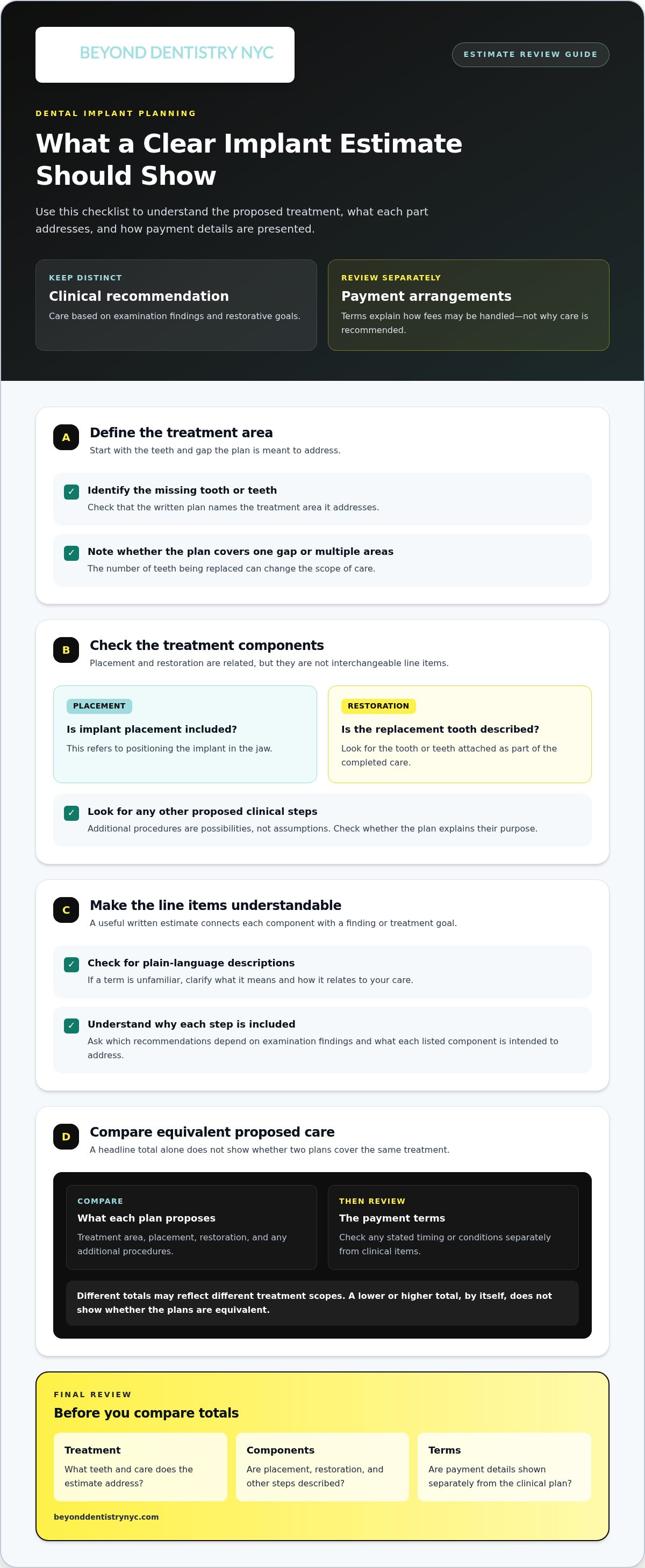
Start by distinguishing the stages and components in the plan. Implant placement refers to positioning the implant in the jaw. The restoration is the replacement tooth or teeth attached as part of the completed care. These components are related, but they aren’t interchangeable line items. If an estimate names only one stage or component, its total may not describe the full proposed treatment.
For a general overview of implant structure and terminology, see What is a Dental Implant?. Knowing that the implant and restoration serve different roles makes estimate details easier to follow. It also gives you a useful starting point for asking what each part of the plan is intended to address.
Which parts of implant treatment can affect an estimate?
The number of teeth being replaced can change the scope of care, as can whether the plan addresses a single gap or multiple areas. An estimate may distinguish implant placement from the restoration and describe other clinical steps if they’re part of the proposed plan. Additional procedures are possibilities, not assumptions. Whether they’re appropriate depends on the clinician’s evaluation and findings.
Why can two NYC implant estimates differ?
Two totals can represent different proposed care. One plan may describe implant placement and a restoration, while another may include different steps or address a different number of missing teeth. Clinical findings and your restorative goals help shape the recommendations. Compare what each estimate proposes, not only the amount at the top. A lower or higher total does not, by itself, show whether the plans are equivalent.
Before comparing figures, identify what each plan is meant to accomplish. Replacing one tooth in a particular area and planning restorations for multiple missing teeth involve different scopes. The clinician’s evaluation helps determine which steps are relevant to you, rather than applying the same sequence to every patient.
- Placement: Identify whether the estimate includes implant placement as part of the proposed care.
- Restoration: Look for a description of the replacement tooth or teeth connected with the implant plan.
- Other steps: Note any additional procedures and whether the plan explains their clinical purpose.
These details turn a headline total into a clearer picture of treatment. If an item is unfamiliar, ask how it relates to your findings and goals. Reviewing the estimate this way helps you understand what’s proposed and why, without treating a general cost figure as a prediction of your own care.
What should a dental implant estimate include?
A total by itself tells you little about the proposed care. A written estimate is easier to understand when it describes treatment in plain language, identifies the tooth or teeth being addressed, and separates clinical services from the restoration and any additional procedures. Inclusions depend on the individual evaluation, so don’t assume every implant plan contains the same components.
This detail matters when reviewing a dental implant cost nyc estimate. A clinical recommendation describes care based on examination findings and restorative goals. Payment arrangements or financing terms are a separate part of the discussion. They explain how fees may be handled, not why a treatment is recommended. Keep the two distinct so you can understand the clinical plan before considering its financial terms.
How to read the clinical scope of an implant estimate
First, identify which tooth or teeth the plan addresses. Then look for a description of the proposed restoration and any other procedures the clinician has included. If a term is unfamiliar, ask for its everyday meaning and how it relates to your care. A clear explanation can help you see whether each line item addresses a specific finding or treatment goal.
- Treatment area: Note the missing tooth or teeth named in the plan.
- Restoration: Look for a description of the replacement tooth or teeth associated with the implant treatment.
- Additional procedures: Check whether the plan lists other clinical steps and explains why they’re being considered.
- Payment terms: Review these separately from the clinical recommendation, including any stated timing or conditions.
Estimates may use different wording or organize information in different ways. The key is to understand what care is proposed, what each component is intended to address, and whether the document distinguishes clinical items from payment details. For general background on factors that can influence estimates, Delta Dental’s Factors Affecting Dental Implant Cost offers additional context.
Which questions clarify a personalized treatment plan?
A focused discussion can turn technical wording into practical information. Ask what each listed component is intended to address, which recommendations depend on your examination findings, and whether the written estimate describes the complete proposed scope. These questions help connect the plan with your needs instead of leaving you to interpret unfamiliar terms alone.
You can also ask how your restorative goal shaped the recommendation and whether any part of the plan may change as findings are reviewed. For further background before the discussion, the dental implant patient guide offers an overview of considerations involved in implant care.
At Beyond Dentistry NYC, an individualized consultation can help you review the clinical plan and understand how its components relate to your goals. Explore personalized implant care as you prepare to discuss your treatment estimate.
How to compare dental implant estimates in NYC fairly
Comparing estimates is most useful when you line up the care each one describes. A smaller total may reflect a different treatment scope, not the same plan at a lower price. Use each written estimate to understand the proposed clinical steps, restoration, additional procedures, and payment terms instead of judging the number alone.
What to compare across written implant plans
Use a simple comparison table to organize the information. If an estimate leaves a category unclear, mark it as “not specified” rather than assuming it’s included or excluded. This keeps your comparison grounded in the written plans and gives you specific points to clarify.
| Comparison point | What to look for |
|---|---|
| Clinical steps | Which implant-related services are described, and which tooth or teeth the plan addresses? |
| Restoration | What replacement tooth or teeth are included in the proposed restorative care? |
| Additional procedures | Are any other procedures described as part of the plan, listed separately, or not included in the proposed scope? |
| Payment terms | Are payment arrangements or financing terms stated separately from the clinical recommendation? |
For example, one estimate may describe implant placement and a restoration, while another lists placement without clearly describing the restorative component. Those totals aren’t directly comparable until you understand the difference. The table isn’t a scorecard for providers or a measure of quality. It helps you see whether the proposed care and documented terms match.
How to weigh cost alongside clinical fit
Once you’ve organized the details, consider the clinical reason for each recommended component. Ask how it relates to the examination findings and your goals for restoring function. Suitability depends on the individual, so a treatment step in one plan shouldn’t automatically be assumed necessary or unnecessary in another person’s care.
Review payment options separately. A financing promotion or payment claim can be time-sensitive, so read the current terms and dates in the written offer before relying on them. Keep this information distinct from the treatment recommendation. Payment terms may affect how care is paid for, but they don’t explain why a particular clinical plan fits your needs.
For a broader perspective on how function and oral health can inform dental care, explore functional dentistry and whole-body oral health. This context can help frame questions about how an implant plan supports your goals, while your clinician’s evaluation guides decisions about specific treatment.
A fair comparison gives you clarity, not pressure to choose the lowest headline figure. At Beyond Dentistry NYC, a personalized discussion can help connect proposed implant care with your findings and priorities. Learn more about implant care at Beyond Dentistry NYC.
What to expect at an NYC dental implant consultation
An implant consultation connects your goals with clinical findings and helps you understand what a proposed plan may involve. It’s also a good time to discuss cost questions. Recommendations and estimates are tailored to the patient, so the conversation can clarify what applies to your situation instead of relying on a general figure for dental implant cost nyc.
You don’t need to arrive with every answer. Bringing your concerns and any estimate you’ve already received can make the discussion more focused. If a term or treatment component is unclear, ask for an explanation in everyday language. Understanding why a recommendation is being made can make the next steps easier to consider.
How to prepare for an implant cost discussion
Before the visit, write down what you’d like to know about the proposed care and estimate. Consider what matters most to you, such as addressing a missing tooth, understanding the restoration, or getting clarity on possible additional procedures. If you have an existing written estimate, bring it so the clinician can explain its wording in context.
Describe any concerns related to the missing tooth or teeth and what you hope treatment will support. You might be focused on function, appearance, or both. Sharing these priorities gives the clinician useful context for discussing options. You’re not expected to know technical terms. Asking for a plain-language explanation is part of an informed conversation.
Which questions can help you understand your options?
Clear questions link the evaluation to the plan. Ask which findings inform the recommendation, what each proposed component is intended to address, and how the restoration fits your goals. If additional procedures appear in the plan, ask why they’re recommended and how they relate to the clinical findings. This clarifies the reasoning without assuming every patient needs the same steps.
A simple sequence can keep the consultation comfortable and organized:
- Share your concerns. Describe what you’d like to address and what matters most to you.
- Review the evaluation. Ask the clinician to explain the findings that relate to implant care.
- Discuss options. Learn how the recommended approach connects with your goals and restoration.
- Clarify the estimate. Review what the written plan describes and ask about unfamiliar items or cost details.
Take your time with the conversation. If you leave with a term or detail you’d like to revisit, write it down so you can follow up on your understanding of the plan. The goal is to leave with a clearer sense of what’s recommended, why it fits your needs, and how the estimate relates to that care.
Beyond Dentistry NYC provides individualized implant planning as part of advanced restorative care. To discuss your needs and estimate with a clinician, schedule an implant consultation.
Dental implant care at Beyond Dentistry NYC: personalized planning
Dental implant care is personal. The right conversation starts with your concerns, clinical findings, and what you hope your restored smile will help you do. At Beyond Dentistry NYC in New York City, implants are part of advanced restorative care, with planning shaped around the individual rather than a one-size-fits-all template.
A personalized plan can bring the clinical recommendation and your dental implant cost nyc estimate into context, helping you understand how proposed care relates to your needs and priorities. This can be useful if you’re unsure what treatment may involve or how to make sense of estimates you’ve reviewed.
A restorative plan shaped around the patient
Dr. Morgan Herman and Dr. Michael Herman lead the practice’s care, which includes innovative technology treatments. Implant planning considers clinical findings alongside restorative goals, including what the proposed restoration is intended to address. Technology is part of the practice’s approach, while recommendations remain specific to the person being evaluated.
It’s natural to have questions about treatment and cost. You deserve space to raise those concerns and understand the reasoning behind a recommendation. A thoughtful discussion can clarify which elements are based on your evaluation, how the restorative goal informs the plan, and what each estimate item represents. Don’t assume two treatment plans are identical simply because both involve implants.
For some people, the priority is understanding how a restoration may support everyday function. For others, appearance and comfort may also be central to the conversation. Sharing what matters most helps guide a plan that considers the overall restorative goal, not only the missing tooth. Your clinician can explain how the findings and proposed care fit together in clear, approachable language.
Take the next step toward a clearer estimate
Before comparing totals, understand the scope behind them. A written estimate is more meaningful when you know what treatment it describes, how the restoration fits the plan, and whether additional procedures are part of the recommendation. That clarity helps you evaluate your options without treating a general figure as a prediction of your individual care.
Bring your questions, concerns, and any estimate you’d like to discuss. The Beyond Dentistry NYC team can talk through your implant needs, clinical findings, and restorative goals. You don’t need to arrive with every detail figured out. The consultation is an opportunity to build a clearer understanding together.
For a personalized discussion of your treatment goals and implant plan, schedule a dental implant consultation.
Move forward with a plan that feels clear
Your next step doesn’t have to be a decision about treatment. It can be a conversation that helps you understand what your estimate describes and how the proposed care relates to your priorities. With a clearer picture of your options, the dental implant cost nyc discussion becomes less about interpreting a number on its own and more about making an informed choice.
If questions remain, bring them into a one-on-one discussion. Talk through your goals, review what you understand so far, and learn what the next steps may involve. A thoughtful plan starts with being heard and having space to make decisions at your own pace.
Take the next step and schedule a dental implant consultation. A clearer path forward can begin with one conversation.
Frequently Asked Questions
Is dental implant placement painful?
Comfort and the experience vary by person and by the planned procedure. During a consultation, the clinician can explain anesthesia and comfort measures that may be appropriate for your treatment. If dental visits make you anxious, or you have concerns about pain or a relevant medical history, bring them up early. Sharing this context helps the clinician discuss your care with your individual needs in mind.
How long do dental implants last?
There isn’t one guaranteed lifespan for every dental implant. Longevity can vary with individual health, how well the implant is cared for, and ongoing dental maintenance. Consistent oral hygiene and routine follow-up visits are important parts of caring for your mouth after treatment. Your outlook depends on your circumstances, so ask the treating clinician what factors may affect your implant and what maintenance they recommend.
Can I get a dental implant if I have bone loss?
Bone condition is one factor a clinician evaluates when planning implant care, but it doesn’t determine your options on its own. Depending on examination findings, further evaluation or treatment may be considered. A dentist needs to assess your situation before discussing what may be appropriate. Share any information you have about your oral health and ask how the findings relate to your proposed treatment plan.
Does dental insurance cover dental implants in NYC?
Coverage depends on your specific policy, plan rules, and the treatment being proposed, so don’t assume the full dental implant cost in NYC will be covered. Ask your insurer how your benefits apply to the clinical plan and request details in writing. A written treatment estimate can help you discuss the proposed care with your insurer, but coverage and reimbursement decisions are determined by your plan.
How soon can I return to work after dental implant treatment?
The timing depends on the procedure, your individual response, and the clinician’s instructions, so there isn’t a universal return-to-work date. Before treatment, discuss your work schedule and responsibilities, including whether your role involves physical activity or public-facing duties. Your care team can offer guidance based on the plan and your circumstances. Follow the specific instructions you receive rather than relying on someone else’s recovery timeline.
Can smokers receive dental implants?
Smoking is relevant medical history to discuss during an implant evaluation, as it may affect clinical planning. It doesn’t determine your suitability without an individual assessment. Be open with the clinician about your current smoking habits and any changes over time. This information helps the dental team consider your circumstances, explain relevant factors, and discuss appropriate next steps for your care.


