

Could the very material meant to restore your smile be triggering a silent response from your immune system? For many of our patients in Manhattan, the choice between materials isn't just about durability; it's about peace of mind. You likely want a permanent tooth replacement that looks indistinguishable from your natural teeth, yet you might worry about metal sensitivities or that dreaded grey shadow appearing at your gumline over time. We understand that clinical claims can feel contradictory and overwhelming when you're simply seeking the safest, most aesthetic path forward for your body.
This 2026 guide to ceramic vs titanium implants nyc provides the clarity you need to make an informed decision for your holistic well-being. You'll discover how yttria-stabilized zirconia now offers a 97.7% survival rate, matching the reliability of traditional metal while providing superior aesthetics. We'll also explain how we integrate these restorations with smile makeovers, veneers, and adult orthodontics to ensure your results are both functional and beautiful. We even explore how treating sleep apnea with MAD appliances protects your investment from nocturnal clenching. By the end of this article, you'll understand how advanced technology and a whole-body approach can transform your restorative experience into one of total confidence.
Key Takeaways
- Understand how ceramic implants offer a metal-free alternative that supports your systemic health and eliminates concerns about galvanic toxicity in the mouth.
- Compare ceramic vs titanium implants nyc to see how zirconia mimics natural tooth roots, preventing the dark grey shadow often visible at the gumline with metal posts.
- Learn why modern zirconia restorations now offer clinical success rates that rival traditional titanium, giving you long-term durability without compromising your holistic standards.
- Discover how a functional dentistry approach combines 3D imaging with smile design to ensure your implant harmonizes perfectly with adjacent veneers and your overall bite.
- See why identifying sleep apnea and using MAD appliances is vital for protecting your new restorations from the damaging effects of nocturnal bruxism.
The Evolution of Dental Implants: Ceramic vs. Titanium in NYC
For decades, the standard for tooth replacement was set in stone, or rather, in metal. Since the 1960s, titanium has dominated the restorative landscape due to its remarkable ability to fuse with human bone. However, as we move through 2026, the needs of the modern patient have evolved. In our Manhattan practice, we've seen a significant surge in patients seeking alternatives that align with a holistic lifestyle. When comparing ceramic vs titanium implants nyc, the choice is no longer just about filling a gap in your smile; it's about how that restoration integrates with your entire biological system.
This shift is a cornerstone of functional dentistry. We don't view a missing tooth as an isolated problem. Instead, we consider how dental materials might impact your systemic health, immune response, and even your confidence. While titanium remains a powerhouse in oral surgery, the rise of "metal-free" zirconia reflects a growing desire for biocompatibility and elite aesthetics that match the high standards of New York City's most discerning patients.
What is a Ceramic (Zirconia) Implant?
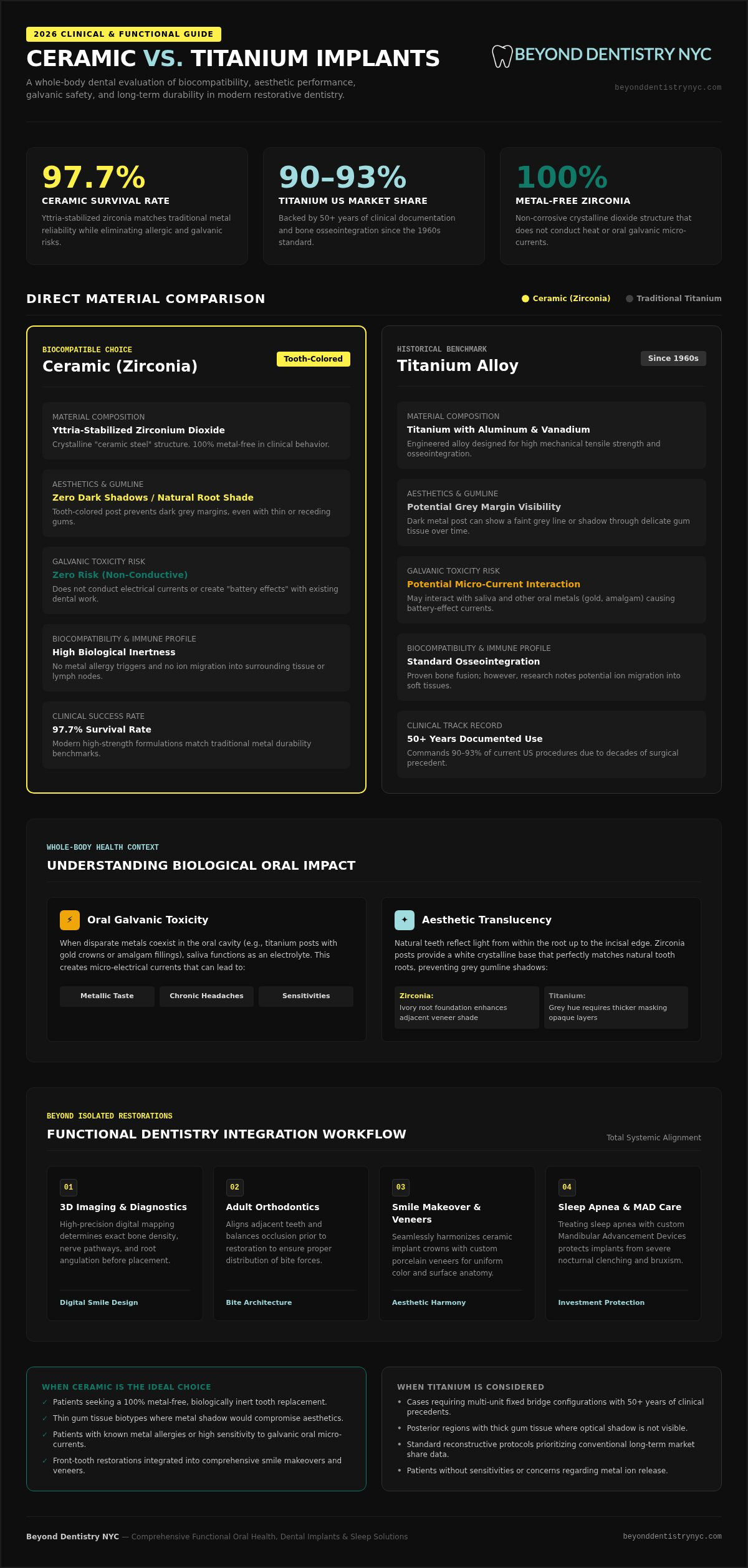
Zirconia is a sophisticated crystalline material. While zirconium is technically a transition metal on the periodic table, once it is processed into zirconium dioxide, it behaves like a ceramic. It's essentially a "ceramic steel" that offers incredible strength without the properties of traditional metals. In a clinical context, zirconia is considered 100% metal-free because it doesn't corrode, trigger metal allergies, or conduct heat and electricity. For patients worried about "heavy metal" toxicity or immune triggers, this material provides a sense of safety. Beyond health, the aesthetic advantage is immediate. Because the implant post itself is tooth-colored, it provides a bright, natural foundation that enhances the final look of your restoration from the inside out.
The Legacy of Titanium Implants
We can't discuss modern restorations without honoring the legacy of titanium. It currently holds roughly 90% to 93% of the U.S. market share, supported by over fifty years of clinical documentation. The success of these implants relies on osseointegration and implant biocompatibility, a process where your jawbone grows directly into the surface of the metal post. Most modern titanium implants are actually alloys, mixed with small amounts of aluminum or vanadium to increase their strength. They are exceptionally durable and have served as the reliable "gold standard" for millions. While they are highly effective, the conversation around ceramic vs titanium implants nyc often focuses on whether "effective" is enough, or if a more biocompatible, aesthetic alternative is the better fit for your specific health goals.
Biocompatibility and Health: The Functional Dentistry Perspective
In functional dentistry, we view the mouth as a gateway to the rest of your body. When you choose between ceramic vs titanium implants nyc, you aren't just selecting a structural post; you're choosing a material that will interact with your immune system for decades. Your body is a closed system. Every restoration we place has the potential to influence your systemic health, which is why we prioritize materials that promote biological harmony rather than just mechanical success.
One primary concern with metal restorations is galvanic toxicity. This occurs when different metals in the mouth, such as a titanium implant and a gold crown or silver filling, interact within your saliva to create a "battery effect." These micro-currents can lead to a metallic taste, chronic headaches, or unexplained sensitivities. Additionally, while titanium is generally stable, research suggests that metal ions can sometimes migrate into the surrounding soft tissue or lymph nodes over time. To better understand the safety standards governing these materials, you can review the FDA guidance on dental implant systems. If you're concerned about how your dental health affects your overall wellness, our team can help you explore functional dentistry solutions tailored to your unique biology.
Metal Sensitivities and Allergies
While only about 0.6% of the population has a documented titanium hypersensitivity, many cases remain undiagnosed until after surgery. Patients with metal sensitivities might experience chronic inflammation, skin rashes, or even implant rejection without a clear cause. We often recommend MELISA testing (Memory Lymphocyte Immunostimulation Assay) for patients with a history of autoimmune concerns or metal allergies. Because zirconia is a non-reactive crystalline material, it serves as the definitive solution for those seeking a truly inert, metal-free restoration that won't trigger an immune response.
Gum Health and Bacterial Resistance
The health of your gums is just as critical as the health of your bone. Zirconia has a remarkably low affinity for plaque, meaning bacterial biofilm is significantly less likely to accumulate on its surface compared to titanium. This resistance is a major advantage in preventing peri-implantitis, a form of gum disease that is the leading cause of implant failure. Ceramic surfaces allow for a more natural "attachment" of the soft tissue, creating a tight seal that protects the underlying bone. In clinical terms, ceramic promotes a healthier biological width at the gumline by allowing the soft tissue to adhere directly to the zirconia surface without the inflammatory response often seen with metal components.
Aesthetics and Longevity: Meeting the NYC Standard
In a city that sets the global pace for fashion and professional excellence, your smile is a vital asset. When weighing ceramic vs titanium implants nyc, the aesthetic outcome often becomes the deciding factor. Titanium, while structurally sound, is an opaque grey metal. In patients with thin gingival biotypes, research indicates that titanium can cause noticeable mucosal discoloration in up to 30% to 40% of cases. This creates a dark, unnatural shadow at the gumline that even the most beautiful porcelain crown cannot fully hide.
Zirconia solves this by mimicking the ivory hue and light-transmitting properties of natural tooth roots. This translucency ensures that light interacts with your gums just as it does with natural teeth, providing the essential foundation for our smile gallery restorations. We believe that a restoration shouldn't just function well; it should disappear into your smile, looking completely organic under any lighting condition.
The Cosmetic Advantage of Zirconia
For teeth in the "aesthetic zone"—those visible when you speak or laugh—cosmetic dentists increasingly favor ceramic. Zirconia eliminates the risk of a dark metallic ring appearing if the gums recede slightly over time. This makes it a critical component of a comprehensive smile makeover in NYC. By using a tooth-colored post, we ensure uniform light translucency across your entire arch. This allows your implant to blend seamlessly with adjacent natural teeth or custom porcelain veneers, maintaining a vibrant, youthful appearance.
Durability and Fracture Resistance in 2026
A common myth suggests that ceramic is "brittle" compared to metal. While early generations faced challenges, modern yttria-stabilized zirconia is engineered for maximum toughness. As of 2026, prospective multicenter data shows a 97.7% cumulative 10-year survival rate for these implants, demonstrating clinical parity with titanium's benchmarks. When evaluating ceramic vs titanium implants nyc, it's clear that both materials are recognized under FDA guidelines on dental implant safety and materials as safe, durable options. The shift toward modern two-piece zirconia systems has further improved outcomes for active New Yorkers. These systems allow for flexible angulation and custom emergence profiles, providing the strength needed for a high-performance lifestyle without the aesthetic compromises of metal.
The Decision Matrix: Which Implant is Right for You?
How do you choose between two high-performance materials when both offer excellent clinical success? In our Manhattan office, we treat this as more than a surgical choice. It's an alignment between your lifestyle and your biology. When evaluating ceramic vs titanium implants nyc, you must weigh your long-term health priorities against specific mechanical needs. While zirconia is often the gold standard for holistic wellness, titanium remains a reliable workhorse for complex structural challenges.
Your gingival biotype plays a massive role in this decision. If you have thin gum tissue, the risk of a metal post casting a dark shadow is significantly higher. We also look at the opposing tooth. The way your teeth meet, known as your occlusion, dictates the force placed on the restoration. For patients navigating sleep apnea or TMD, jaw tension can be significant. In these cases, we evaluate how the rigidity of the material affects your overall craniofacial comfort and long-term stability. If you're ready to see which path fits your unique biology, you can schedule a functional consultation with our expert team.
When to Choose Ceramic (Zirconia)
Zirconia is the premier choice for patients who prioritize a biological approach to their dental care. We typically recommend it for:
- Biocompatibility: If you have a history of autoimmune conditions, chronic inflammation, or confirmed metal sensitivities, zirconia is the safest, non-reactive choice.
- Aesthetic Zone Focus: For front teeth, ceramic is unparalleled. It prevents that dark metallic hue at the base of the crown and maintains a natural translucency that titanium can't match.
- Holistic Lifestyle: Many of our New York patients prefer a "metal-free" mouth as part of a broader commitment to systemic health and longevity.
When Titanium Might Still Be Recommended
Despite the rise of ceramic, titanium still has a place in specific clinical scenarios, particularly when structural limitations are present:
- Complex Reconstructions: In full-mouth cases, titanium's mechanical flexibility and the availability of narrow-diameter options make it indispensable for areas with restricted bone volume.
- Extreme Bite Forces: If you're replacing a back molar where aesthetics are less critical and bite forces are extreme, titanium's decades of data in high-pressure zones provide a strong safety net.
- Surgical Versatility: In cases requiring severe angled corrections where two-piece ceramic availability might be limited, titanium offers more options for precise placement.
The Beyond Dentistry NYC Approach: Functional Integration
At Beyond Dentistry NYC, we don't just place an implant; we integrate it into your biological life. Choosing between ceramic vs titanium implants nyc is a significant decision, but it's only one piece of a much larger puzzle. Our philosophy centers on functional integration, which means we look at your entire craniofacial system to ensure your restoration supports your systemic health. We've seen that when a restoration is placed without considering the jaw's underlying mechanics, it can lead to unnecessary complications. That's why we often combine implant planning with TMD therapy to ensure your new smile provides relief rather than creating new jaw pain.
Innovative Technology for Precise Outcomes
Precision is the foundation of comfort. We utilize advanced 3D CBCT imaging and digital impressions to map your bone density and nerve pathways with incredible accuracy. This allows us to plan your procedure with a level of detail that traditional methods simply can't match. We also practice airway-focused dentistry, evaluating how your oral structure affects your breathing and sleep. Our functional dentistry approach leads to longer-lasting implants by ensuring every restoration is perfectly harmonized with your natural bite and airway health. By using this technology, we can predictably place your ceramic vs titanium implants nyc in the ideal position for both structural strength and aesthetic beauty.
Your Journey to a Restored Smile in Manhattan
Your experience starts with an empathetic consultation at our Manhattan office. You'll meet with Dr. Michael Herman or Dr. Morgan Herman to discuss your health philosophy and goals. We don't believe in one-size-fits-all solutions. Instead, we collaborate with you, explaining the nuances of different materials and how they fit into your personal wellness journey. Whether we're matching an implant to existing porcelain veneers or planning a full smile makeover, the process is transparent and focused on your peace of mind. We've designed our practice to be a calm, welcoming environment where your anxiety is met with compassion and clinical excellence. You're a partner in this process, and we're here to guide you toward a result that feels as natural as it looks.
Empowering Your Path to a Biocompatible Smile
Choosing the right dental restoration is an act of self-care that extends far beyond your mouth. You now understand that the decision between ceramic vs titanium implants nyc involves weighing systemic health, aesthetic goals, and your unique biology. Whether you're drawn to the metal-free peace of mind offered by zirconia or the structural legacy of titanium, your choice should reflect your personal health philosophy. By looking at the whole-body impact, you're ensuring that your new tooth supports your overall wellness for decades to come.
We're here to provide the clarity and expertise you need to make this transition with confidence. Our practice combines a deep mastery of functional dentistry and smile makeovers with state-of-the-art technology to ensure your treatment is precise and comfortable. We take pride in offering compassionate, patient-centered care in the heart of NYC, creating an environment where your well-being is always the priority. It's time to reclaim your confidence with a solution tailored specifically to you. Schedule your functional implant consultation at our Manhattan office today. We can't wait to help you discover the healthiest version of your smile.
Frequently Asked Questions
Are ceramic dental implants as strong as titanium ones?
Modern ceramic implants are exceptionally durable and designed to last a lifetime. Recent clinical data shows a 97.7% cumulative 10-year survival rate for zirconia, which matches the long-term reliability of traditional metal posts. While titanium has a longer history, yttria-stabilized zirconia provides the high fracture resistance needed for a high-performance lifestyle. We use advanced 3D planning to ensure your restoration is positioned to handle the natural forces of your bite with total confidence.
Is there a significant cost difference between ceramic and titanium implants in NYC?
Ceramic fixtures generally involve a higher material and manufacturing cost compared to standard metal. In the Manhattan market, this often results in a 20% to 30% premium for the implant component itself. This reflects the sophisticated milling process and the high-end aesthetic results achieved with zirconia. When weighing ceramic vs titanium implants nyc, many patients find the long-term health benefits and the superior, natural appearance in the "smile zone" are well worth the initial investment.
Can I replace my old titanium implants with ceramic ones?
It is possible to replace existing titanium posts, though we typically only recommend this if the current implant is failing or causing systemic health issues. Removing an integrated implant is a surgical process that requires careful evaluation of your bone density. If you're experiencing metal sensitivities or are unhappy with a grey line at your gumline, we can discuss a transition plan. We'll focus on preserving your jaw health while moving toward a more biocompatible, aesthetic solution.
How do I know if I have a titanium allergy?
Titanium hypersensitivity can manifest as chronic gum inflammation, unexplained skin rashes, or even the slow rejection of an implant. While these allergies affect a small percentage of the population, they often go undiagnosed until after surgery. We recommend MELISA testing or a patch test for patients with a history of autoimmune concerns. Choosing ceramic vs titanium implants nyc allows you to bypass these risks entirely with a 100% metal-free material that won't trigger an immune response.
How long does the ceramic implant process take from start to finish?
The journey to a restored smile typically spans three to six months. This timeline allows your jawbone to securely bond with the implant through osseointegration. After the initial placement in our Manhattan office, you'll wear a comfortable temporary restoration while the biological healing occurs. Once the foundation is stable, we'll place your custom-designed ceramic crown. We use innovative technology to map every step, ensuring the process is efficient, predictable, and tailored to your body's natural healing pace.
Does insurance cover zirconia implants differently than titanium?
Most dental insurance providers use the same clinical codes for implant placement regardless of the material used. However, some plans may classify ceramic as a cosmetic upgrade or an elective choice, which could affect your out-of-pocket costs. It's important to verify your specific coverage with your provider before beginning treatment. Please keep in mind that Beyond Dentistry NYC does not offer in-house dental insurance plans, but our team is happy to help you understand your benefits.
What is the recovery time for a ceramic dental implant?
Most patients return to their normal daily routine within one to two days after the procedure. You might experience minor swelling or tenderness for the first week, but this is easily managed with standard care. The deeper biological recovery, where the bone integrates with the zirconia, happens silently over several months. We prioritize a compassionate, anxiety-reducing environment to ensure your immediate post-operative experience is as comfortable and ease-filled as possible.
Are ceramic implants better for patients with gum disease?
Zirconia surfaces are highly resistant to plaque and bacterial biofilm, which can be a significant advantage for long-term gum health. This lower bacterial affinity reduces the risk of peri-implantitis, a leading cause of implant failure. While we must treat active gum disease before placing any restoration, ceramic supports a healthier soft-tissue attachment once you're healed. This creates a tight, biological seal that protects your bone and keeps your smile makeover looking vibrant and healthy.


